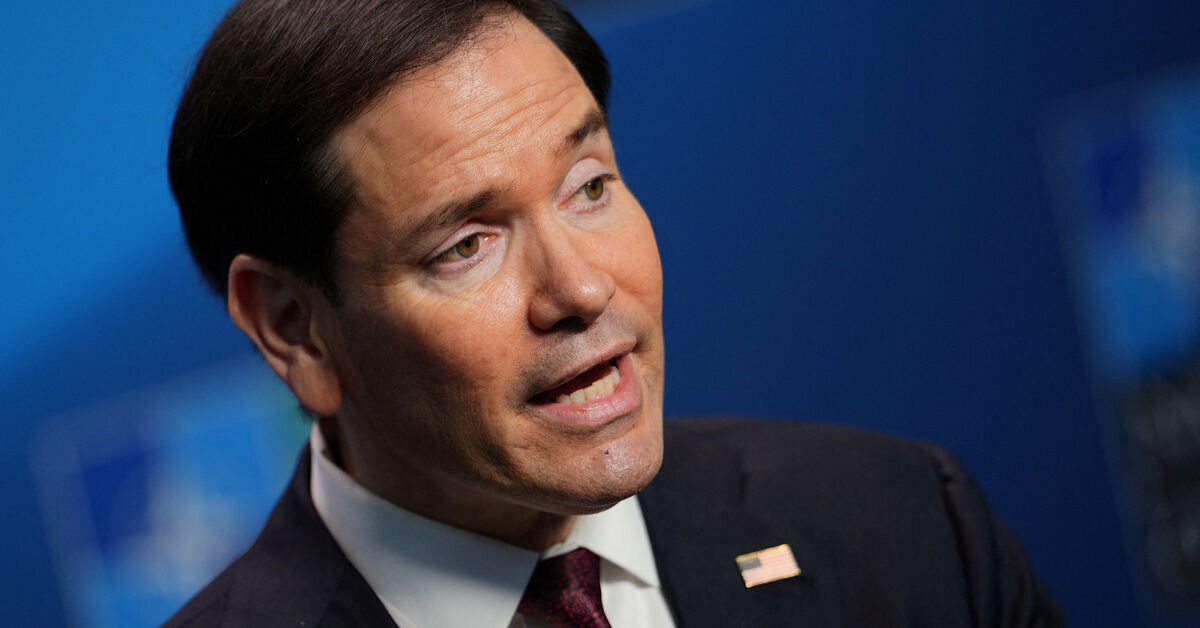
US Secretary of State Marco Rubio announced that there is progress in the ongoing talks with Iran, indicating that the United States is continuously working with Pakistani mediators. This announcement came during a press conference following a meeting of NATO defense ministers in Helsingborg, Sweden.
Rubio clarified that "there is progress, but it should not be overstated or underestimated." He also added that "there is more work to be done," emphasizing that the United States has not yet reached its desired goal in these negotiations.
Details of the Event
Rubio's statements come at a sensitive time as the United States seeks to revive the Iranian nuclear deal signed in 2015, from which former President Donald Trump withdrew in 2018. Since then, relations between Washington and Tehran have experienced increasing tension, affecting stability in the Middle East.
The current talks involve efforts to bring Iran back to the negotiating table, as the United States aims to ensure that Iran does not develop nuclear weapons. In this context, Pakistan plays a mediating role, reflecting the importance of regional relationships in resolving international disputes.
Background & Context
Historically, relations between the United States and Iran have been strained since the Islamic Revolution in 1979. These relations have witnessed numerous crises, including the hostage-taking of American citizens in Tehran, the imposition of economic sanctions, and mutual military threats. However, there have also been periods of dialogue, such as the nuclear agreement reached during President Barack Obama's administration.
The current negotiations are part of broader efforts to rebuild trust between the two parties, as the United States seeks to achieve balance in the region, especially in light of increasing threats from Iran-backed armed groups.
Impact & Consequences
If the talks succeed in making tangible progress, it could lead to a reduction in tensions in the region, positively reflecting on regional security. Conversely, if these talks fail, tensions may escalate, increasing the likelihood of new conflicts in the Middle East.
These negotiations underscore the importance of diplomacy as a tool for resolving disputes, as it can contribute to achieving long-term stability in the region. Moreover, their success could open avenues for further cooperation among major powers on other issues related to global security and peace.
Regional Significance
The US-Iranian relationship is a key factor influencing many Arab countries, which are directly affected by the tensions between the two parties. For instance, any positive steps in the talks could alleviate conflicts in Iraq, Syria, and Yemen, where Iran plays a prominent role.
On the other hand, some Arab countries may feel concerned about any rapprochement between the United States and Iran, as it could lead to a shift in the balance of power in the region. Therefore, monitoring these talks is crucial for Arab nations seeking to achieve their stability and security.