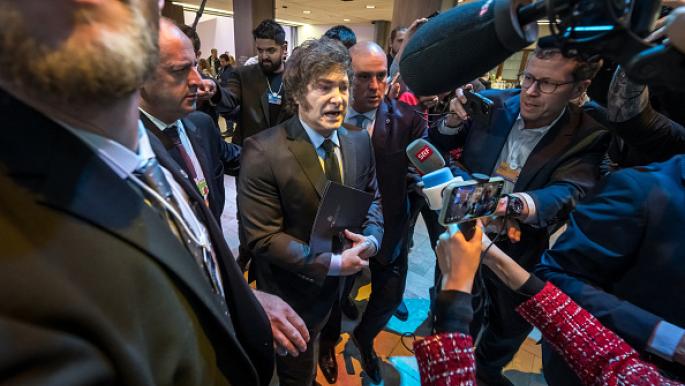
In a new escalation against the media, the government of Argentinian President Javier Milei has barred journalists from accessing the presidential palace for the third consecutive day, raising concerns about press freedom in the country.
This move comes at a sensitive time as the new government seeks to assert its control over the media landscape, reflecting increasing tension between the government and journalists. This decision has elicited mixed reactions from press unions and human rights organizations, which view these measures as a threat to freedom of expression.
Details of the Incident
Since Javier Milei assumed the presidency, the relationship between the government and the media has noticeably deteriorated. Journalists have been prevented from entering the presidential palace, a site central to important political decisions. This decision was made following criticisms directed at the government regarding its economic and social policies.
This action occurs as the government attempts to bolster its authority, aiming to implement a series of controversial reforms. Press unions have deemed this decision an unprecedented step in Argentina's history, as journalists have never been barred from accessing the presidential palace in such a manner.
Background & Context
Historically, Argentina has experienced tensions between governments and the media, witnessing periods of repression and censorship. However, the current government under Milei is taking matters to a new level, raising concerns among international observers.
This decision comes at a time when the country is grappling with a severe economic crisis, as Milei seeks to implement austerity measures that may impact citizens' lives. Many international organizations consider press freedom a fundamental indicator of democracy, making this decision particularly alarming.
Impact & Consequences
Preventing journalists from entering the presidential palace is seen as a sign of the declining state of press freedom in Argentina, which could exacerbate political and social crises. This measure may provoke strong reactions from civil society and unions, potentially leading to widespread protests.
The potential ramifications of this decision could extend to international relations, as Argentina may face pressure from human rights organizations and other countries concerned about freedom of expression. Furthermore, this decision could affect Argentina's image in international forums, especially amid the economic and political crises it faces.
Regional Significance
Press freedom is a critical issue in the Arab world, where many countries suffer from media repression. What is happening in Argentina may serve as a warning to Arab nations facing similar challenges. Restrictions on press freedom can lead to worsening political and social crises.
Monitoring events in Argentina may provide important lessons for Arab countries on the significance of protecting freedom of expression and how repression can lead to dire consequences for political and social stability.