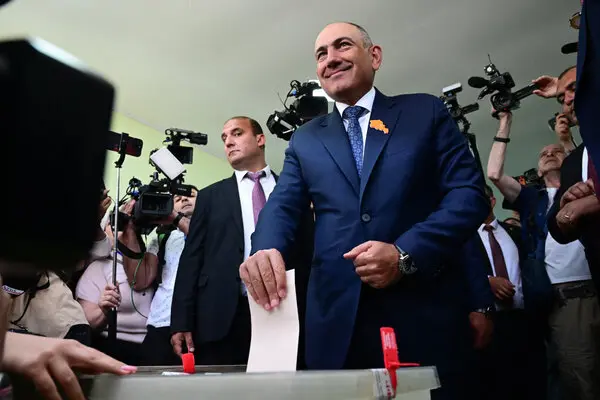
Armenian Prime Minister Nikol Pashinyan declared his victory in the general elections held on Sunday, surpassing political pressures from Moscow. His party, Civil Contract, received 49.8% of the votes, ensuring a majority in parliament according to Armenia's complex electoral rules.
This election marks the first time Armenians have voted since Azerbaijan seized the disputed region of Nagorno-Karabakh in 2023, a painful defeat that affected voter sentiments and influenced the election results.
Details of the Event
During the election campaign, Pashinyan emphasized to voters the necessity of his re-election to complete the initial peace agreement with Azerbaijan, reached in Washington last year. He presented a vision for Armenia to live in peace for the first time since the collapse of the Soviet Union, highlighting the security and economic benefits these agreements would bring.
In contrast, his party warned that a victory for the opposition would restore the corrupt and authoritarian forces that ruled Armenia for years before Pashinyan came to power following a civil uprising in 2018.
Background & Context
Historically, Armenia and Azerbaijan have been in conflict over the Nagorno-Karabakh region, witnessing armed disputes between the two countries for decades. In 2020, a brief war erupted between the sides, resulting in heavy casualties and complicating their relations further.
Armenia has a long history of complex relations with Russia, which has been considered Armenia's main strategic ally. However, the pressures from Moscow on Pashinyan during the election campaign indicate a potential shift in the political dynamics of the region.
Impact & Consequences
Pashinyan's victory may open the door for further dialogue with Azerbaijan, potentially leading to greater stability in the region. However, ongoing Russian pressures could hinder these efforts, as Moscow seeks to maintain its influence in the Caucasus.
On the other hand, this victory could strengthen Pashinyan's position domestically, providing him with the necessary power to confront the economic and political challenges currently facing Armenia.
Regional Significance
The events in Armenia hold particular importance for the Arab region, reflecting geopolitical tensions that could impact the stability of neighboring countries. Pashinyan's success in achieving peace may serve as a model for Arab nations seeking to resolve regional conflicts.
In conclusion, Nikol Pashinyan's victory represents a significant step towards achieving stability in Armenia and may contribute to reshaping relations in the Caucasus region, potentially having far-reaching effects on regional politics.