NASA has announced a significant achievement for the Artemis II mission, which has surpassed the halfway point between Earth and the moon, bringing the astronauts aboard the spacecraft closer to the moon than to Earth. This mission is the first of its kind since the Apollo 17 mission in 1972, aimed at testing the Orion spacecraft as part of NASA's plans to return to the moon.
Artemis II launched from Cape Canaveral in Florida and is now approximately 219,000 kilometers from Earth, continuing its journey on a path known as "free return trajectory," allowing it to utilize the moon's gravity to return to Earth without additional propulsion.
Details of the Event
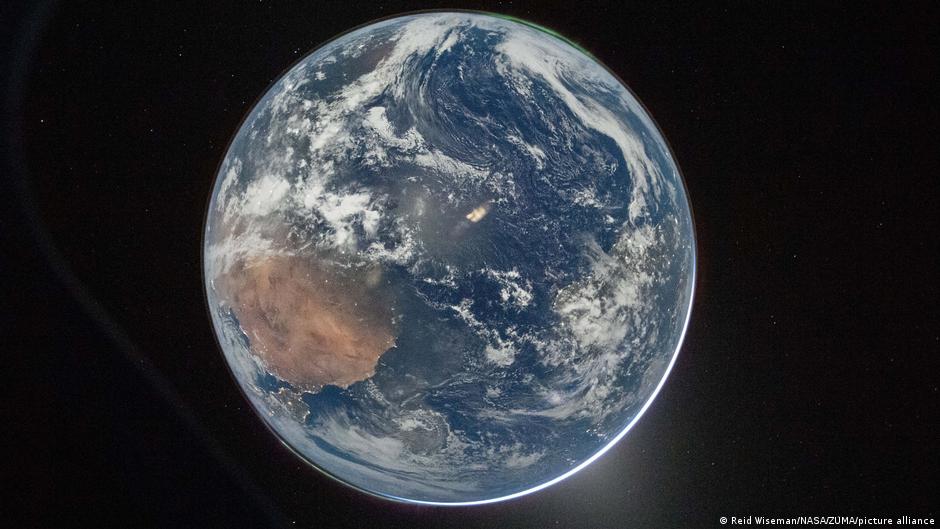
During a call with the Houston control center, the four astronauts were informed that they were now closer to the moon than to Earth, which sparked feelings of joy among them. Astronaut Christina Koch stated, "We can see the moon from the docking window; it's a magnificent sight." The astronauts also captured images of Earth, which NASA has released, showcasing stunning views of our planet, including a picture from the spacecraft's window showing part of Earth with moving clouds.
One of the images taken by commander Reid Wiseman showed Earth curved from one of the spacecraft's windows, while another image displayed the entire globe with oceans and clouds. Wiseman described that moment as "the most breathtaking," as they all fell silent in awe.
Background & Context
The Artemis II mission is part of NASA's Artemis program, which aims to return humans to the moon and includes plans to establish a permanent base on the lunar surface by 2028. This program is considered a significant step towards space exploration and reflects technological advancements and scientific research in the field of space.
Historically, the Apollo 17 mission was the last crewed mission to the moon, occurring in 1972. Since then, no crewed missions have been sent to the moon, making Artemis II a milestone in the history of space exploration.
Impact & Consequences
This mission is an important step towards achieving NASA's goals in space exploration, as the agency seeks to develop new technologies that can be used in future missions to Mars and beyond. The success of Artemis II could enhance international cooperation in space, as many countries are developing their own space programs.
Furthermore, this mission demonstrates humanity's ability to overcome technical challenges, fostering an innovative spirit in the fields of science and technology.
Regional Significance
Although the Artemis II mission focuses on the moon, its impact could extend to the Arab region by promoting collaboration in the fields of science and technology. Arab countries can benefit from advancements in space by developing their own programs, contributing to innovation and economic development.
This mission could also inspire new generations in the Arab world to explore fields of science and engineering, enhancing the region's ability to compete in modern technology sectors.
The success of the Artemis II mission is a significant achievement in the field of space exploration, reflecting the progress humanity is making in this area. As the journey continues, all eyes remain on the moon and what new discoveries the future may hold.