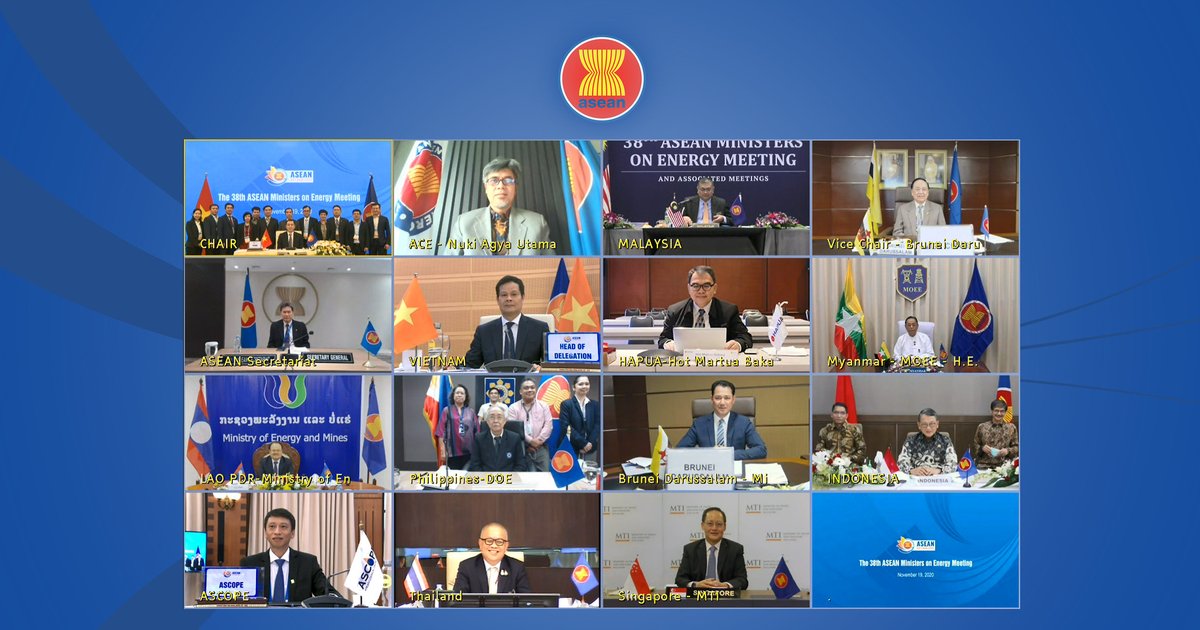
Amid escalating tensions in the Middle East, the energy ministers of the Association of Southeast Asian Nations (ASEAN) have called for urgent and coordinated actions to ensure regional energy security. This came during a special virtual meeting held on Monday, where the ministers agreed on the importance of enhancing cooperation and rapid responses to crises.
Many Southeast Asian countries have been significantly affected by the energy crisis resulting from the closure of the Strait of Hormuz due to the ongoing conflict in Iran, prompting governments to take measures to ration energy supplies and diversify their sources. In a joint statement, the ministers emphasized that any disruptions in major energy transportation routes could significantly impact global oil supply chains, especially as ASEAN is considered an energy-importing region.
Details of the Meeting
During the meeting, the ministers discussed the potential impact of developments in the Middle East on global oil and gas markets, including price volatility and supply uncertainty. They pointed out that the increasing demand for energy in ASEAN could heighten the region's exposure to shocks, making it essential to maintain stable and affordable energy supplies.
The ministers also stressed the importance of keeping maritime navigation routes safe and open to ensure a continuous flow of energy supplies. They discussed the need to enhance regional preparedness and response mechanisms, including activating the ASEAN Framework Agreement on Oil Security.
Background & Context
Historically, the Middle East has been a major hub for oil production, making it a vital focal point for global energy security. With rising political tensions and armed conflicts in the region, it has become imperative for energy-importing countries like those in ASEAN to take proactive steps to ensure the stability of their supplies.
The challenges faced by ASEAN countries are increasing in light of climate change and the transition to renewable energy sources. Therefore, enhancing regional cooperation in the energy sector is crucial to address these challenges effectively.
Impact & Consequences
Developments in the Middle East have profound implications for global markets, as they can lead to rising oil prices and increased uncertainty in supplies. This could directly affect the economies of ASEAN countries, which heavily rely on energy imports.
Under these circumstances, it becomes essential to strengthen cooperation among ASEAN member states to reduce reliance on traditional energy sources and promote the use of renewable energy. There must also be a swift and effective response to the challenges that may arise due to changes in global markets.
Regional Significance
Arab countries are directly affected by developments in the Middle East, as many of these nations are among the largest oil producers. Therefore, any disruptions in this region could impact global oil prices and, consequently, the economies of Arab countries.
It is important for Arab nations to collaborate with ASEAN countries in energy sectors to ensure market stability and enhance energy security in the region. Cooperation in areas such as renewable energy and modern technology can contribute to achieving sustainable development goals.