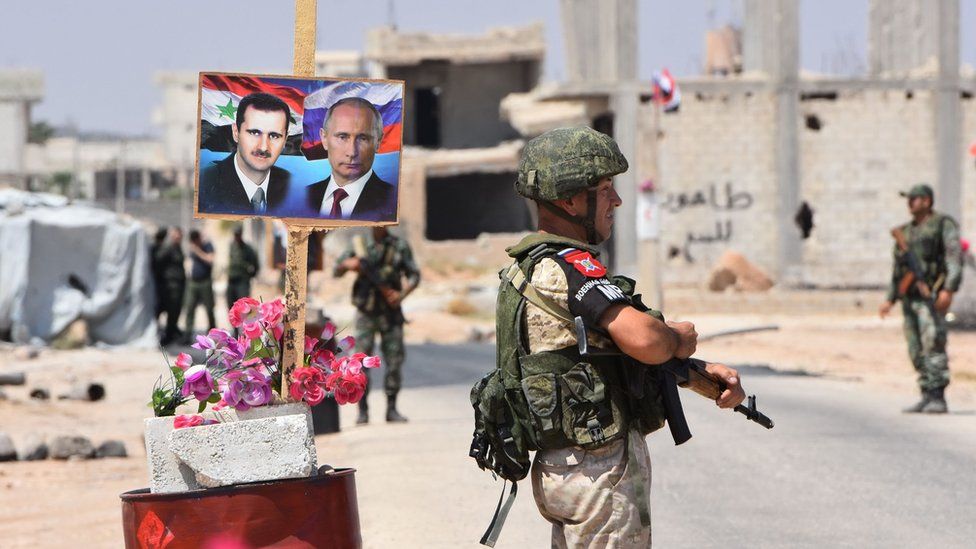
Despite the ongoing civil war that has ravaged Syria for more than a decade, President Bashar al-Assad has managed to hold onto power for over twenty years. This is largely due to the military and political support provided by Russia and Iran, while the West appears to have abandoned Syria during critical times.
This situation serves as a clear example of how international powers influence internal conflicts, allowing Assad to remain in power despite significant challenges. The Russian support, which manifested in direct military intervention in 2015, played a crucial role in bolstering Assad's position, while Iran provided ongoing support through its militias spread across the country.
Details of the Situation
Since the onset of the conflict in 2011, Syria has witnessed radical shifts in its political and military landscape. While there were hopes for regime change, Assad managed to exploit the chaos to strengthen his authority. External interventions, particularly from Russia and Iran, have significantly altered the course of events in his favor.
Despite Western attempts to impose sanctions on the Syrian regime, these measures have not yielded the desired results. On the contrary, it seems that Assad has leveraged this pressure to enhance his relationships with his allies, further isolating Western nations from influencing the Syrian issue.
Background & Context
Historically, Syria has been under Assad's rule since 2000, when Bashar al-Assad took power following the death of his father, Hafez al-Assad. The country has faced numerous crises during his tenure, beginning with popular protests in 2011 that escalated into armed conflict. As violence surged, external powers intervened, complicating the situation further.
Initially perceived as a weak leader, Assad managed to overcome challenges thanks to external support. This backing was not only military but also included economic and political assistance, enabling him to regain control over vast areas of the country.
Impact & Consequences
The repercussions of the Syrian conflict continue to affect the entire region. The conflict has not only impacted Syria but also led to a flow of refugees into neighboring countries and Europe, creating humanitarian and economic crises. Furthermore, Assad's continued rule reflects the failure of Western policies to achieve their objectives in the region.
The Syrian case serves as a lesson in how major powers can influence internal disputes, where external interventions may lead to unexpected outcomes. This raises questions about the effectiveness of Western strategies in addressing crises in the Middle East.
Regional Significance
The Syrian experience is a model for many Arab countries that have witnessed protests and revolutions. Internal conflicts in other nations may be influenced by the Syrian experiences, making it essential to understand the regional and international dynamics.
Assad's continued rule may encourage some regimes in the region to adopt similar stances, complicating democratic change efforts in Arab countries. Additionally, the economic and social impact of the Syrian conflict will continue to affect relations between Arab states.
In conclusion, the question of Syria's future remains open, as the challenges facing the country persist while Assad continues to govern with external support. These dynamics will remain a focal point for observers in the region and the world.