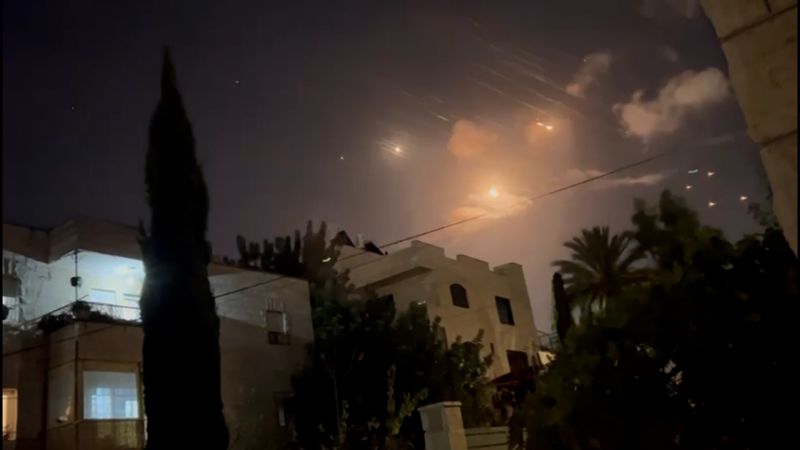
Concerns are rising about Iran's capability to persist in launching missiles towards Israel and Gulf states. Five analysts have evaluated this capacity amid escalating tensions in the region. Reports indicate that Iran may be capable of executing repeated attacks, but the question remains: how long can it continue to do so?
The estimates provided by the analysts include several factors, such as the current stockpile of missiles, the ability to manufacture more, and the logistical support it may receive from its allies. Additionally, the geopolitical situation in the region plays a crucial role in determining Iran's ability to carry out its attacks.
Details of the Situation
In recent years, the region has witnessed a rise in tensions between Iran on one side and Israel and the Gulf states on the other. Iran has utilized missiles as a key tool in its military strategy, launching several missiles at targets in Israel, which has provoked strong reactions from the Israeli side. Analysts point out that Iran may be able to continue these attacks, but this depends on several factors, including its ability to maintain its missile stockpile.
Estimates suggest that Iran possesses a variety of missiles, including long-range missiles, which give it the capability to target objectives deep within Israeli territory. However, maintaining these capabilities requires significant resources, along with the ability to manufacture and continuously develop new technologies.
Background & Context
Historically, relations between Iran and Israel have been tense, with Iran considering Israel its arch-enemy. Since the Islamic Revolution in 1979, Iran has adopted an antagonistic policy towards Israel, viewing its support for armed groups in the region as part of its strategy to confront Israel. Gulf states, feeling threatened by Iran's increasing influence, may also be susceptible to Iranian attacks, complicating the situation in the region.
In recent years, Iran has increased its support for armed groups in Iraq, Syria, and Lebanon, reflecting its strategy of using proxies to strike at the interests of its adversaries. This tactic may enhance its ability to carry out attacks without the need to deploy its military forces directly.
Impact & Consequences
Iran's ability to continue launching missiles could escalate tensions in the region, potentially prompting military responses from Israel and the Gulf states. This escalation could lead to a broader conflict, threatening regional stability and impacting the global economy, especially given the reliance on oil and gas from the Gulf region.
Furthermore, the continuation of these attacks may push Western countries to reassess their strategies towards Iran, potentially leading to new sanctions or increased military support for allied countries in the region. This situation could complicate international relations in the area and affect regional security.
Regional Significance
Arab countries, particularly those in the Gulf, are on high alert due to ongoing Iranian threats. The continuation of Iranian attacks could directly impact the national security of these countries, prompting them to bolster their military capabilities and enhance security cooperation with Western nations. Additionally, the situation may affect foreign investments in the region, as companies may hesitate to invest in areas experiencing security tensions.
In conclusion, the question of Iran's ability to continue launching missiles remains open, but it is certain that the increasing tensions in the region will continue to affect security and stability in the Middle East.