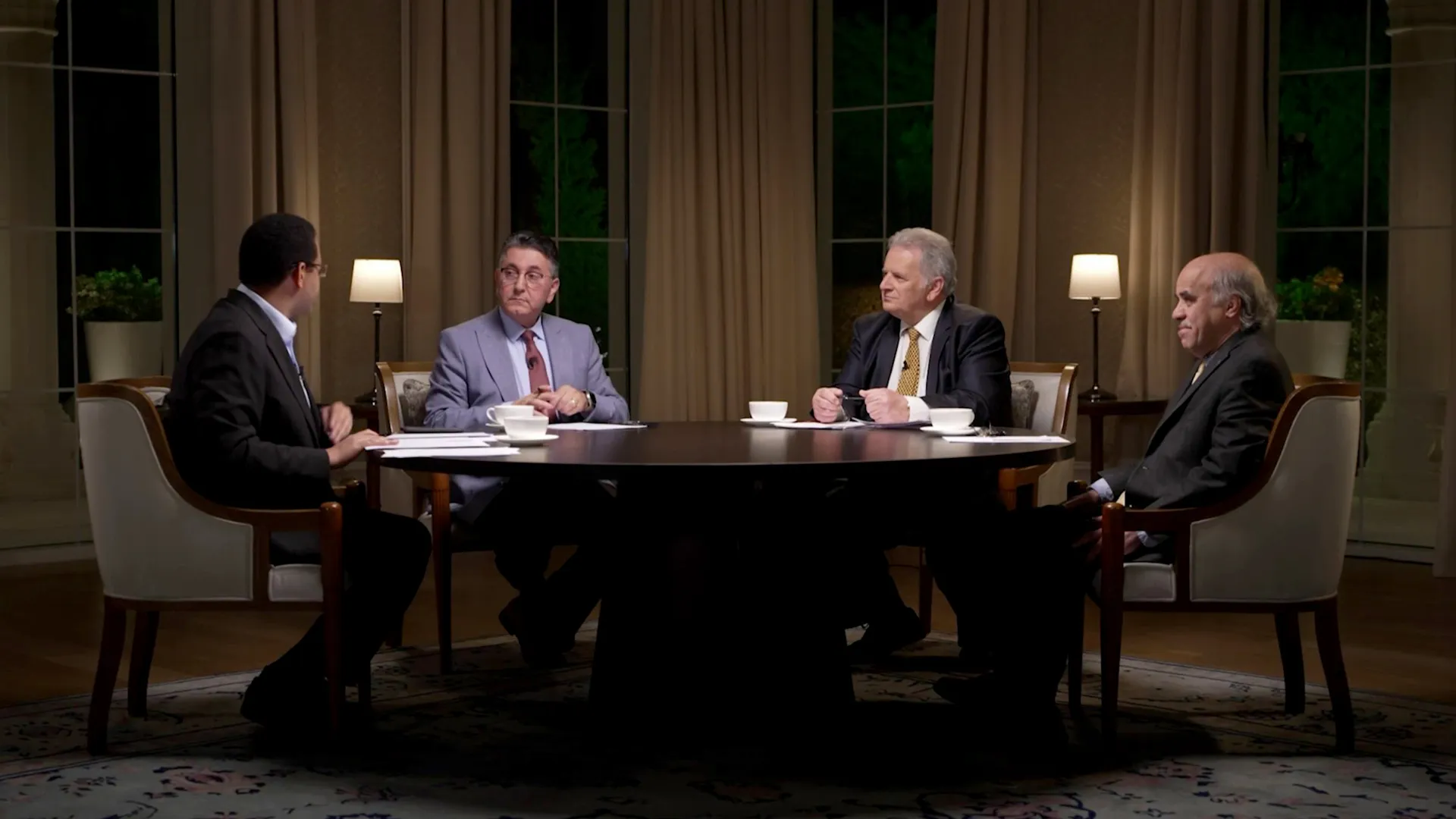
NATO is currently at a critical juncture that may reshape its relationship between the United States and European nations, as disagreements over reliance on the American security umbrella intensify. In a recent episode of the program "Understanding Attempts" aired on Al Jazeera, these issues were discussed in the context of rising American isolationism and the implications of the Ukrainian war.
Osman Ay Farah opened the discussion by questioning the transformations NATO has undergone since its establishment in 1949. He pointed out that the goal set by Lord Ismay, the first Secretary General of the alliance, is now under deep review. With the expansion of NATO to 32 countries, questions arise about whether it still serves as a framework for collective defense or merely as a tool for American dominance.
Event Details
Brigadier General Hassan Jouni provided a historical overview of the nature of the alliance, explaining that NATO was founded as a military pact aimed at deterring the Soviet Union and preventing its expansion into Eastern Europe after World War II. The Warsaw Pact was later established as a direct reaction to the formation of NATO, creating a balance during the Cold War.
Although the military aspect remained central to the alliance, political and strategic dimensions later intertwined. Jouni emphasized that Article 5, concerning collective defense, is considered the "spirit of the alliance," meaning that any attack on a member state is an attack on all members. However, the application of this article depends on the political assessments of each country and its specific circumstances.
Background & Context
The American influence within NATO is based on military and financial superiority, with the United States being the primary power and funding the majority of NATO's budget. However, the presidency of former President Donald Trump created "cracks" within the alliance, weakening Washington's ability to impose its vision on European allies.
Recent European stances, particularly during tensions related to Iran, have shown a degree of "rebellion" against American dominance. Several European countries have refused to engage in escalation projects that Washington sought to rally the alliance behind, reflecting the increasing calls for European defense independence.
Impact & Consequences
Mohamed Al-Sharqawi, a conflict resolution professor, argues that NATO has not been solely military from the beginning; it also carries political and cultural dimensions linked to defending a Western way of life against the Soviet bloc. The establishment of NATO coincided with the Marshall Plan for European reconstruction, highlighting the alliance's significance in the historical context.
With the rise of Trump, the debate within Europe regarding the future of the Atlantic partnership was reignited, especially as Washington adopted a narrative that considers European security a burden on the United States. Europeans have begun contemplating the creation of an independent defense system and allocating specific budgets for defense research.
Regional Significance
The Russian-Ukrainian war has revealed the depth of disagreements within the alliance, as NATO's eastward expansion has been one of the main reasons for tensions with Moscow. The Ukrainian crisis reflects the failure of old understandings between the West and Russia regarding the limits of NATO's influence, which may affect stability in the Arab region.
In conclusion, the guests' opinions varied regarding the future of the alliance. While Brigadier General Hassan Jouni believes that NATO will remain intact, Al-Sharqawi sees the alliance entering a phase of gradual reshaping. Barakat, on the other hand, ruled out the collapse of NATO, asserting that shared interests make its continuation a necessity for both parties.