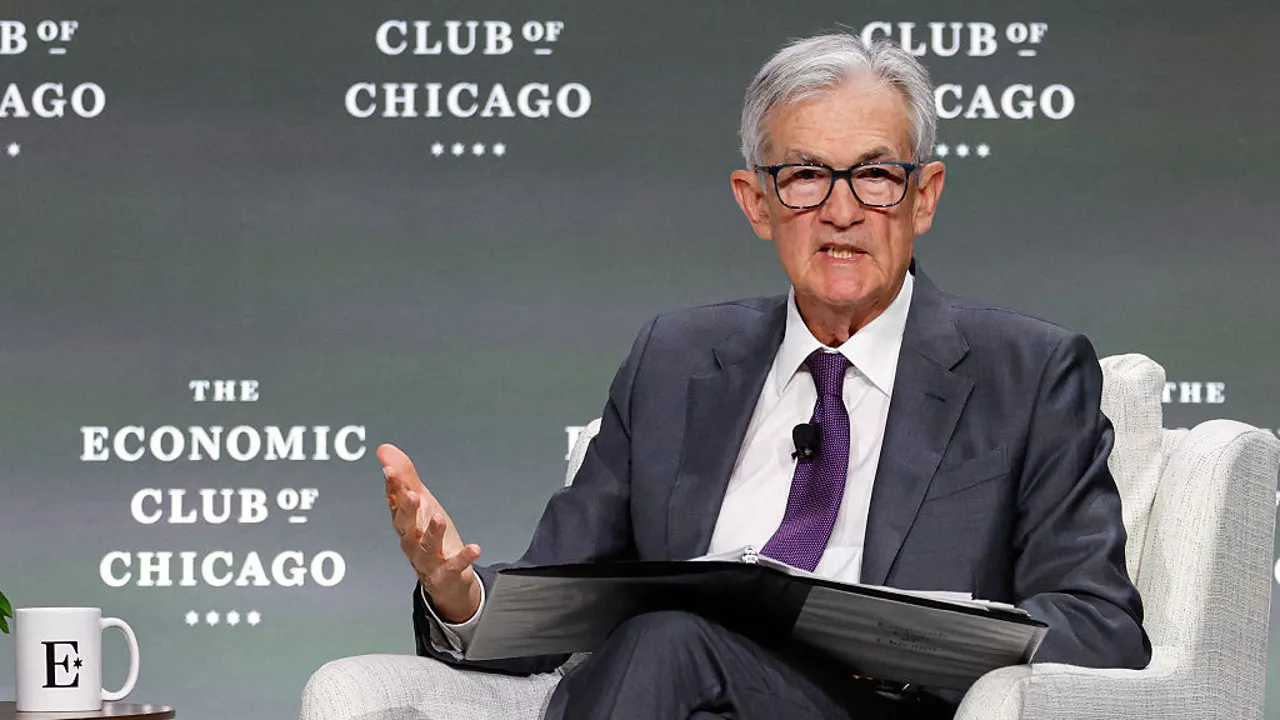
Federal Reserve Chairman Jerome Powell stated that it is still too early to determine the potential economic impact of the war with Iran. This statement was made during an academic event at Harvard University, where he pointed out that the Federal Reserve's decisions regarding interest rates primarily affect demand in the economy, rather than supply.
Powell explained that the rise in oil prices due to geopolitical tensions, such as the war with Iran, represents a supply shock that could affect inflation expectations. He emphasized the need to monitor these developments closely, as any significant increase in oil prices could lead to inflationary pressures impacting both the U.S. and global economies.
Event Details
During his talk, Powell clarified that the Federal Reserve focuses on managing inflation and achieving price stability, but global events such as military conflicts can complicate these efforts. He noted that the impact of the war with Iran may take a long time to clearly manifest in economic data.
He also added that the Federal Reserve is closely monitoring developments in the oil market, as any sudden spike in prices could affect consumers' and businesses' spending capabilities, potentially leading to a slowdown in economic growth.
Background & Context
Historically, relations between the United States and Iran have been tense, with the region experiencing numerous armed conflicts and political tensions. A war with Iran could escalate situations in the Middle East, impacting global markets, particularly oil markets.
In recent years, oil prices have experienced significant fluctuations due to geopolitical events, with prices sharply rising at times due to regional tensions. These events place additional pressures on the global economy, which is still recovering from the impacts of the COVID-19 pandemic.
Impact & Consequences
The war with Iran is expected to affect the global economy in multiple ways. First, rising oil prices may lead to increased transportation and production costs, which will reflect on the prices of goods and services. Second, military tensions could increase uncertainty in the markets, potentially affecting investments and business activities.
Moreover, the war could lead to heightened inflationary pressures, which might prompt the Federal Reserve to make more cautious decisions regarding interest rates. Under these circumstances, consumers may find themselves in a difficult position, facing rising living costs while economic growth slows.
Regional Significance
Considering the situation in the Arab region, the war with Iran could exacerbate economic and political crises in countries such as Iraq, Syria, and Lebanon. These countries are already facing significant economic challenges, and any escalation in conflict could increase the pressures on them.
Additionally, rising oil prices may have a dual impact on oil-producing Arab countries, as it could increase revenues but also lead to heightened internal and external tensions. Ultimately, the current situation requires careful monitoring by policymakers in the region.