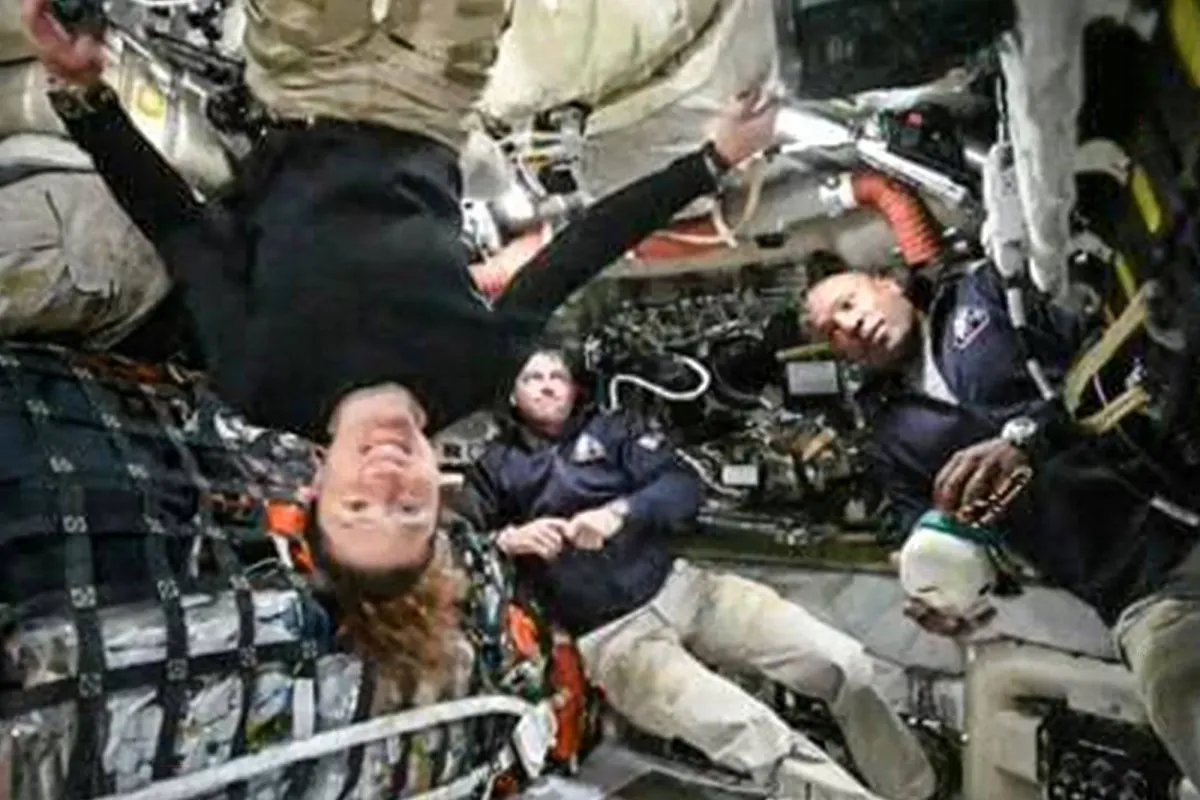
The four astronauts participating in the Artemis 2 mission have reached the halfway point between Earth and the Moon, with their spacecraft, Orion, continuing to approach the Moon in preparation for orbiting it in the coming days, according to the NASA.
Data shows that the Orion spacecraft is now 219,000 kilometers from Earth, needing to cover a similar distance to reach the vicinity of the Moon. NASA announced via its official social media accounts on Friday evening (Saturday morning in the Middle East) stating, "We are now halfway there."
Details of the Event
The Artemis 2 mission is part of a broader program for space exploration, aiming to return humans to the Moon by 2024. This mission represents a critical step towards achieving the long-term goal of sending astronauts to Mars. The current flight is the second in a series of missions designed to develop new technologies and explore deep space.
The four astronauts involved in this mission are: Jonathan King, Alyssa Alton, David Kraft, and Sarah Johnson. They have been carefully selected based on their diverse expertise and skills in various fields, including engineering, medicine, and science.
Background & Context
The history of space exploration dates back decades, with the first human spaceflight occurring in 1961. Since then, humanity has made significant advancements in this field, including landing on the Moon in 1969. The Artemis program represents a strong return for the United States to lunar exploration after decades of hiatus.
Through this program, NASA seeks to enhance international cooperation in space, with many countries participating in the development of the necessary technologies and equipment for these missions. There is also a growing interest from the private sector in space exploration, opening new avenues for collaboration and investment in this field.
Impact & Consequences
The Artemis 2 mission is a crucial step towards achieving NASA's ambitious goals, reflecting the United States' commitment to leadership in space exploration. The success of this mission could bolster the U.S.'s status as a leading power in space and encourage further investments in this sector.
Additionally, this journey may pave the way for more future missions to the Moon and Mars, contributing to the development of technologies necessary to support human life in space. Progress in this area could have positive impacts on science and technology across various fields, including communications and medicine.
Regional Significance
While the Artemis 2 mission focuses on the Moon, it has potential implications for the Arab region. In recent years, Arab countries have begun exploring space, launching several space projects, such as the UAE's Mars exploration initiative.
Successes like Artemis 2 could inspire Arab nations to invest more in space programs, potentially leading to the development of new technologies and enhancing regional and international collaboration in this field. There is also an opportunity to strengthen education and scientific research in space and related sciences.
In conclusion, the Artemis 2 mission represents a milestone in the history of space exploration, opening new horizons for international cooperation and scientific advancement. The success of this mission could have far-reaching effects on humanity as a whole, and particularly on Arab countries.