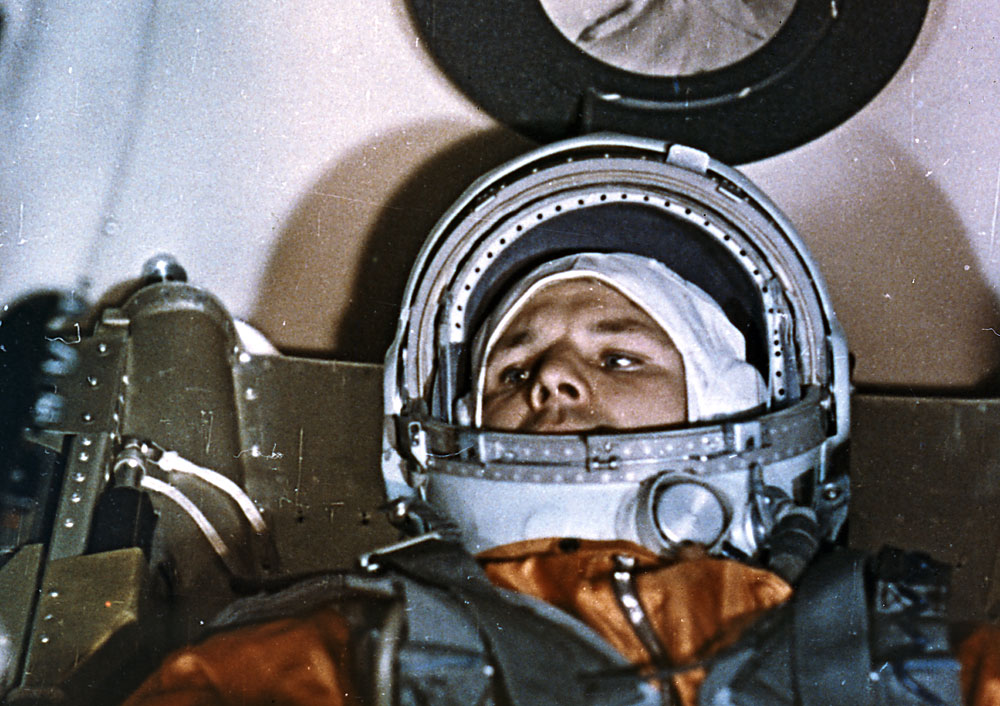
On this day, humanity's dream of venturing into space was realized with the first human journey to outer space. This achievement marked the beginning of a new era of discoveries and technological advancements.
The history of space exploration began in 1961 when the Soviet Union launched astronaut Yuri Gagarin on a historic journey around the Earth. This flight represented a turning point in human history, demonstrating humanity's ability to transcend the limits of its planet. Gagarin, who became a symbol of hope and ambition, showed the world that space was not as distant as previously thought.
Details of the Event
The Vostok 1 spacecraft, carrying Gagarin, was launched on April 12, 1961. The flight lasted approximately 108 minutes, orbiting the Earth once before returning safely. This historic moment was the culmination of tremendous scientific efforts, as new technologies were developed in engineering and physics.
Following this flight, nations began to race in the field of space exploration, leading to the development of advanced space programs. The United States, for instance, launched the Apollo program, achieving the milestone of landing on the Moon in 1969. These achievements were not merely scientific victories but also embodiments of the human spirit in the pursuit of knowledge and discovery.
Background & Context
Before Gagarin's launch, there were numerous attempts to explore space, most of which were experimental. The Cold War between the United States and the Soviet Union drove both sides to accelerate their efforts in space. This competition extended beyond military domains into science and technology.
The NASA agency was established in the United States in 1958, beginning the development of ambitious space programs. Meanwhile, the Soviet Union made significant progress in sending satellites, such as Sputnik 1, launched in 1957. These events marked the beginning of the space age, where space became a new arena for competition among superpowers.
Impact & Consequences
Gagarin's historic flight not only influenced global politics but also had a profound impact on society. This journey inspired generations of scientists and engineers, leading to the development of new fields such as space science and aerospace engineering. It also contributed to enhancing education in science and technology.
Moreover, these achievements led to the development of new technologies with applications on Earth, such as improved communications and navigation. They also fostered international cooperation in space, with countries beginning to collaborate on joint projects like the International Space Station.
Regional Significance
In the Arab world, there have been attempts to explore space, with some countries launching their own space programs. For example, the United Arab Emirates launched the Hope Probe to Mars in 2020, reflecting Arab ambition in the field of space. These achievements enhance the status of Arab countries on the global stage and open new avenues for cooperation in science and technology.
In conclusion, the memory of humanity's journey into space remains a symbol of hope and ambition. This historic achievement is not just a scientific event; it embodies human will to transcend boundaries and strive for knowledge. As space exploration continues, the question remains: what is the next step for humanity in this vast field?