The Regional Climate Change Center (RCCC) has announced the latest climate indicators related to the El Niño phenomenon, highlighting forecasts of temperatures rising above normal levels in the coming months. These predictions, issued by the National Center of Meteorology (NCM) and RCCC, point to expected climatic impacts on the kingdom during the fall of 2026, including higher temperatures and increased rainfall chances in certain regions.
Currently, the El Niño state is neutral, with a Niño 3.4 reading recorded on May 5, 2026, at 0.39 degrees Celsius, while the neutral range fluctuates between -0.80 degrees Celsius and +0.80 degrees Celsius. It is anticipated that anomalies in sea surface temperatures in the Niño 3.4 region will exceed 0.8 degrees Celsius. However, according to the National Center of Meteorology and RCCC, there is an increasing likelihood of El Niño conditions developing between May and October.
Forecast Details
The forecasts predict that temperatures will rise in May to above 1.1 degrees Celsius, in June to above 1.4 degrees Celsius, in July to over 1.8 degrees Celsius, in August to 2.3 degrees Celsius, in September to 2.5 degrees Celsius, and finally in October to 2.8 degrees Celsius. In addition to rising temperatures, rainfall is expected to impact several areas in the kingdom.
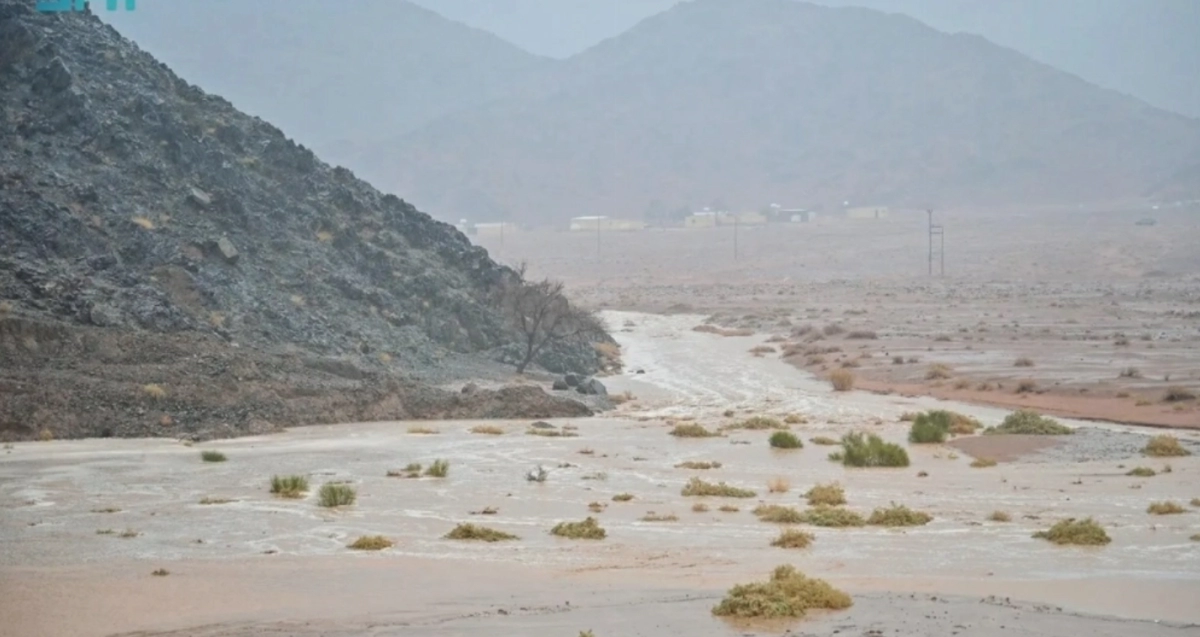
Predictions indicate that western Saudi Arabia will face heightened flood risks during the upcoming fall season (September, October, and November). Rainfall effects are also expected to be felt in central Saudi Arabia during the next rainy season (2026-2027). Meanwhile, rainfall amounts in the southwestern highlands may exceed normal levels during the upcoming fall season (2026).
Background & Context
The El Niño phenomenon is part of the El Niño-Southern Oscillation (ENSO) cycle, which affects weather and climate patterns worldwide. Historically, Saudi Arabia has experienced significant impacts from this phenomenon, resulting in notable changes in temperature and rainfall. In recent years, climate change has played a major role in exacerbating these phenomena, necessitating greater attention from stakeholders.
Ongoing climate changes in the region require close monitoring, as weather forecasts are often unstable, especially during the spring transition period (February-May). Therefore, the importance of continuous monitoring of El Niño developments is increasing, particularly in light of global climate changes.
Impact & Consequences
Studies predict that the El Niño phenomenon will have negative impacts on agriculture and water resources in Saudi Arabia, potentially affecting food security. Additionally, rising temperatures may increase energy consumption, placing further pressure on the country's energy infrastructure. It is crucial for the government to take proactive measures to address these challenges.
Moreover, potential flooding in western regions could lead to property and infrastructure damage, necessitating early preparations by local authorities. Effective emergency plans must be in place to mitigate potential risks.
Regional Significance
The El Niño phenomenon affects many Arab countries, potentially causing climatic changes that impact agriculture and water resources. In countries like Egypt and Jordan, climate changes may pose additional challenges in managing water resources. Therefore, regional cooperation in water management and adaptation to climate changes becomes an urgent necessity.
In conclusion, the current situation requires significant attention from all stakeholders, as climate changes represent a global challenge that necessitates a collective response.