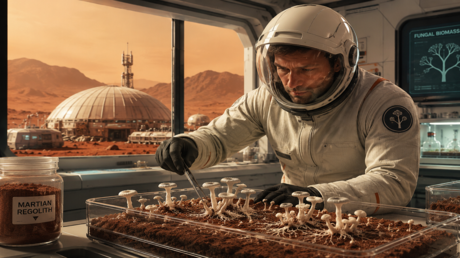
In a significant scientific advancement, researchers have confirmed that beneficial fungi possess the ability to modify the chemical composition of Martian soil, opening new avenues for plant growth on the Red Planet. This discovery is a pivotal key towards achieving the long-held dream of colonizing Mars, which has been a goal for many scientists and explorers.
Studies indicate that fungi play a vital role in enhancing soil properties, as they can convert unusable nutrients into forms that plants can utilize. This biological interaction could contribute to creating a suitable agricultural environment on Mars, thereby enhancing the feasibility of establishing human colonies there.
Details of the Research
Scientists conducted experiments on samples of Martian soil, introducing specific types of fungi. The results showed that these fungi are capable of altering the chemical structure of the soil, making it more conducive to plant growth. This development is an important step towards achieving food self-sufficiency in any future colonies on Mars.
This research is part of broader efforts aimed at exploring the possibility of life on other planets. Previous studies have shown that fungi can survive in harsh conditions, making them ideal candidates for supporting life in unfamiliar environments.
Background & Context
The idea of colonizing Mars is not new; it has been proposed for decades, but challenges related to securing food and water have always been a major hurdle. In recent years, investments in space research have increased, leading to significant advancements in our understanding of various planetary environments.
Fungi are an essential part of the ecosystem on Earth, playing a crucial role in decomposing organic matter and supporting plant growth. Utilizing these microorganisms in space exploration could change our perspective on life on other planets.
Impact & Consequences
If fungi prove effective in preparing Martian soil, this could accelerate plans for human colonization of the planet. This discovery may contribute to the development of new agricultural techniques in space, paving the way for future exploration projects.
Moreover, this research could have far-reaching implications for how we approach agriculture on Earth. Techniques derived from these studies may help improve agricultural productivity in harsh environments on our planet.
Regional Significance
Arab countries are among those interested in space and modern technology fields. This discovery could enhance Arab cooperation in scientific research and space exploration. Additionally, the development of new agricultural technologies may positively impact food security in the region.
It is crucial for Arab nations to invest in scientific research and technology, as these fields could be key to achieving sustainable development and enhancing competitiveness in the global market.
The discovery of fungi's ability to improve Martian soil represents an important step towards realizing the dream of colonizing the Red Planet. As research continues, we may soon witness new developments in this field, opening unprecedented horizons for humanity.