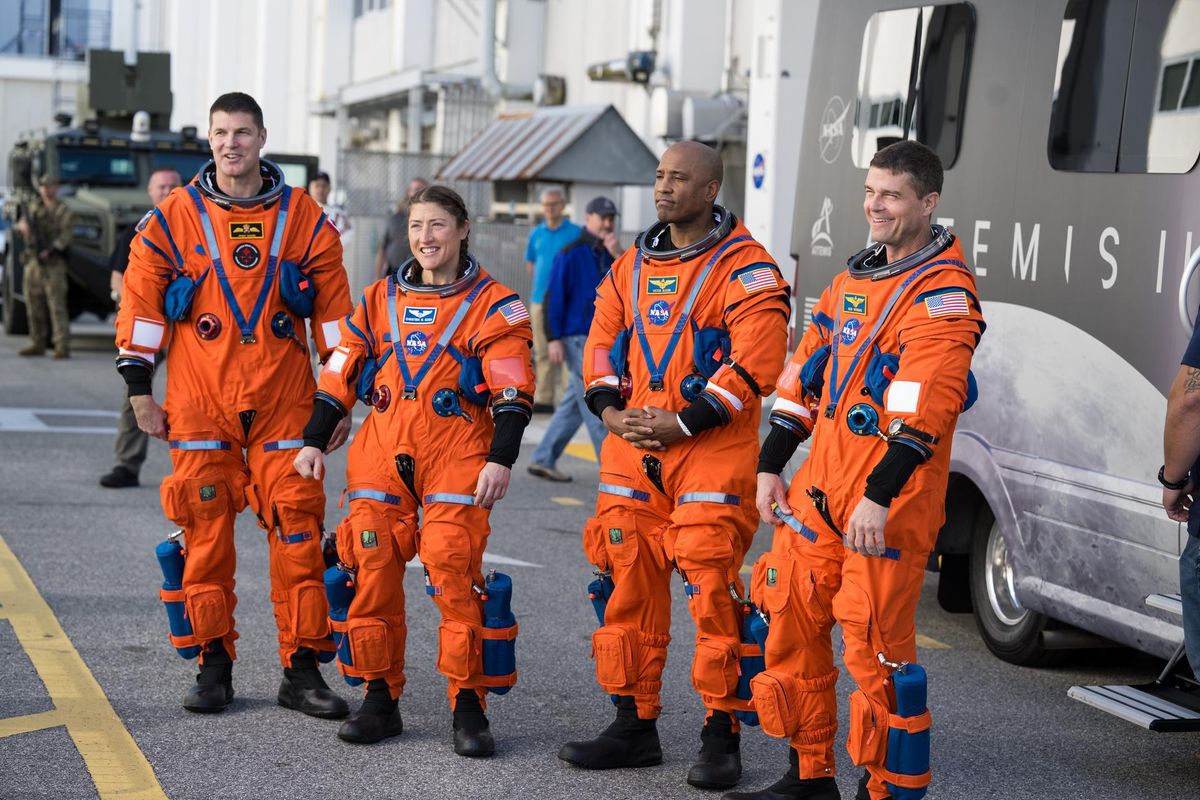
Astronauts orbiting the moon as part of the Artemis 2 mission are experiencing a lifestyle that closely resembles that of people on Earth. Despite being in space, they enjoy meals like pancakes and couscous, take pictures with their mobile phones, and deal with email issues, in addition to fixing a malfunctioning toilet.
This mission is part of the American space program aimed at returning to the moon and exploring it more deeply. Reports have shown that life in space is not just a scientific adventure but also requires adaptation to new conditions and daily challenges.
Details of Daily Life in Space
While in space, astronauts follow a special diet that includes a variety of foods, with meals prepared in advance to be suitable for consumption in a microgravity environment. Although space is considered an unfamiliar place, the astronauts strive to maintain some of the daily habits they are used to on Earth.
The use of mobile phones in space reflects the technological advancements made, allowing astronauts to communicate with their families and friends, which alleviates feelings of loneliness. However, they face technical challenges such as email issues, adding another dimension to their space experience.
Background & Context
The Artemis 2 mission is part of NASA's efforts to explore the moon and is part of a broader program aimed at sending humans to Mars in the future. This program was announced as part of a new vision for space exploration, where countries are seeking to enhance their capabilities in this field.
Historically, space missions were limited to a few countries, but today, many nations and private companies are competing in this field, reflecting the importance of space as a vital area in the 21st century.
Impact & Consequences
This mission represents a significant step towards achieving larger goals in space exploration. The experiences of astronauts in Artemis 2 will contribute to understanding how to live and work in unfamiliar environments, which may assist in planning future missions to Mars.
Additionally, this mission enhances international cooperation in space, as many countries participate in research and technology related to space, contributing to the promotion of peace and understanding among nations.
Regional Significance
Efforts in space exploration hold particular importance for the Arab region, where many Arab countries are seeking to enhance their capabilities in this field. Some countries, like the United Arab Emirates, have launched their own space programs, reflecting their interest in technology and innovation.
The success of the Artemis 2 mission could inspire Arab nations to develop their own space programs, contributing to the enhancement of education and scientific research in the region.
In conclusion, the life of astronauts in the Artemis 2 mission reflects the challenges and opportunities humanity faces in space exploration. Understanding how to adapt to life in space can have far-reaching implications for the future of space exploration.