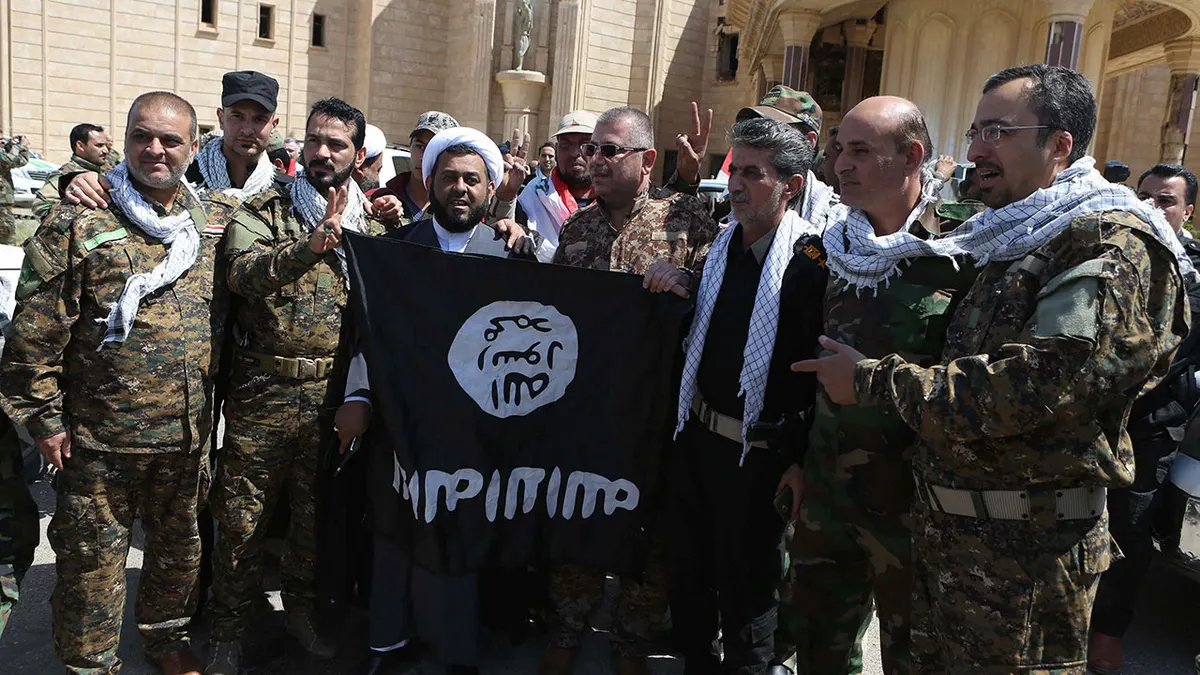
A bombing targeting a headquarters of the Popular Mobilization Forces in Kirkuk, northern Iraq, resulted in the deaths of three individuals and injuries to several others. This incident reflects the rising security tensions in the region.
The attack occurred on Saturday when an airstrike targeted the facility, which is considered one of the strategic sites for the Popular Mobilization Forces. Local sources reported the incident, confirming that the bombing caused significant damage to the building, in addition to the human casualties.
Details of the Incident
The Popular Mobilization Forces are part of the Iraqi security apparatus, formed in 2014 to confront ISIS. However, they face ongoing criticism from certain political and public circles, which view them as an armed force beyond control. The recent attack comes at a sensitive time, as the country is experiencing increasing political and security tensions.
The party responsible for the bombing has not yet been identified, but there are speculations that the attack may be linked to regional conflicts, especially with the rising tensions between Iran and the United States in the area. Reports indicate that the strike specifically targeted one of the centers used to coordinate military operations against armed groups.
Background & Context
Historically, Kirkuk has witnessed numerous conflicts, as it is considered a multi-ethnic and multicultural city, making it a point of tension between Arabs, Kurds, and Turkmen. After regaining control of the city from ISIS, Kirkuk became a hub for many military and security operations, leading to an increased military presence of the Popular Mobilization Forces.
In recent years, criticism directed at the Popular Mobilization Forces has increased, as they are perceived by some parties as a tool for Iranian influence in Iraq. This influence has raised concerns that military operations carried out by these forces could exacerbate the security situation in the country.
Impact & Consequences
This incident serves as a wake-up call regarding the security situation in Iraq, as it could potentially lead to a new escalation in conflicts between government forces and armed groups. It may also affect relations between Iraq and its neighbors, especially amid ongoing tensions between Iran and the United States.
There are growing fears that such incidents could worsen the humanitarian situation in the region, where civilians suffer from the consequences of ongoing conflicts. Human rights organizations have warned that such attacks could lead to mass displacement of local populations, increasing the burdens on the Iraqi government.
Regional Significance
This incident illustrates how Iraq remains a center for regional conflicts, where political and military interests intersect. The rising violence in Iraq can impact the stability of neighboring countries and increase tensions in the Middle East.
As Arab nations strive for stability, events like this highlight the significant challenges they face. The stability of Iraq is vital for peace and security in the region, and any escalation in violence could adversely affect neighboring countries.
In conclusion, the recent incident in Kirkuk serves as a stark reminder that Iraq continues to suffer from internal and external conflicts, and the efforts to achieve peace and stability still require international and regional support.