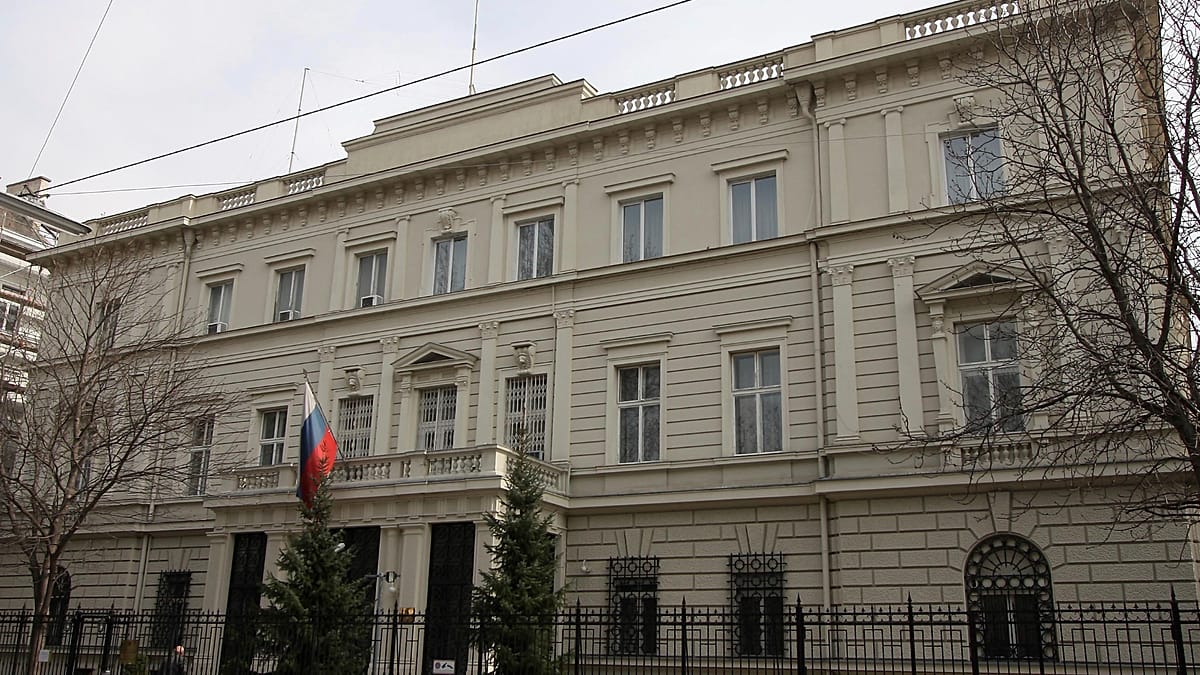
In a controversial move, Austria expelled three Russian diplomats last week, accusing them of using diplomatic cover to engage in espionage activities in the capital, Vienna. This decision is part of Austria's efforts to enhance its national security and combat foreign spying.
Austrian Foreign Minister Beate Meinl-Reisinger confirmed that Austria is adopting a stricter approach towards espionage activities, labeling it a "security issue." She explained that the Austrian government had clearly communicated its growing concerns regarding what has been termed the "forest of antennas" at the Russian mission.
Concerns Over Antenna Systems
The concerns particularly relate to large antenna systems and satellite dishes installed on Russian diplomatic buildings in Vienna, which are believed to be used for intercepting communications. Typically, embassies use antennas to secure communications with their governments; however, according to international law, any wireless transmission device must be installed and operated with the consent of the host country.
Reports have indicated that the satellite dishes on the Russian buildings in Vienna frequently move and reposition themselves, which is unusual behavior for systems used solely for diplomatic communication. Erik Mückl, an Austrian journalist, noted that one of the antenna systems at the Russian embassy indicates unusual directions, raising questions about its use.
Background & Context
Historically, Vienna has been a center for international espionage, given the presence of numerous international organizations such as the United Nations and the International Atomic Energy Agency. Previous reports, such as those published by Der Spiegel, have also accused American and British embassies in Europe of using surveillance systems on the rooftops of their buildings.
In 2013, the British embassy in Berlin faced accusations of establishing a "secret listening station" on the roof of the building. Recent investigations have shown that Russian embassies in countries like Poland and Belgium may also be equipped with specialized equipment for intercepting electronic communications.
Impact & Consequences
These events are seen as an indicator of rising tensions between Russia and European countries, with increasing concerns over espionage activities. Observers expect these developments to lead to further actions by European countries against Russian activities, potentially increasing Moscow's isolation on the international stage. Additionally, this issue may affect diplomatic relations between Austria and Russia, as Austria may take further steps to monitor Russian activities on its territory.
Regional Significance
The expulsion of the diplomats underscores the growing unease among European nations regarding Russian espionage efforts. As countries like Austria take a firmer stance, it may encourage other nations to reevaluate their diplomatic relations with Russia. This situation could have broader implications for regional security and international diplomacy.
In conclusion, Austria's decision to expel the Russian diplomats highlights the delicate balance of diplomatic relations in a world where espionage remains a critical concern. The actions taken by Austria may serve as a precedent for other nations facing similar challenges.