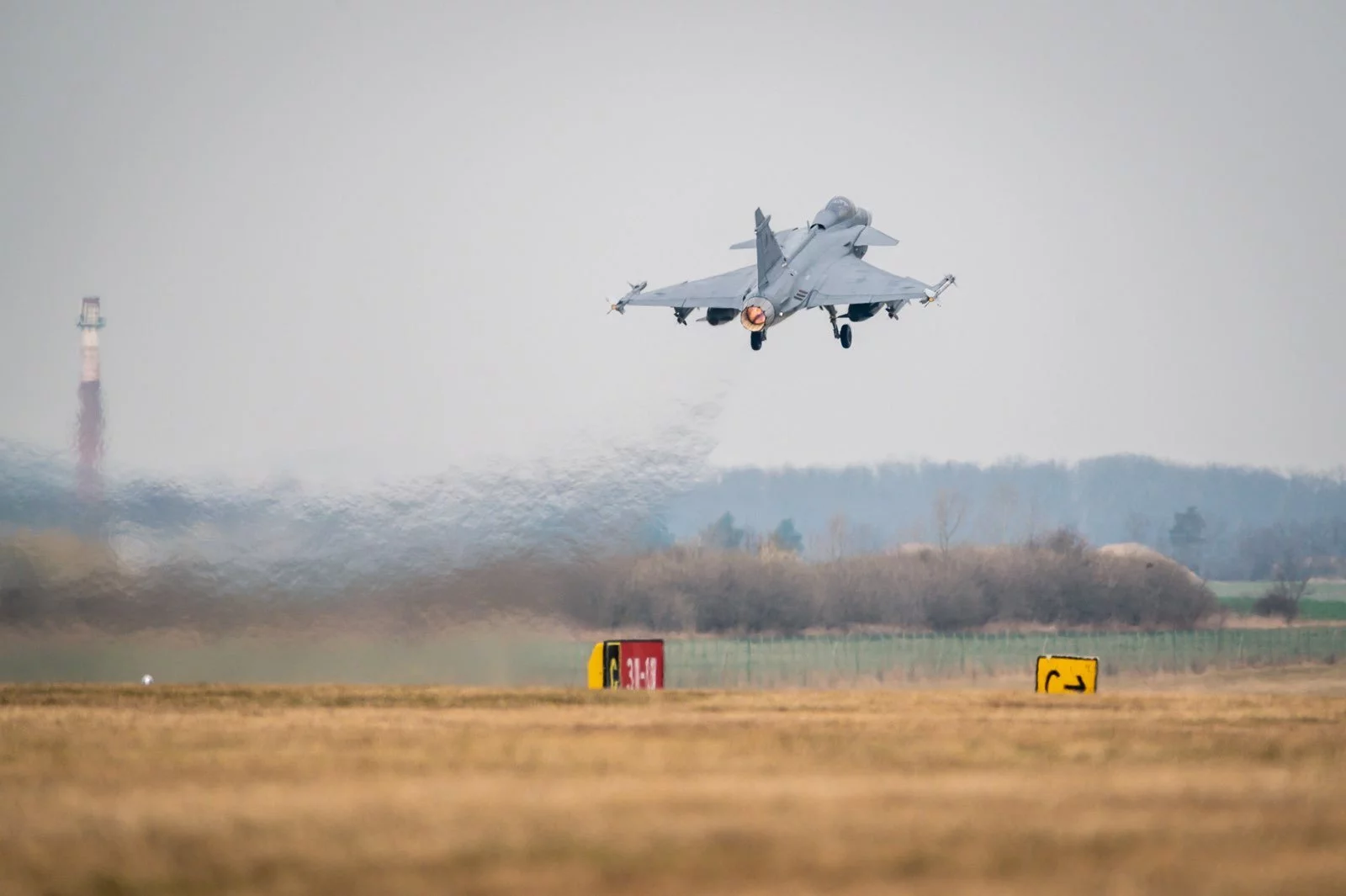
The Austrian government has announced its rejection of all U.S. requests regarding military aircraft overflights since the outbreak of the Iran War, reaffirming its adherence to the principle of neutrality that has long characterized its foreign policy. This stance reflects Austria's commitment to its historical principles of non-alignment in military conflicts, and it comes at a sensitive time when the region is witnessing escalating tensions.
In a related context, Britain is hosting talks aimed at forming an international coalition of countries to discuss ways to reopen the Strait of Hormuz, one of the world's most important maritime corridors. This strait is considered a vital artery for global oil trade, and any tension in this area could significantly impact the global economy.
Austrian Government's Position on Military Overflights
Austria, regarded as one of the European countries that has maintained a policy of neutrality for decades, has turned down U.S. requests that arose following the escalation of tensions in the Middle East. The Austrian government confirmed that this decision aligns with its commitment to the principles of neutrality and non-intervention in military conflicts.
This position also reflects Austria's concern over the repercussions of military conflicts on security and stability in Europe. The Austrian government hopes that this decision will contribute to enhancing peaceful dialogue among the concerned parties in the region.
Historical Context of Austria's Neutrality
Historically, Austria has followed a policy of neutrality since the end of World War II, being one of the countries that did not participate in NATO or any other military alliances. This policy has made Austria a center for dialogue and diplomacy on various international issues.
With the rising tensions in the Middle East, particularly after the outbreak of the Iran War, Austria has faced increasing pressure from some Western countries to participate in military alliances. However, the Austrian government has remained steadfast in its position, reflecting its independence in making political decisions.
Potential Consequences of Austria's Decision
Austria's refusal to allow U.S. military aircraft to transit its airspace may affect relations between Austria and the United States, as Washington might view this decision as a lack of cooperation in addressing security threats. Nevertheless, Austria hopes that this stance will enhance its role as a mediator in international issues.
On the European front, this decision could stimulate discussions about the neutrality policy in other European countries, especially amid increasing tensions in the region. It may also pave the way for other nations to adopt similar positions, potentially influencing geopolitical dynamics in Europe.
Implications for the Arab Region
The Middle East is one of the regions most affected by political and military transformations, and Austria's refusal to allow U.S. military aircraft overflights may send a message to Arab countries about the importance of neutrality in conflicts. This position could encourage some Arab nations to reassess their military relationships with major powers.
Furthermore, the ongoing tensions in the Strait of Hormuz could impact oil prices and global markets, prompting Arab countries to take proactive steps to protect their economic interests.
In conclusion, Austria's stance on U.S. military aircraft overflights reflects its commitment to neutrality and raises questions about the impact on international relations amid increasing tensions in the Middle East.