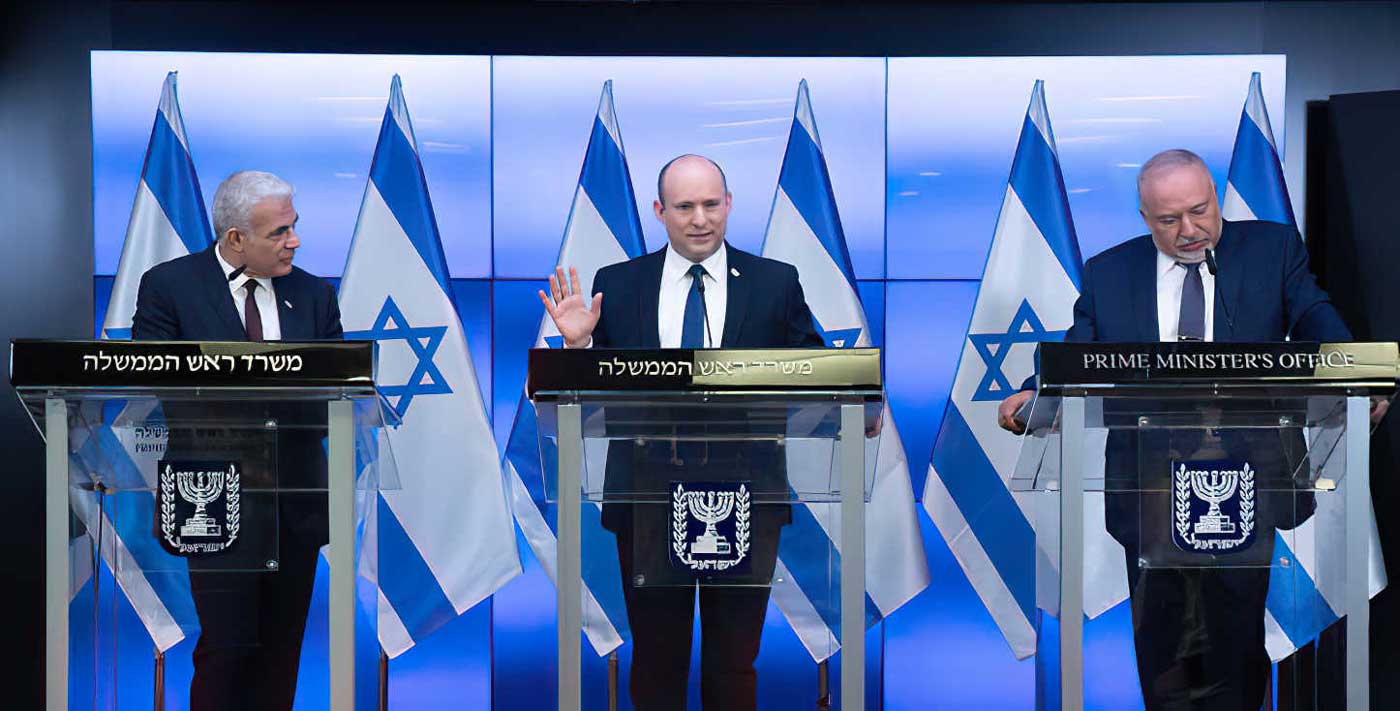
Naftali Bennett and Yair Lapid have declared their competition for a joint list, coinciding with a celebratory invitation to General Gadi Eisenkot. During the press conference, Bennett stated that "Arab parties are not Zionist," highlighting a new trend in Israeli politics towards Arabs.
This move comes at a sensitive time, as Arab parties were part of the previous government coalition. Bennett and Lapid expressed their readiness to welcome Eisenkot, while ignoring their former government partner, Mansour Abbas, head of the "United Arab List," reflecting a shift in political dynamics.
Event Details
At the press conference featuring Bennett and Lapid, the importance of forming a joint list was emphasized, with an invitation extended to Eisenkot to join them. However, the notable exclusion of Arab parties reflects an increasing trend towards enhancing Jewish identity in Israeli politics.
Bennett, who previously served as Prime Minister, pointed out that Arab parties do not align with the Zionist vision, indicating a clear disparity in political positions. This statement also reflects the rising tensions between Israeli parties and Arabs, who constitute a significant portion of the population in Israel.
Background & Context
Historically, Arab parties have been part of the Israeli political landscape, contributing to the formation of previous governments. However, current trends indicate a diminishing role for them in Israeli politics. Recent years have witnessed a rise in nationalist rhetoric, impacting the relationship between Arabs and Jews in Israel.
These developments come in the context of new elections that Israel may face, as Bennett and Lapid seek to bolster their political power through new alliances. This shift could have far-reaching implications for relations between Arabs and Jews in the country.
Impact & Consequences
The exclusion of Arab parties from political alliances may exacerbate tensions between the communities. This situation could negatively impact relations between Arabs and Jews, widening the political and social gap between the two sides.
Moreover, this trend may affect Arab participation in the political process, potentially leading to a decline in trust in the Israeli political system. Consequently, this step could have repercussions for internal stability in Israel.
Regional Significance
These developments suggest that Israeli politics may be heading towards greater rigidity towards Arabs, which could affect relations with neighboring Arab countries. Amid ongoing tensions, Arab nations may find themselves compelled to reassess their strategies towards Israel.
The exclusion of Arabs from the Israeli political scene could lead to increased discontent in the Arab world, potentially impacting peace efforts in the region. Ultimately, the question remains about how these dynamics will influence the future of Arab-Israeli relations.