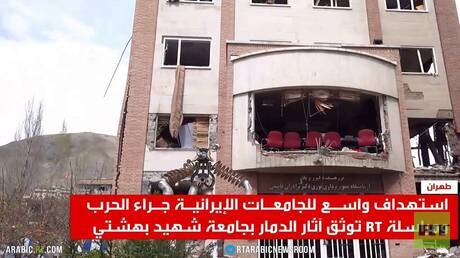
More than thirty Iranian universities have come under direct attack, depriving millions of students of their education. This military escalation occurs amid an ongoing war that significantly impacts the country's educational sector.
The bombardment has resulted in the destruction of several educational facilities, leading to the suspension of classes and scientific research at many universities. This tragic situation reflects the significant challenges faced by educational institutions in Iran, where students find themselves confronting harsh conditions that prevent them from obtaining the education they need.
Details of the Incident
According to reports, the bombardment targeted universities in various Iranian cities, resulting in the destruction of some buildings and damage to essential facilities. The universities that were attacked include prestigious institutions in Tehran and other cities, raising concerns about the future of higher education in the country.
This aggression comes at a sensitive time, as students are experiencing psychological and economic pressures due to the current situation. Many students and faculty members have expressed their discontent with these attacks, calling on the international community to intervene to protect their right to education.
Background & Context
Historically, Iran has witnessed numerous political and military crises that have affected education. Since the onset of the current conflict, the frequency of attacks on educational institutions has escalated, leading to a deterioration of the educational situation. Education is considered one of the fundamental pillars of development, and any assault on it represents a threat to the future of upcoming generations.
In recent years, there have been attempts to improve the quality of education in Iran, but these efforts face significant challenges due to political and economic conditions. The ongoing bombardment of universities reflects the instability the country is experiencing.
Impact & Consequences
Attacks on universities have negative repercussions on higher education in Iran, as students are unable to complete their studies or conduct scientific research. This situation may lead to a shortage of scientific and research competencies in the future, adversely affecting economic and social development.
Moreover, depriving students of education may lead to increased unemployment and poverty rates, exacerbating social tensions. Education is the key to progress, and any regression in it signifies a decline in all areas of life.
Regional Significance
The events in Iran have significant implications for the Arab region, as they could exacerbate political and economic crises. The continuation of the conflict in Iran may encourage the escalation of tensions in neighboring countries, increasing instability in the region.
Furthermore, the educational situation in Iran may affect academic cooperation between Arab countries and Iran, hindering the exchange of knowledge and experiences. Education is a bridge for communication between peoples, and any assault on it represents a threat to this communication.
In conclusion, the international community must act to protect educational institutions and ensure students' right to education. Education is a fundamental right and must be safeguarded from any assaults.