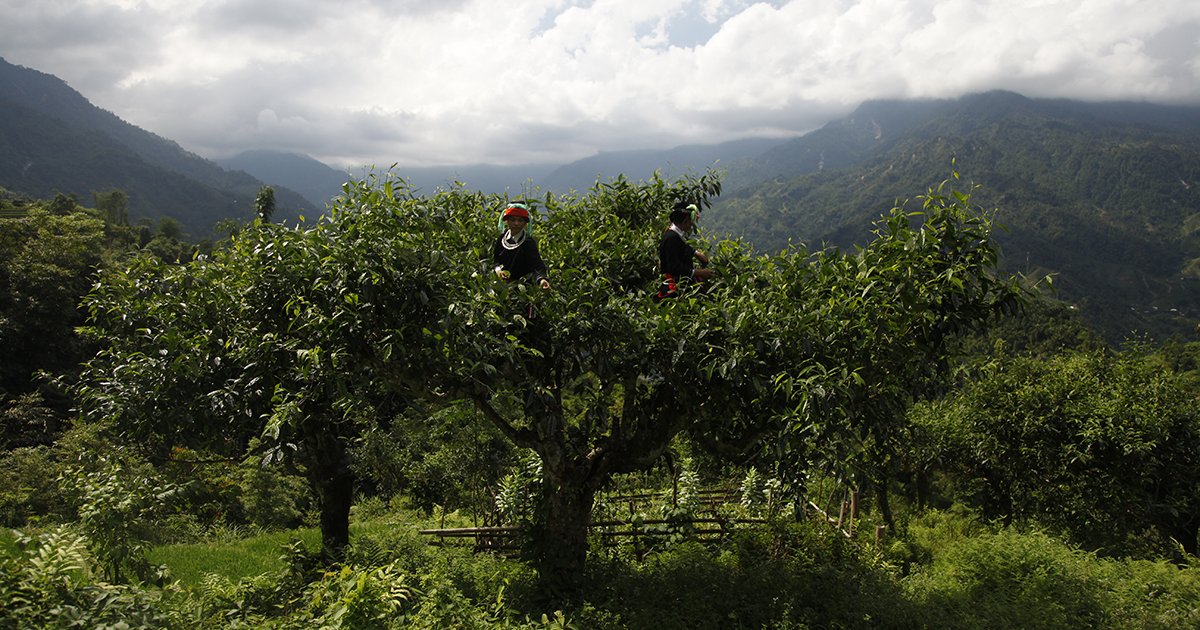
Mount Jingtian, regarded as a cultural symbol in China, has become an increasingly attractive tourist destination due to the integration of tea farming with tourism. The mountain boasts a historical reputation, having been praised by the famous Chinese poet Li Bai during the Tang Dynasty (618-907). In recent years, local authorities have leveraged the natural resources and unique cultural heritage of the mountain to enhance tourism.
Surrounding Mount Jingtian are tea plantations that span over 10,000 mu (approximately 666.67 hectares), making it one of the largest green tea production areas in China. As the tea harvesting season begins, tourists from across the country and around the world flock to enjoy a unique experience that combines the aroma of tea with the breathtaking mountain views.
Event Details
Local authorities aim to boost tourism by organizing events related to tea harvesting, where visitors can participate in the harvesting process and learn about tea cultivation techniques. These activities not only enhance the visitor experience but also contribute to supporting the local economy by providing new job opportunities.
The events also include guided tours of the tea farms, where visitors can learn about the history of tea and its significance in Chinese culture. Workshops are held to teach visitors how to prepare tea traditionally, adding a cultural and experiential dimension to the visit.
Background & Context
Tea is an integral part of Chinese culture and has played an important role in daily and social life throughout the ages. The history of tea cultivation in China dates back over 5,000 years, and the techniques for its cultivation and preparation have evolved over time. Mount Jingtian, with its unique geographical location, serves as a living example of how cultural heritage can be integrated with economic development.
In recent years, China has seen a growing interest in promoting rural tourism, with natural areas like Mount Jingtian being ideal destinations for tourists seeking authentic experiences away from major cities. This trend aligns with government efforts to promote sustainable tourism.
Impact & Consequences
Tourism at Mount Jingtian contributes to enhancing the local economy by providing new job opportunities and supporting small businesses. It also helps preserve cultural heritage by encouraging visitors to learn about tea cultivation traditions.
These initiatives serve as a model for other regions in China and around the world, where agriculture can be integrated with tourism to promote sustainable development. The success of Mount Jingtian may inspire other areas to effectively utilize their natural resources.
Regional Significance
Arab countries can benefit from the experience of Mount Jingtian in integrating agriculture with tourism. Many Arab nations possess rich natural and cultural areas that can be developed to enhance tourism. Additionally, developing agricultural tourism can contribute to supporting the local economy and creating new job opportunities.
In conclusion, Mount Jingtian demonstrates how cultural and natural heritage can enhance tourism and contribute to economic development. The integration of agriculture with tourism is an effective strategy that can benefit many regions around the world.