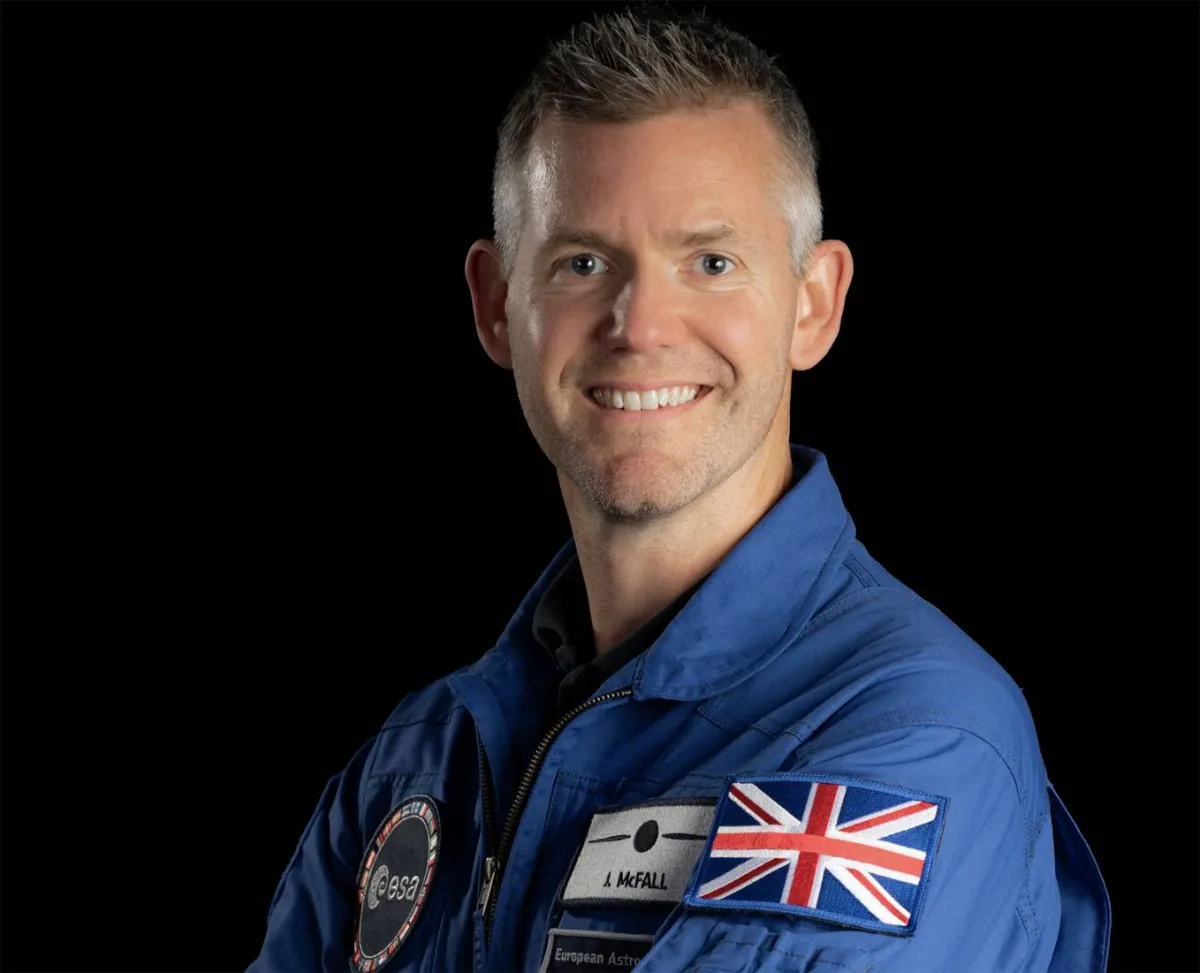
John McFall, a British surgeon and Paralympic champion, is poised to become the first physically disabled person to live in orbit following the UK government's signing of an agreement with an American company that is developing a small commercial space station. This initiative marks a significant advancement in space exploration, with McFall expected to participate in a mission to the proposed "Haven-1" space station in 2027.
McFall, who is a member of the European Space Agency (ESA) astronaut reserve, received approval to conduct activities in orbit last year. The "Haven-1" station, being constructed by the California-based startup "Fast," will be the size of a single-decker bus and accommodate four astronauts. The station features an interior design made of maple wood veneer and a dome window for viewing Earth, along with a laboratory for research in microgravity.
Mission Details
McFall stated from the European Astronaut Centre in Germany, "This is an exciting opportunity." The two-week mission will focus on studying how the space environment affects his body, as well as its impacts on modern prosthetics, which rely on sensors and microprocessors to function correctly. This research could benefit disabled individuals broadly by advancing designs toward lighter and more adaptable prosthetics.
He added that this mission will challenge preconceived notions about the capabilities of disabled individuals, emphasizing that "it’s okay for disabled people to be astronauts." This message reflects his commitment to changing societal perceptions regarding human abilities.
Background & Context
This initiative comes at a time when global interest in integrating disabled individuals into new fields such as space is increasing. In recent years, there has been a growing movement toward achieving greater inclusivity across various sectors, including science and technology. McFall, who lost his right leg in a motorcycle accident at the age of nineteen, turned to adaptive sports, winning a bronze medal at the 2008 Beijing Paralympic Games.
After leaving the hospital, McFall enrolled in medical school to become an orthopedic surgeon and participated in the ESA's "Fly!" project, which studies the feasibility of including disabled astronauts in long-duration missions.
Impact & Consequences
If the mission proceeds as planned, McFall will become the first British astronaut since Tim Peake, who spent six months aboard the International Space Station between 2015 and 2016. This mission could pave the way for more disabled individuals to participate in space exploration, reflecting a shift in how society views people with disabilities.
The potential impacts of this research may include improvements in prosthetic design, leading to enhanced quality of life for many disabled individuals. Additionally, McFall's participation in this mission may inspire others to overcome the limitations imposed on them.
Regional Significance
In the Arab region, this step serves as evidence of the importance of integrating disabled individuals into new and innovative fields. This experience could inspire many Arab countries to develop similar programs that support disabled individuals across various sectors, including science and technology.
In conclusion, McFall's project represents a bold step toward achieving greater inclusivity in space exploration and reflects the international community's commitment to changing perceptions about human capabilities.