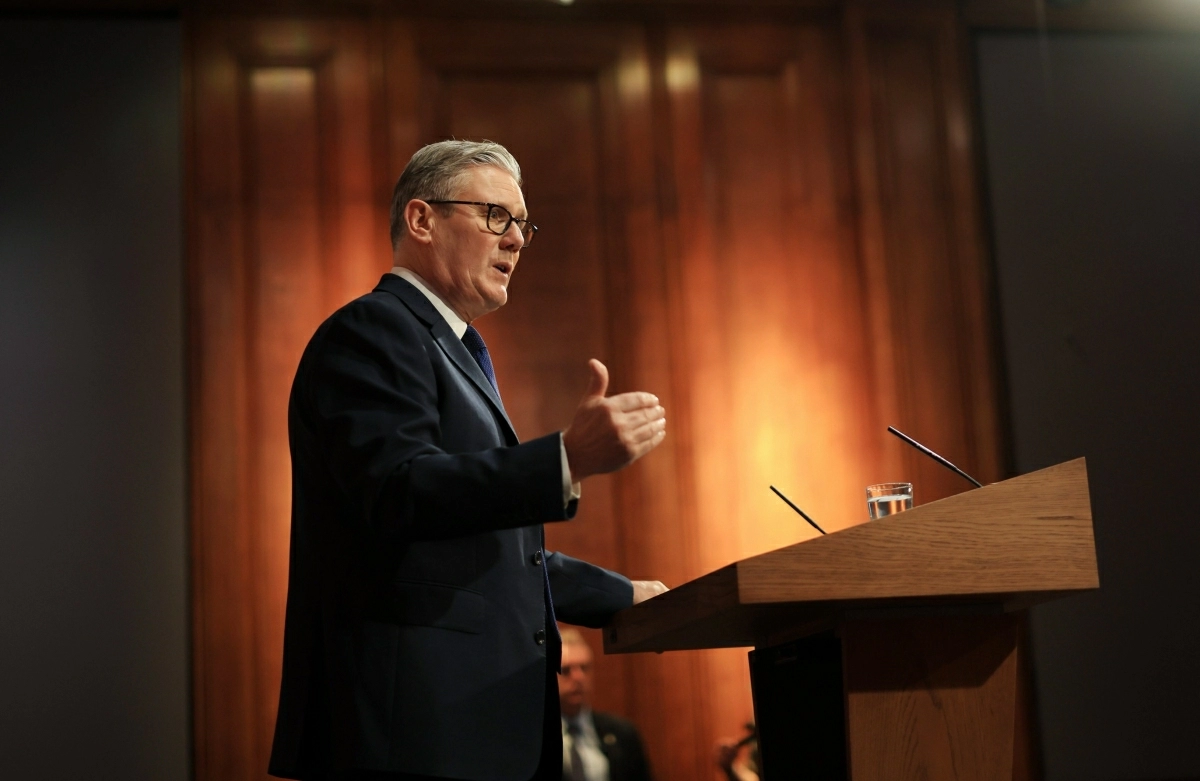
British Prime Minister Keir Starmer affirmed that the war in Iran is not the UK's conflict, emphasizing that the United Kingdom will not be drawn into the struggle. This statement was made during a press conference at Downing Street, where Starmer noted that his government is working swiftly to support efforts to de-escalate tensions in the region, while also acknowledging that the conflict will have long-term implications for the UK.
British Foreign Secretary Yvette Cooper will hold a meeting this week focusing on enhancing maritime security in the Gulf. Following the meeting, British military planners will assess how to organize their capabilities to ensure the Strait of Hormuz remains open and secure once the fighting ceases. Starmer confirmed that the government is closely monitoring the situation amid rising concerns regarding energy.
Details of the Event
During the conference, Starmer stated, "No matter the pressures I face, I will always act in the interest of the UK's national interest in all decisions I make." He explained that it is essential to enhance cooperation with European allies in the fields of defense, security, and economic affairs. He also indicated that the situation in Iran requires the UK to take a clear stance, which is to avoid being drawn into a conflict that does not concern it.
Starmer's remarks come at a sensitive time, as tensions in the Arab Gulf region are escalating, raising global concerns about the stability of energy markets. Former US President Donald Trump had previously expressed interest in withdrawing the United States from NATO due to a lack of support from allies for the war in Iran, complicating the international situation further.
Background & Context
Historically, relations between Iran and Western countries have been strained, particularly following the 1979 Islamic Revolution. Since then, the region has witnessed numerous conflicts that have affected its stability. In recent years, tensions have escalated again due to Iran's nuclear program and its support for armed groups in the region, making it a key focus in international politics.
In this context, the United Kingdom seeks to maintain its national interests by adopting cautious stances. The situation in the Gulf has a direct impact on global oil prices, making any escalation in the conflict affect the global economy.
Impact & Consequences
The United Kingdom anticipates that the conflict in Iran will have implications for regional and international security. The UK’s non-intervention may help reduce tensions, but it could also exacerbate the situation if the conflict is not managed effectively. There are also concerns that escalating the conflict could have negative effects on energy markets, which could impact the British economy.
It is crucial for the United Kingdom to remain vigilant regarding any developments in the region, especially given its significant reliance on energy imports from the Gulf. Maritime security in the Strait of Hormuz is vital, as approximately 20% of the world's oil passes through it.
Regional Significance
Neighboring Arab countries to Iran, such as Iraq, Saudi Arabia, and the UAE, are among the most affected by the conflict. Any escalation in the dispute could destabilize these countries, negatively impacting regional security. Furthermore, cooperation between Arab nations and the UK in the fields of security and defense will significantly influence how security challenges in the region are addressed.
In conclusion, the situation in Iran remains a sensitive topic that requires all parties involved to work towards achieving peace and stability. The UK’s stance of non-intervention may be a wise step, but it must be accompanied by effective diplomatic efforts to ensure that the situation does not worsen.