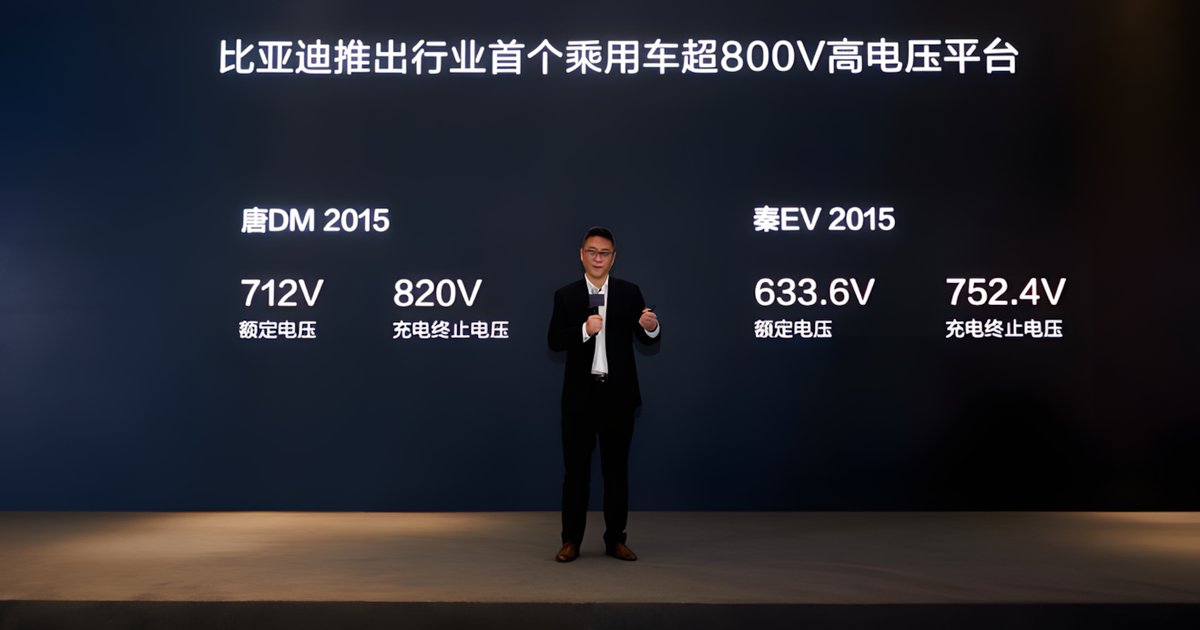
Chinese company BYD has ignited a new race in the electric vehicle world with its announcement of "Flash Charging" technology, promising to add hundreds of kilometers of range in just a few minutes. This revolutionary technology aims to significantly reduce the charging time for electric vehicles.
According to BYD, its new models, such as the Denza Z9GT, can recover around 500 kilometers of range in just 5 minutes, bringing the charging time for electric vehicles closer to that of traditional fuel refueling. While these figures may impress many, they also raise questions about their impact on battery longevity.
Event Details
In contrast, German company BMW has expressed reservations about this technology, warning that such high speeds may come with significant trade-offs. A company official explained that focusing solely on charging speed can be misleading, as improving one aspect of battery performance, like charging speed, often comes at the expense of others.
BMW used a simple analogy to illustrate its point: if you pull a blanket from one side, the other side will be exposed, meaning that enhancing a specific feature requires sacrificing something else. Nevertheless, BMW asserts that it is not lagging in this area, as its latest electric models, such as the BMW iX3 and BMW i3, support charging speeds of up to 400 kilowatts.
Background & Context
This competition between BYD and BMW is part of a broader struggle in the electric vehicle industry, where major companies strive to balance speed, performance, and safety. While BYD focuses on developing rapid charging technologies, BMW aims to achieve a balance between performance and battery quality.
BYD's new technology represents a significant step towards making electric vehicles more practical and could effectively reduce the "charging time" issue that has hindered the widespread adoption of these vehicles. However, the question remains: will these high speeds negatively affect battery lifespan?
Impact & Consequences
The importance of these discussions is increasing in light of the global shift towards electric vehicles, as companies compete to offer the best solutions for consumers. Achieving a balance between speed and sustainability poses a significant challenge, requiring innovation in battery technology and the development of more efficient charging systems.
This competition also highlights the importance of research and development in this sector, as companies seek to improve charging technologies without compromising battery quality. Success in this area could determine the future of electric vehicles in the coming years.
Regional Significance
In the Arab region, this development could have a significant impact on the electric vehicle market, where there is an increasing need for effective charging solutions. With growing interest in sustainability and the environment, these new technologies may encourage the adoption of electric vehicles in Arab countries.
Moreover, enhancing charging technologies could contribute to strengthening the infrastructure for electric vehicles in the region, making it easier for consumers to transition to more sustainable options. These developments could open new avenues for investment in the electric vehicle sector in Arab nations.