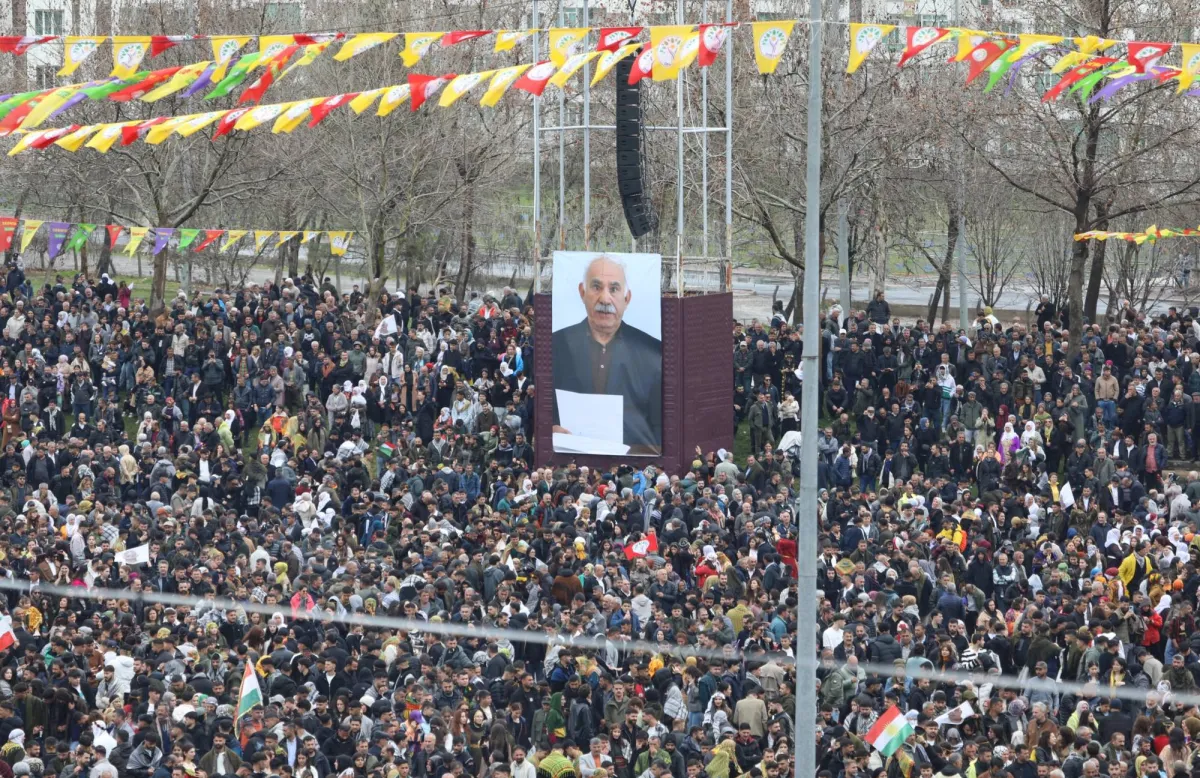
The Kurdish-supporting party, "Democracy and Equality of Peoples," has called for immediate steps to enhance the peace process without waiting for parliamentary approval on proposed legal regulations. Co-chair of the party, Tunçer Bakırhan, emphasized that these steps include implementing decisions from the European Court of Human Rights and the Turkish Constitutional Court regarding the release of political detainees, including Selahattin Demirtaş, the former co-chair of the "Peoples' Democratic Party."
In his speech during the party's parliamentary group meeting, Bakırhan pointed out the possibility of the government isolating appointed trustees on municipalities instead of their elected heads, reflecting the party's desire to enhance democracy and adherence to the law.
Details of the Event
Bakırhan criticized the Turkish government's delay in taking tangible steps within the peace process, known as the "Turkey Free of Terrorism" initiative. He also urged the parliament to schedule a discussion on the report from the "National Solidarity, Brotherhood, and Democracy Committee," which laid out a legal framework for resolving the Kurdistan Workers' Party and disarmament. The committee concluded its work on February 18 but the parliament has yet to set a date for discussing the report.
The report includes proposals for establishing legal regulations and democratic reforms, along with recommendations for abolishing the appointment of trustees on municipalities. It also highlights the necessity of verifying the completion of the disarmament process of the Kurdistan Workers' Party in response to the call from its leader Abdullah Öcalan.
Background & Context
These calls come in a historically complex context, as Turkey has experienced long-standing conflicts with the Kurdistan Workers' Party, which many Turks consider a terrorist organization. Since 1984, the party has waged war against the Turkish state, resulting in tens of thousands of deaths. In recent years, there have been multiple attempts to achieve peace, yet tensions remain high.
The Turkish government seeks to implement reforms aimed at improving conditions in Kurdish regions, but these efforts often face resistance from various political parties. In this context, the committee's report is seen as an important step towards achieving peace, but its implementation hinges on political will.
Impact & Consequences
If the proposals in the report are implemented, it could lead to improved relations between the Turkish government and the Kurds, thereby enhancing stability in the country. However, any delay or failure to execute these steps may exacerbate tensions and intensify the conflict.
This issue holds particular significance amid complex regional conditions, as Turkey plays a pivotal role in various regional matters. Achieving peace with the Kurds could contribute to regional stability and positively impact relations with neighboring countries.
Regional Significance
The situation in Turkey directly affects neighboring Arab countries, as the Kurdish issue is part of broader regional conflicts. Achieving peace in Turkey could help enhance stability in Iraq and Syria, where large Kurdish communities exist.
Ultimately, there is hope that these calls will advance the peace process, benefiting all parties involved.