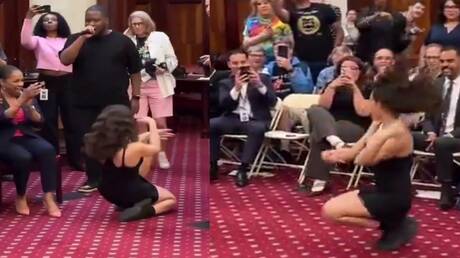
The historic chamber of the New York City Council — one of the most venerable local government institutions in the United States — transformed into a vibrant artistic venue to host an LGBTQ+ Pride celebration, marking a first-of-its-kind precedent in the history of the institution founded in the seventeenth century. The event, held within the official walls of the Council, witnessed the conversion of the traditional political space into an open stage for fashion shows and artistic competition among hundreds of participants.
Informed sources reported that the celebration included diverse segments embodying the city's embrace of sexual diversity and gender identity, where lights and music blended with the formal atmosphere of the chamber that typically hosts voting sessions on local laws and budget discussions. This event is considered a watershed moment in the trajectory of LGBTQ+ community integration within official U.S. institutions, following decades of struggle for legal and social recognition.
Artistic Celebration and Fashion Showcase
The celebration — held as part of the annual Pride Month festivities — focused on showcasing the artistic and design talents of community members, as the chamber's marble floor transformed into a runway for spectacular fashion shows. Dozens of designers and models from the LGBTQ+ community participated in the activities, presenting collections reflecting the diversity of identities and cultures within the city considered the cradle of the global gay liberation movement.
Organizers added special artistic touches to the chamber's official decor while preserving its historic architectural landmarks, creating a striking visual contrast between ancient stone pillars and the vibrant colors of Pride flags. The event witnessed heavy attendance from local officials and human rights activists, alongside members of the general public, indicating the inclusive character sought by the organizing administration.
Historical Context and Background
This move carries special significance within the context of New York City's history as the gateway to the global gay rights movement, as Greenwich Village in Manhattan witnessed the 1969 Stonewall uprising considered the first spark of organized struggle for LGBTQ+ rights in the United States and the world. Since then, the city has transformed into a symbol of openness and diversity, but bringing Pride celebrations into the heart of the local legislative institution represents qualitative progress in the journey of political integration.
The New York City Council — comprising 51 elected members — sits at the head of a legislative authority controlling a budget exceeding $100 billion annually, making it one of the most powerful local bodies in the world. Using its main chamber for cultural celebratory purposes indicates a shift in the official view of these spaces, from being exclusive to traditional political work to inclusive spaces reflecting the city's diverse social fabric.
Social Impact and Implications
This event represents a culmination of efforts to integrate the LGBTQ+ community into official U.S. institutions, which have accelerated over the past decade. Observers acknowledge that opening official doors to such events carries a strong symbolic message that gender identity and sexual orientation have become integral parts of the city's political and cultural fabric. It also reflects a change in local priorities, where recognition of sexual minorities has risen to equal footing with traditional issues such as housing and public transportation.
However, the move was not without potential controversy, as there remain political and social currents criticizing the accelerated integration of LGBTQ+ issues into government institutions, considering it a transgression of boundaries between public and private life. Yet supporters of the event see it as an honest expression of the tolerance and diversity values upon which the city was founded, and a step toward empowering young generations of the LGBTQ+ community to see themselves represented within the most venerable governmental institutions.
Regional Significance and the Arab World
This precedent comes at a time when sensitivities surrounding LGBTQ+ issues are escalating in the Arab region, where public discussion of gender identity and sexual orientation remains limited or prohibited in most countries. The event sheds light on the widening gap between the Western model heading toward politicizing and empowering sexual minorities within official institutions, and the Arab reality where raising such topics is often seen as a transgression of social and religious constants.
Nevertheless, the circulation of news about such events in the Arab media space contributes to enriching discussion around individual rights and personal freedoms, even if within a framework of criticism or rejection. The greatest challenge facing Arab societies remains how to reconcile increasing international demands to respect sexual diversity with preserving cultural specificities and prevailing social values, in a connected world where social media transmits images and news across borders at lightning speed.