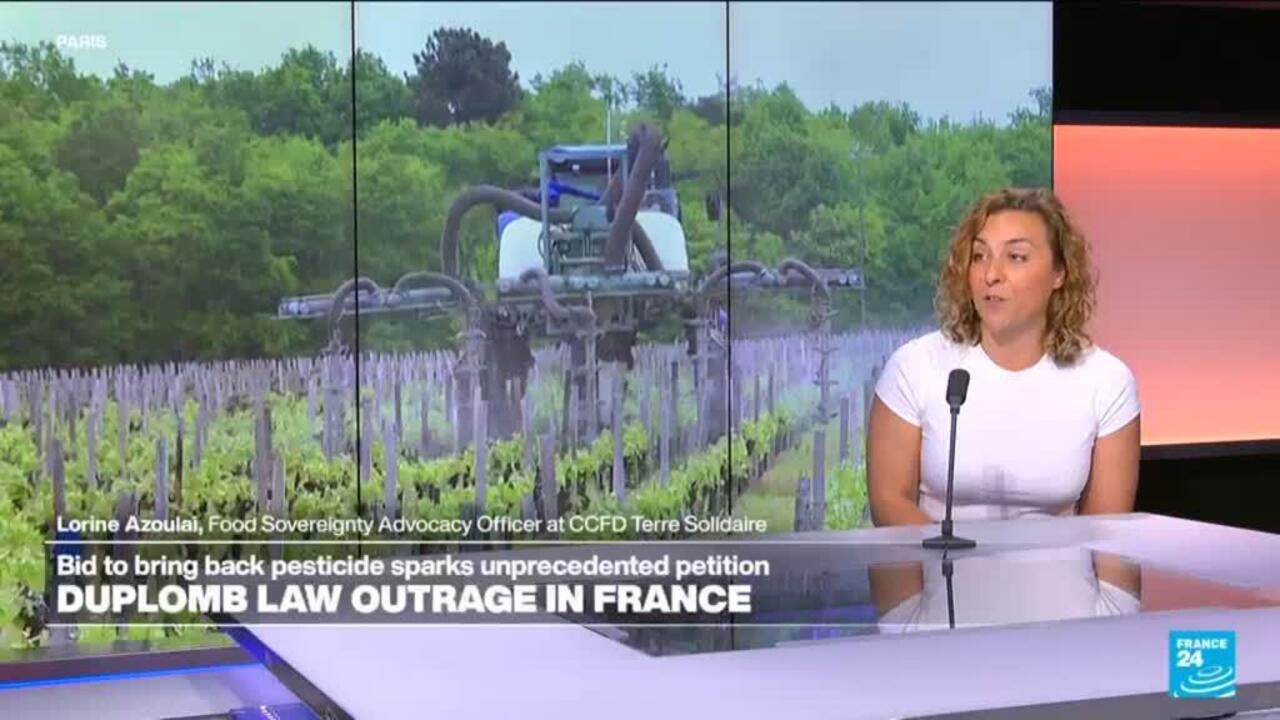
Gerard Larcher and Laurent Dubol have called for the inclusion of Dubol 2 Law in the upcoming agricultural emergency bill after a controversial amendment in July 2025. The new amendments came after the French Constitutional Council annulled a provision aimed at reintroducing acetamiprid, a pesticide belonging to the neonicotinoid family, which sparked outrage from many environmental organizations.
This step is part of the French government's efforts to address increasing agricultural challenges, as lawmakers seek to find a balance between supporting farmers and protecting the environment. Larcher and Dubol noted that including this law in emergency agricultural legislation would help provide a clear legal framework for farmers, ensuring the sustainability of agricultural production in the country.
Details of the Event
In July 2025, the first version of Dubol 2 Law was adopted, which sparked widespread controversy due to the reintroduction of acetamiprid. This pesticide had been banned in many European countries due to its negative impact on bees and the environment. However, farmers in France believe that its use is essential to combat agricultural pests threatening crops.
Following public and environmental pressure, the Constitutional Council decided to annul the controversial provision, prompting lawmakers to reconsider the legal texts related to agriculture. Larcher and Dubol emphasized the importance of finding alternative solutions that ensure environmental protection while simultaneously supporting farmers in facing challenges.
Background & Context
Historically, France has witnessed numerous changes in its agricultural policies, especially concerning pesticide use. In recent years, concerns have escalated regarding the impact of these pesticides on the environment and human health, leading to bans on many of them. However, farmers face increasing pressures due to climate change and rising pest populations, making them reliant on these chemicals.
The issue of acetamiprid exemplifies the conflict between environmental protection and farmers' needs. While governments strive to reduce the use of harmful substances, the greatest challenge remains how to support farmers in producing safe and sustainable food.
Impact & Consequences
The inclusion of Dubol 2 Law in emergency agricultural legislation could have wide-ranging effects on the agricultural sector in France. On one hand, this law could provide the necessary support for farmers in combating pests, potentially leading to increased agricultural production. On the other hand, the use of acetamiprid could exacerbate environmental problems, necessitating strict oversight of its use.
This situation may also spark debate in other European countries, where some may adopt similar policies or oppose them, affecting agricultural trade between nations. The balance between supporting farmers and protecting the environment will be at the center of discussions in the near future.
Regional Significance
The issue of pesticide use and its environmental impact is also significant in many Arab countries. Arab nations face similar challenges in agriculture, especially with climate change and increasing pests. Sharing experiences between European and Arab countries in this field could yield substantial benefits, particularly in developing sustainable agricultural strategies.
In conclusion, the discussion surrounding Dubol 2 Law reflects the complex challenges facing agriculture in the modern era. It is crucial for governments, farmers, and environmentalists to collaborate in finding solutions that ensure the sustainability of agricultural production while protecting the environment simultaneously.