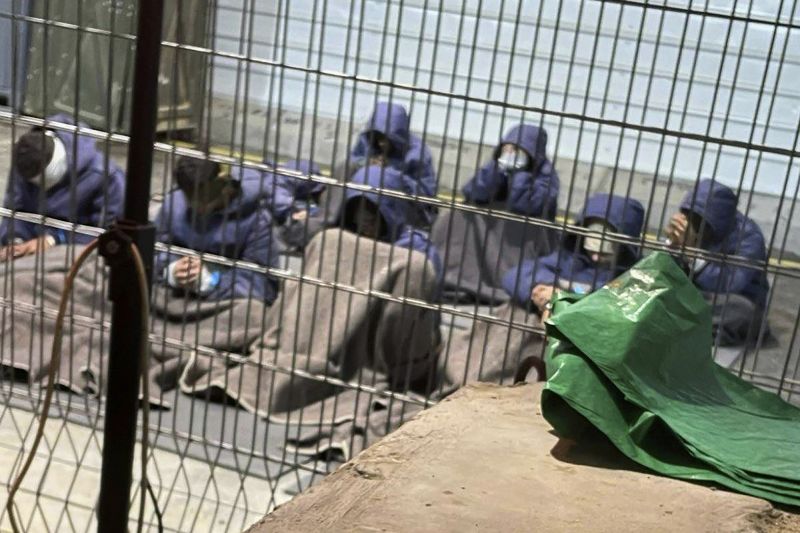
International and local calls are increasing to halt the killing of Palestinian prisoners in Israeli jails, amid rising concerns over deteriorating humanitarian conditions due to ongoing violations. These calls come at a sensitive time, as crises in the region intensify and urgent solutions are needed.
These calls include human rights organizations, which have emphasized the necessity of protecting the rights of Palestinian prisoners, stressing that their killing constitutes a blatant violation of international laws. Many activists have pointed out that these violations negatively impact peace and stability in the region.
Details of the Incident
Recently, multiple human rights reports have documented cases of killings of Palestinian prisoners in Israeli jails, sparking widespread outrage among Palestinian and international circles. These reports have confirmed that many prisoners are suffering from harsh conditions, including medical neglect and torture, which exacerbate their health conditions.
Statistics have shown that the number of Palestinian prisoners in Israeli jails exceeds 5,000, including women and children, highlighting the extent of the suffering faced by these prisoners. Many Arab countries have called for a firm stance against these violations, expressing solidarity with the Palestinian people.
Background & Context
The roots of the Palestinian prisoners' issue date back decades in the ongoing Palestinian-Israeli conflict, where thousands of Palestinians have been detained amidst the continuous strife. Recent years have witnessed an escalation in arrest operations, leading to a worsening of humanitarian conditions within the prisons.
Historically, there have been several international attempts to pressure Israel to improve the conditions of prisoners; however, these attempts have not yielded tangible results. Many observers consider that the continuation of these violations reflects a systematic Israeli policy aimed at suppressing Palestinians and depriving them of their basic rights.
Impact & Consequences
Analyses indicate that the continued killing of Palestinian prisoners could exacerbate conditions in the region, potentially provoking angry reactions from Palestinians and Arab countries. These violations may also affect relations between Israel and Western countries, which closely monitor human rights violations.
Moreover, these conditions could lead to an escalation of violence in Palestinian territories, complicating peace efforts and hindering any attempts to reach a lasting resolution to the conflict.
Regional Significance
The issue of Palestinian prisoners is a sensitive matter that affects relations between Arab countries and Israel. This issue reflects the suffering of the Palestinian people and highlights the violations they face, leading to widespread Arab solidarity with the Palestinian cause.
Furthermore, the continuation of these violations could impact stability in the region, potentially escalating tensions between Palestinians and Israelis, which negatively affects regional security.
In conclusion, the issue of Palestinian prisoners remains one of the central issues in the Palestinian-Israeli conflict, requiring urgent international action to stop the violations and protect the rights of these prisoners.