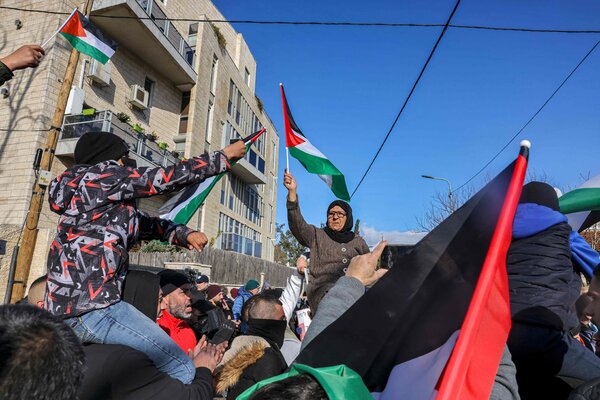
The Palestinian government, on Friday, March 27, called for urgent international intervention to stop the forced displacement of over 200 Palestinian families in the city of Jerusalem. These families, which include approximately 900 people, are at risk of being evicted from their homes in the Silwan neighborhood due to lawsuits filed by extremist settlement organizations.
The Palestinian Ministry of Foreign Affairs reported that Israeli courts are being used as a tool to reinforce the illegal status quo in the city, granting a false legitimacy to the occupation. The ministry also confirmed that eviction operations are increasing, with 15 families evicted last week from the Batn al-Hawa neighborhood, in addition to demolition orders issued for seven homes in the Qalandia area.
Details of the Displacement Events
Concerns are rising regarding the displacement operations in East Jerusalem, as these actions are seen as part of a plan aimed at altering the demographic composition of the holy city. The Palestinian Ministry of Foreign Affairs asserts that these plans aim to Judaize Jerusalem and expel Palestinians from their lands. The ministry has called on the international community to take more effective steps to prevent these violations.
The statement also noted that the United Nations confirmed on March 26 that Israeli forces evacuated 16 Palestinian families from the Batn al-Hawa area. Violations against Palestinians continue, with reports indicating that 691 individuals have been killed and 1,876 others injured since military operations began in Gaza in October 2023.
Historical Context and Background
Historically, East Jerusalem has witnessed an escalation in displacement operations since its occupation in 1967. Israel has employed a range of laws and legal procedures to justify evictions, exacerbating the humanitarian situation for Palestinians. These practices are part of a broader policy aimed at enhancing Israeli control over the holy city.
These events coincide with rising tensions in the region, where Palestinian territories experience daily violations by Israeli forces, complicating the security and humanitarian situation. International reports have indicated that these violations contradict international laws and human rights.
Consequences and Impact of Displacement
The displacement operations are worsening the humanitarian conditions in Jerusalem, where Palestinians face increasing difficulties in accessing essential services such as education and healthcare. These policies also affect regional stability, contributing to heightened tensions between Palestinians and Israelis.
These events are also a test for the international community, as effective action is required to pressure Israel to cease these violations. Human rights organizations have warned that the continuation of these policies could lead to an explosion of tensions in the region.
Significance for the Arab Region
Events in Jerusalem directly impact Arab countries, as the Palestinian issue remains a central focus in Arab politics. Many Arab nations are calling for enhanced support for Palestinians and solidarity in facing these violations. Continued tensions in Jerusalem may also affect relations between Arab states and Israel, complicating the political landscape in the region.
In conclusion, the Palestinian issue remains one of the most complex issues globally, requiring genuine international efforts for resolution. Urgent international intervention is essential to protect the rights of Palestinians and ensure their safety against forced displacement.