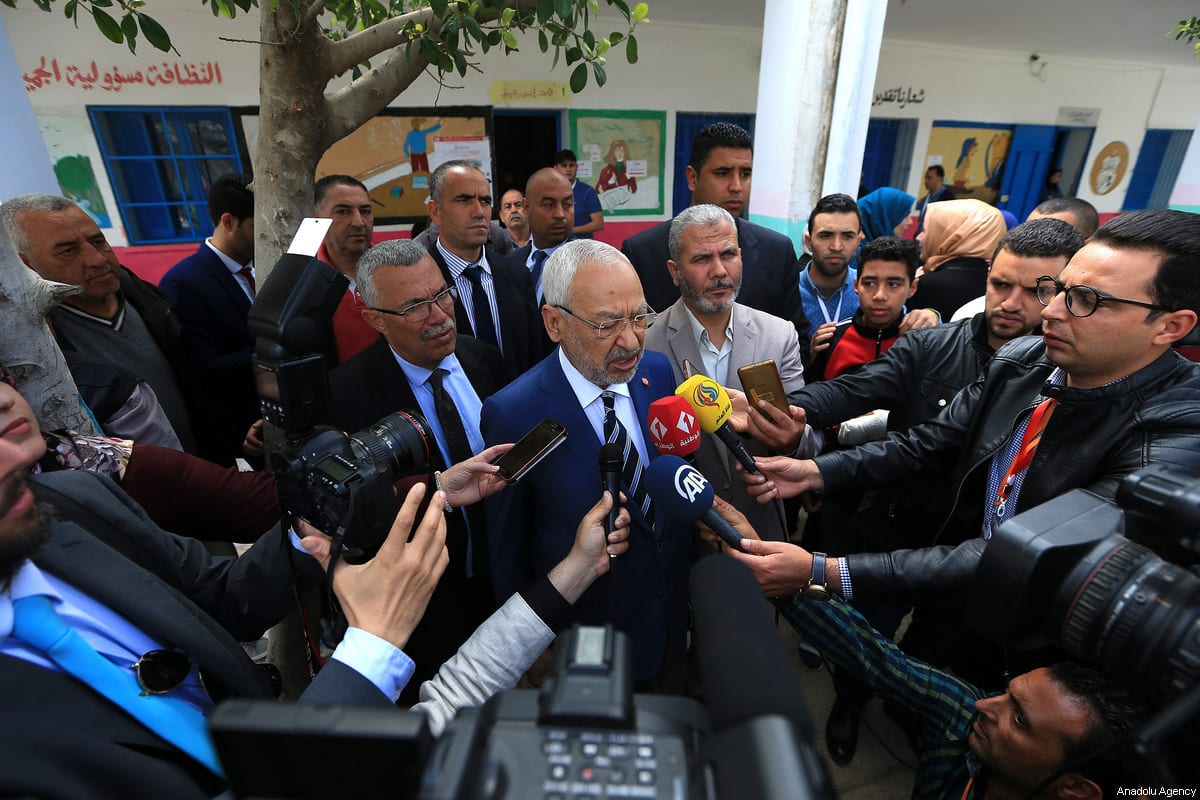
Rached Ghannouchi, the leader of the Ennahda Movement in Tunisia, has called for a "dialogue that excludes no one," aiming to establish a national approach to tackle the crises and challenges facing Tunisia. This call comes at a time when the country is experiencing significant political and economic uncertainty, prompting questions about its motivations and objectives.
Many political analysts believe that Ghannouchi's call for dialogue reflects his conviction that political crises can only be resolved through dialogue and understanding among all parties. Some suggest that this initiative might be an attempt to restore the movement's role in the Tunisian political landscape after a period of decline.
Details of the Call
Ghannouchi announced his call during a press conference, emphasizing the importance of involving all political and social groups in the dialogue. He pointed out that Tunisia is facing multiple challenges, including economic and social crises, which necessitate a genuine national consensus.
This appeal comes at a critical juncture, as pressures on the Tunisian government mount due to deteriorating economic conditions, rising unemployment rates, and increasing public protests. Some have argued that dialogue may be the only way out of these crises.
Background & Context
Historically, Tunisia has undergone significant political transformations since the revolution in 2011, with the Ennahda Movement being a part of the political scene. However, the movement has faced widespread criticism for its governance performance, leading to a decline in its popularity.
In recent years, Tunisia has encountered major economic challenges, including rising public debt and declining investments. These conditions have prompted many political parties to consider the necessity of dialogue as a means to overcome the crises.
Impact & Consequences
If Ghannouchi's call for dialogue succeeds, it could lead to greater political stability in Tunisia, potentially helping to attract investments and improve economic conditions. However, if this initiative fails, it may exacerbate the crises and increase social tensions.
This call is also a test of the political parties' ability to transcend their differences and reach real compromises. Should the dialogue succeed, it could have a positive impact on the political landscape in the region and enhance the prospects for democracy in other Arab countries.
Regional Significance
Tunisia is seen as a model in the Arab region, representing a democratic transition experience. If it can overcome its current crises, it may serve as an inspiration for other countries facing similar challenges.
At the same time, the outcomes of the dialogue in Tunisia could influence relationships among political parties in neighboring countries and encourage the adoption of dialogue methods as a means to resolve political disputes in the region.
In conclusion, Ghannouchi's call for dialogue is a significant step in Tunisia's political journey and may carry new hopes for overcoming the crises. However, its success depends on the responsiveness of the political parties and their ability to reach genuine compromises.