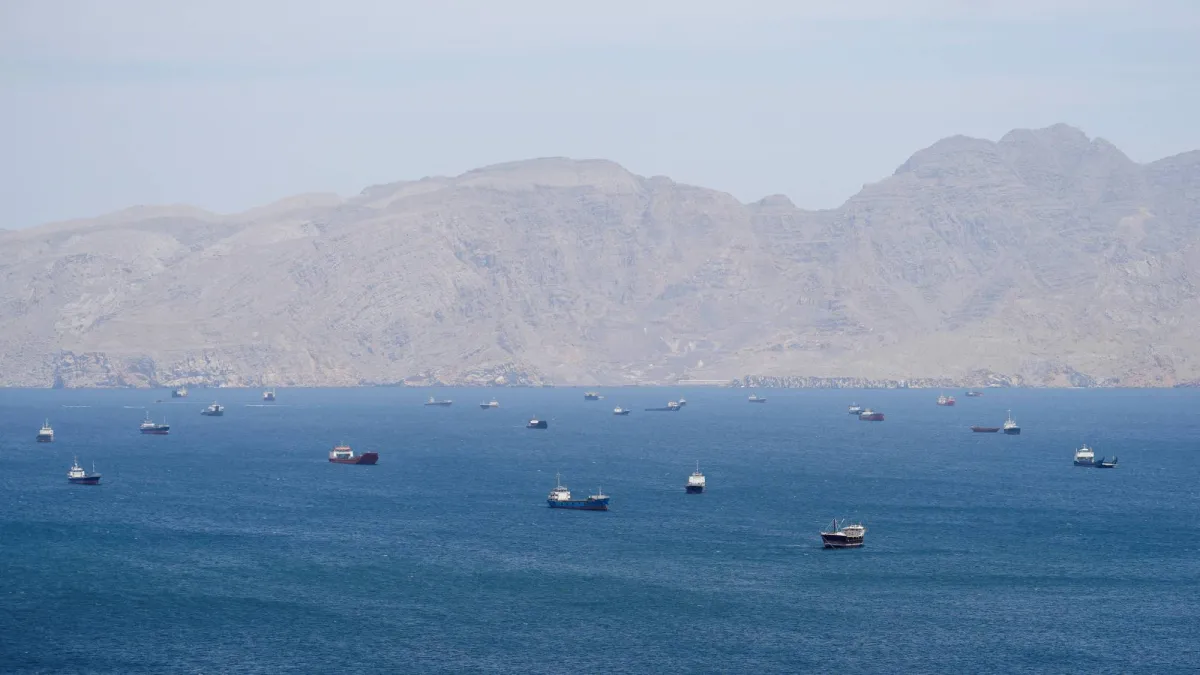
Over 80 countries have called for the reopening of the Strait of Hormuz, which has been closed by Iran, during an open session of the UN Security Council in New York. These calls come at a time when tensions have escalated between Tehran and Washington following Iran's selection for membership in the United Nations conference reviewing the Nuclear Non-Proliferation Treaty.
The session, convened at the request of Bahrain, saw broad participation from member states, with attendees listening to briefings from UN Secretary-General Antonio Guterres, International Maritime Organization Secretary-General Arsenio Dominguez, and maritime security expert Nick Childs.
Details of the Session
In his speech, Guterres warned that global maritime routes, which are the arteries of global trade, are facing immense pressures that threaten international security and stability. He called for respect for navigation rights through the Strait of Hormuz, stating: "Open the strait. Allow ships to pass, without fees, and without discrimination. Allow trade to resume." He cautioned that continued disruptions in navigation could lead to a "global food emergency."
Dominguez, for his part, noted that according to the United Nations Convention on the Law of the Sea, coastal states cannot close straits used for international navigation. He emphasized that "there is no legal basis" for any country to impose fees or discriminatory conditions on international straits.
Background & Context
The Strait of Hormuz is considered one of the most important maritime passages in the world, through which approximately 20% of global oil passes. The region has witnessed increasing tensions in recent years, particularly with the escalation of Iranian military activities and American reactions. In this context, the U.S. Ambassador to the UN, Mike Waltz, asserted that "the Strait of Hormuz does not belong to Iran to manipulate," pointing to support from over 100 countries for this position.
Additionally, the Russian Ambassador to the UN, Vassily Nebenzia, criticized Western countries, considering the situation in the Strait of Hormuz as a result of Israeli-American aggression against Iran. Conversely, the Saudi Ambassador to the UN, Abdulaziz Al-Wasel, stated that any threat to freedom of navigation in Hormuz directly affects the stability of energy markets.
Impact & Consequences
Concerns are growing that the continued closure of the Strait of Hormuz could exacerbate global economic crises, potentially leading to rising oil prices and affecting supply chains. Guterres warned that disruptions in navigation could push millions of people, particularly in Africa and South Asia, into the clutches of hunger and poverty.
Moreover, military escalation in the region could have negative repercussions on regional security, necessitating dialogue and negotiation among the involved parties. Some delegates highlighted the importance of forming an international coalition to protect maritime navigation and ensure freedom of trade.
Regional Significance
These developments are of significant importance to Arab countries, as any escalation in the Strait of Hormuz could impact security and stability in the region. Arab nations heavily rely on oil and gas imported from this area, making them susceptible to the economic effects resulting from any tensions.
In conclusion, hope remains for the possibility of reaching diplomatic solutions that ensure the reopening of the Strait of Hormuz and reduce tensions between Iran and the United States, contributing to regional stability and enhancing food and economic security.