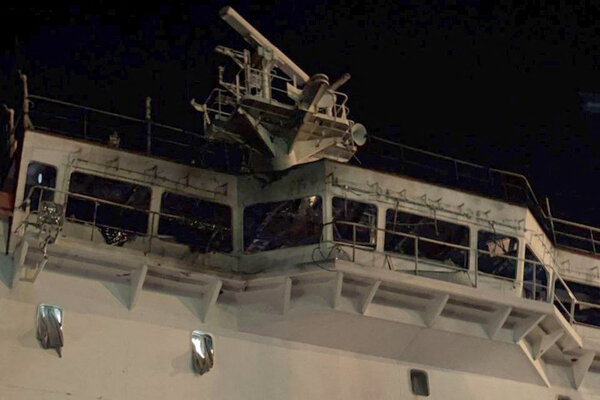
In a new development on the international stage, Ukraine has claimed that a ship belonging to the Russian fleet unloaded a shipment of wheat at the Israeli port of Haifa. This allegation comes at a sensitive time, as tensions between Ukraine and Russia are escalating, reflecting the ongoing struggle for food resources in the region.
In response, Israeli authorities have confirmed that the mentioned ship did not enter the port, which raises questions about the accuracy of the Ukrainian claims. These statements come amid increasing tensions between the two countries, as each seeks to assert its position in the ongoing conflict.
Details of the Incident
Ukraine alleges that the ship, purportedly Russian, unloaded a shipment of wheat sourced from occupied territories at the port of Haifa. Ukrainian officials have indicated that this action constitutes a violation of international laws, as occupied territories are deemed ineligible for international trade.
For its part, Israel has denied these claims, stating that the ship did not enter the port, which casts doubt on the veracity of the Ukrainian information. This comes at a time when Ukraine is facing mounting pressure to secure its food supplies amid the ongoing war.
Background & Context
Historically, relations between Ukraine and Russia have been increasingly strained since 2014, when Russia annexed Crimea. Since then, Ukraine has heavily relied on international support, including from Western nations, to confront military and economic challenges.
The issue of wheat is a sensitive topic in this conflict, as Ukraine is recognized as one of the largest wheat producers in the world. With the war escalating, Ukrainian wheat supplies have become a subject of international discussion, as countries seek to secure their food needs.
Impact & Consequences
If Ukraine's claims are substantiated, this could escalate tensions between Russia and Israel, as any interference in regional affairs may provoke strong reactions from both sides. Additionally, this could impact trade relations between the two countries and reflect a broader division within the international community regarding how to address the Ukrainian-Russian conflict.
Furthermore, the continuation of these tensions could negatively affect global wheat markets, potentially leading to price increases and exacerbating the plight of countries that rely on food imports.
Regional Significance
In the Arab region, food security is a vital issue, as many countries depend on imports to meet their food needs. If tensions continue to escalate, this could affect wheat supplies to Arab nations, increasing economic and social pressures.
Moreover, any escalation in relations between Russia and Israel could impact the balance of power in the region, necessitating that Arab countries adopt strategic positions to confront new challenges.
In light of these developments, the situation in the region remains complex, requiring careful monitoring of events and developments to ensure economic and political stability.