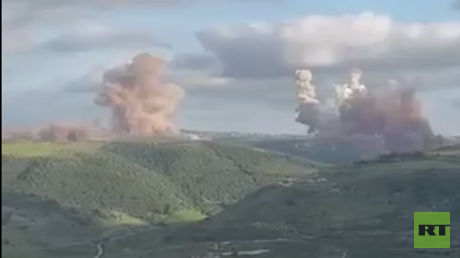
The Israeli army has successfully destroyed two underground tunnels belonging to Hezbollah in the Qantara area of southern Lebanon, using over 450 tons of explosives. The tunnels, which extend nearly two kilometers, are believed to be part of a network that Hezbollah uses for military purposes.
This operation comes at a time when tensions between Israel and Hezbollah are escalating, as Israel seeks to undermine the military capabilities of the group. Military sources have confirmed that these tunnels were intended to facilitate the movement of Hezbollah operatives across the border, increasing security risks in the region.
Details of the Operation
Reports indicate that the Israeli army conducted precise reconnaissance operations prior to executing the attack, accurately identifying the locations of the tunnels. The operation is part of a broader strategy aimed at dismantling Hezbollah's military infrastructure, which Israel considers a direct threat to its national security.
The Israeli army did not provide specific details regarding the timing of the operation, but it is believed to have taken place in the past few days. A military spokesperson noted that this step is part of ongoing efforts to counter threats posed by armed groups in Lebanon.
Background & Context
Historically, the Qantara area has witnessed numerous armed conflicts between Israel and Hezbollah, making it a strategic point. Hezbollah, established in the 1980s, is considered one of the most prominent armed groups in Lebanon and has engaged in several wars with Israel, the most notable being in 2006.
Tensions continue to rise between both sides, particularly with increasing military activities from both parties. Additionally, the situation in Lebanon, which is grappling with economic and political crises, complicates the security landscape further.
Impact & Consequences
The destruction of the tunnels may lead to heightened tensions between Israel and Hezbollah, with expectations that the group will respond to these attacks in various ways. This escalation could affect stability in Lebanon and the region at large, raising fears of a new armed conflict.
Moreover, these events may impact relations between Lebanon and neighboring countries, as these military operations are part of a broader regional conflict. Increased military actions could lead to international or regional interventions, further complicating the situation.
Regional Significance
These developments indicate the ongoing conflict in the region, as military activities between Israel and Hezbollah continue to attract international attention. The direct impact on neighboring Arab countries may manifest in increased security tensions, affecting regional stability.
Amid the economic and political crises faced by many Arab nations, these events could exacerbate conditions, necessitating urgent international responses. Additionally, the situation in Lebanon may influence relations between Arab countries and Israel, particularly in light of ongoing peace efforts.