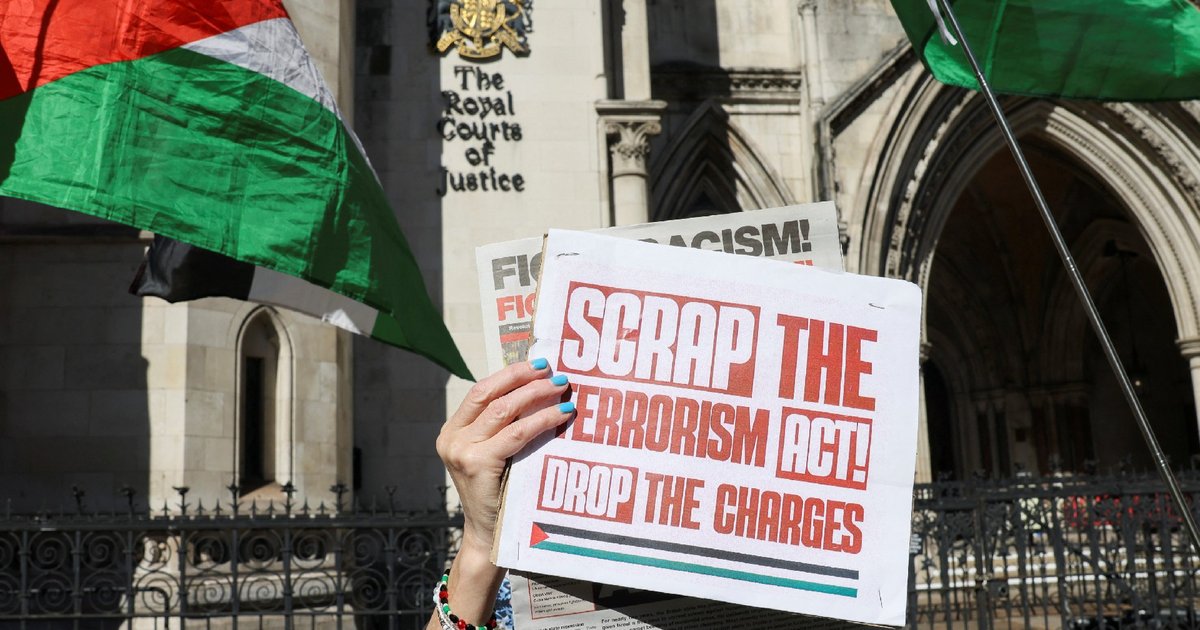
In a controversial move, the British government filed an appeal in the Supreme Court on Tuesday, seeking to reinstate the ban on the Palestine Action group, which was previously classified as a terrorist organization under UK anti-terrorism laws. This appeal comes after a ruling issued by the Supreme Court in February 2026, which found the government's decision to ban the group illegal.
In the appeal, the Home Office argued that the initial ruling was legally flawed and obstructed the government's ability to address the group's increasing activities. The case stemmed from a challenge brought by Huda Omouri, one of the founders of Palestine Action, against the government's decision.
Details of the Case
The government's lawyer, James Eddy, stated that Palestine Action meets the legal criteria for classification as a terrorist organization, citing acts of property destruction and other incidents deemed terrorist under British law. Eddy argued that the previous Supreme Court decision did not adequately consider the democratic structures supporting the ban authorities.
Conversely, Omouri and her legal team asserted that Palestine Action is not a violent organization and that the incidents referenced were exceptional and do not reflect a broader strategy. They pointed out that banning the group would disproportionately affect civil liberties, particularly individuals' rights to express their support for Palestine.
Background & Context
Palestine Action was established amid a rise in global protests against Israeli occupation, aiming to promote Palestinian rights through direct action. Its classification as a terrorist organization has sparked widespread debate regarding the boundaries of free expression and peaceful resistance. In recent years, the UK has seen an increase in pro-Palestine advocacy activities, leading to heightened tensions between the government and protesters.
The ruling issued by the Supreme Court in February 2026 followed a series of protests and confrontations between demonstrators and security forces, resulting in widespread arrests. The court deemed that the group's ban conflicted with the government's own policies, undermining individuals' rights to express and assemble.
Impact & Consequences
This case represents a real test of the boundaries between protest and terrorism within the British legal context. Many are questioning how protest activities are classified and whether the government is using anti-terrorism laws to suppress dissenting voices. Lawyers have noted that the application of terrorism law in this case could erode traditional distinctions between protest and terrorism.
Furthermore, the case could have broader implications for the UK's domestic and foreign policies, especially amid rising human rights issues in Palestine. British relations with Arab and Islamic countries may be affected if the government continues to take steps perceived as repressive by these nations.
Regional Significance
This situation highlights the ongoing tensions between freedom of expression and anti-terrorism efforts, raising questions about how governments handle protests. The classification of Palestine Action as a terrorist organization has significant implications for civil liberties and the right to protest, particularly in the context of the Israeli-Palestinian conflict.
As the appeal progresses, the outcome will likely influence not only the future of Palestine Action but also the broader discourse surrounding activism and governmental authority in the UK.