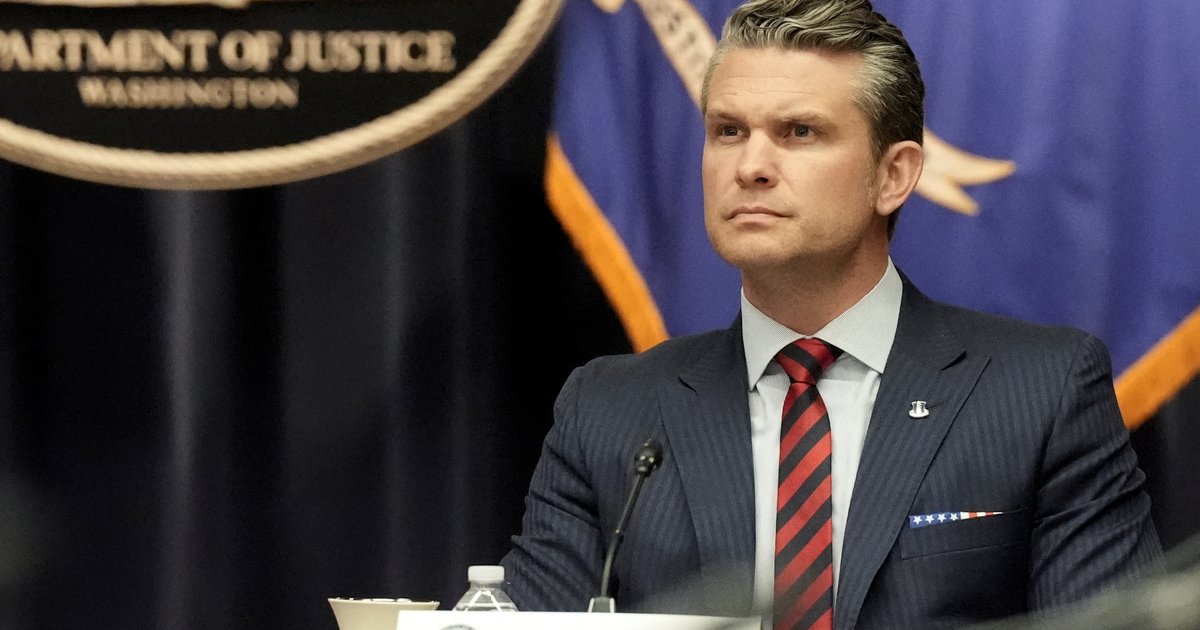
A religious service held at the Pentagon featured a controversial call from Peter Hegseth, who urged violence against those he described as 'unworthy of mercy.' These remarks come at a sensitive time when the United States is experiencing heightened internal and external tensions, raising concerns about the impact of such calls on American society.
In his speech, Hegseth emphasized the importance of strength in confronting enemies, suggesting that some individuals should be met with violence. His statements elicited mixed reactions; while some considered them incitements to violence, others viewed them as reflecting a harsh reality faced by the U.S. military in the context of combating terrorism and extremism.
Details of the Event
The religious service at the Pentagon was attended by several military personnel and government officials, addressing themes related to faith and strength. However, Hegseth's comments on violence were the most controversial, seen as crossing red lines in religious and political discourse.
Hegseth, known for his provocative stances, did not hesitate to express his views openly, leading to widespread criticism from human rights organizations and some politicians who argued that such statements could exacerbate violence in society.
Background & Context
These remarks come in a complex historical context, as the United States has witnessed a rise in violence linked to extremism in recent years. The political and social tensions in the country, particularly following the Capitol riots, have made public discourse more sensitive.
Historically, there have been multiple attempts by public figures to justify violence under various pretexts, leading to a divide in American society regarding the concepts of strength and justice. In this context, the importance of religious discourse and its influence on social and political behaviors becomes evident.
Impact & Consequences
Hegseth's statements carry significant implications on both social and political levels. They could lead to increased tensions among different groups within American society, especially in light of sharp political divisions. Furthermore, these remarks may encourage some individuals to adopt extremist positions, heightening the risk of violence.
Moreover, such calls could affect the United States' image abroad, where it is viewed as a supporter of human rights and democracy. If such statements continue, the U.S. government may face challenges in promoting values of tolerance and mutual respect.
Regional Significance
As tensions rise in the United States, the Arab region is closely monitoring these developments. Calls for violence may impact relations between the U.S. and Arab countries, especially amid shared security challenges.
These events may also evoke past experiences in the region, where some governments have used religious rhetoric to justify violence or suppress dissent. Therefore, observing reactions to these statements in the Arab world will be crucial to understanding potential impacts on international relations.
In conclusion, Hegseth's remarks highlight the challenges facing the United States in its public discourse. It is essential to address these issues with caution and to promote constructive dialogue rather than incitement to violence.