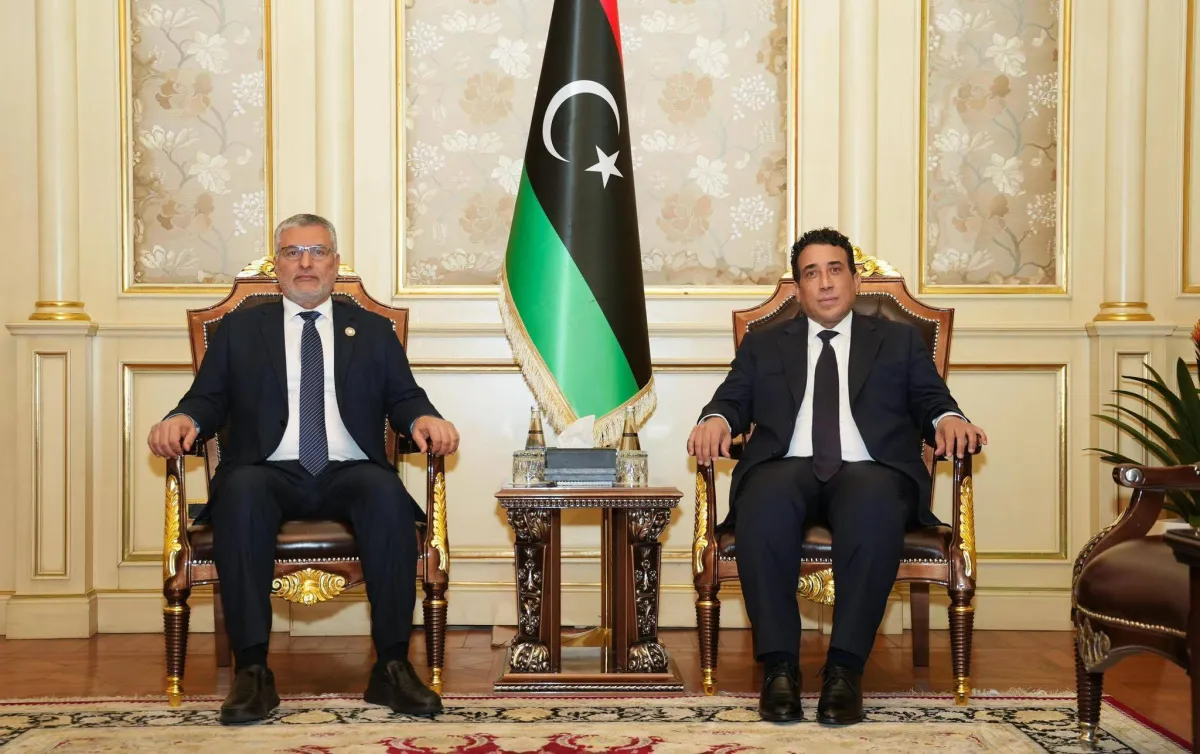
The President of the Presidential Council, Mohamed Al-Menfi, and the Chairman of the State Council, Mohamed Takala, have called for an end to the institutional division in Libya, emphasizing the importance of supporting constitutional paths and providing a secure environment for elections. This call came during a meeting held in the capital, Tripoli, where the political challenges facing the country were discussed.
Amid ongoing political crises, Al-Menfi and Takala highlighted the importance of building trust among the various political parties, which contributes to the success of the electoral process. This meeting occurred at a sensitive time, as new obstacles emerged regarding the rejection of the Libya Reconstruction Fund of any outcomes from the meetings of the economic track committee held in Tunis.
Details of the Meeting
During their meeting, Al-Menfi and Takala stressed the need to address institutional division through comprehensive national agreements aimed at unifying state institutions and enhancing stability. They also discussed the practical steps that must be taken to ensure the organization of free and fair national elections that reflect the will of the Libyan people.
In this context, they reviewed a report from the expert committee of the United Nations Security Council, which included observations on corruption issues affecting some public institutions. They emphasized the necessity of strengthening the role of oversight bodies and activating accountability mechanisms.
Background & Context
These developments come at a time when Libya is suffering from a severe political division, with two competing governments controlling the country, complicating efforts to achieve stability. Numerous international and local initiatives have been launched in an attempt to end this division, but they have yet to yield tangible results.
The security situation in the country remains fragile, as authorities strive to impose state authority and maintain security in the capital and surrounding areas. Al-Menfi reiterated the importance of intensifying efforts to ensure the protection of citizens and uphold public peace.
Impact & Consequences
If the political parties in Libya can reach comprehensive agreements, this could help restore trust between citizens and authorities, potentially leading to improvements in the economic and social situation. However, the continuation of institutional division may exacerbate crises and increase the suffering of the Libyan people.
On the other hand, the rejection of the Libya Reconstruction Fund of the outcomes of economic meetings could complicate development efforts and negatively impact development projects in the country. This requires the government and relevant parties to work on finding consensus solutions that ensure representation from all regions.
Regional Significance
Libya is considered one of the countries facing significant challenges in achieving political and security stability, which affects the regional situation as a whole. Libya's success in overcoming these crises could have a positive impact on neighboring countries, as it may contribute to enhancing regional cooperation and achieving sustainable development.
In conclusion, hope remains pinned on the political parties in Libya to overcome their differences and work together for a better future for the country, which requires strong political will and genuine cooperation among all parties.