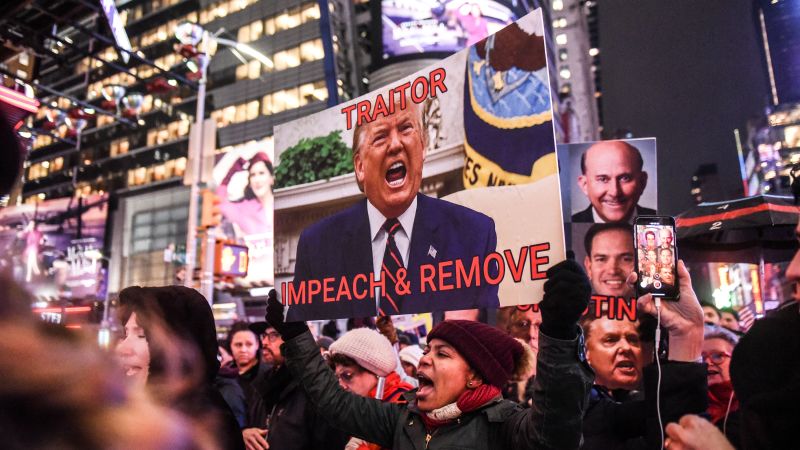
The calls for the impeachment of U.S. President Donald Trump have surged significantly, reaching historic levels never seen before. These demands arise during a sensitive time marked by political and economic tensions in the country, reflecting the acute polarization plaguing the American political landscape.
Reports indicate that over 70% of Americans express dissatisfaction with Trump's performance, highlighting a significant decline in his popularity. These figures come amid a series of crises faced by the administration, including the management of the COVID-19 pandemic, protests against racism, and increasing economic tensions.
Details of the Event
In recent weeks, the voices calling for Trump's impeachment have intensified, with many Democratic lawmakers launching campaigns to gather signatures in support of these demands. Some have pointed out that Trump is no longer capable of effectively leading the country, necessitating serious actions against him.
Additionally, some civil organizations have begun organizing protest events across various states, demanding his impeachment. These movements reflect a sense of public anger towards the policies implemented by the current administration, which many consider inconsistent with democratic values.
Background & Context
Since taking office in 2017, Trump has faced numerous political and social challenges. His presidency has witnessed sharp divisions within American society, as his statements and foreign policy have drawn significant criticism. The management of the COVID-19 crisis marked a turning point in his presidency, with many believing his response was insufficient.
Historically, calls for the impeachment of American presidents are not new, as the country has seen previous attempts against presidents like Richard Nixon and Bill Clinton. However, what distinguishes the current situation is the scale of public response and widespread participation from various segments of society.
Impact & Consequences
If these calls continue to escalate, they could lead to radical changes in the American political landscape. These events are likely to impact the upcoming elections, as candidates may seek to capitalize on the prevailing public discontent.
Moreover, these demands could lead to further divisions within the Republican Party, as Trump may face challenges from within his own party. Should concrete steps be taken towards impeachment, it could fundamentally alter the power dynamics in Washington.
Regional Significance
Arab countries are closely monitoring the political developments in the United States, as any changes in the American administration could significantly affect foreign policies towards the region. U.S. relations with Arab nations, particularly regarding issues like the Israeli-Palestinian conflict, may be greatly influenced.
Furthermore, the state of political instability in the United States could impact global markets, potentially affecting Arab economies that rely on foreign investments.
In conclusion, the calls for Trump's impeachment remain a hot topic in the American political arena, carrying significant implications both domestically and internationally. The world is keenly observing how these events will unfold and whether they will lead to radical changes in the American political landscape.