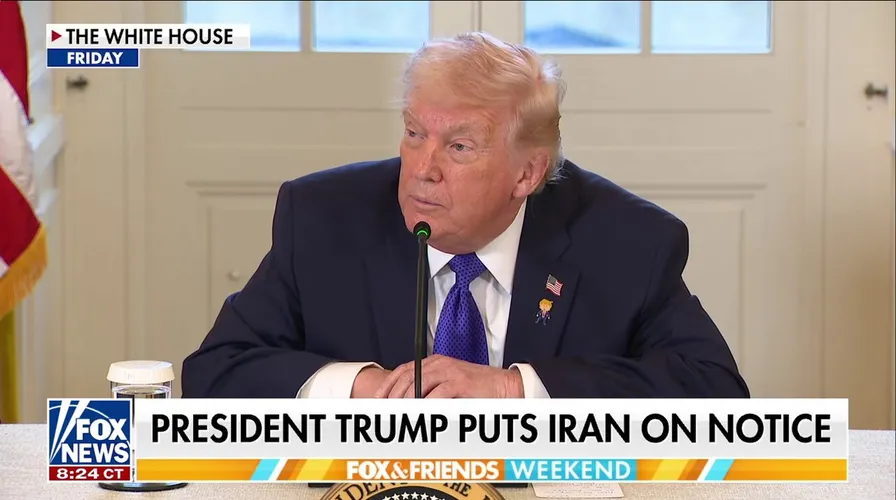
Increasing calls from some American analysts for Washington to 'complete the mission' in Iran raise questions about potential consequences. Writer Douglas MacKinnon criticizes these calls, referencing lessons learned from the Iraq invasion and the Vietnam War.
On February 28, the United States, in collaboration with Israel, launched a military campaign against Iran, sparking widespread debate about what 'completing the mission' actually means. Several American commentators, such as broadcaster Hugh Hewitt, have stated that Washington must take decisive steps against the Iranian regime, without providing clear details on how to achieve this.
Details of the Event
In his statements, Hewitt emphasized that Iran should not be allowed to possess weapons of mass destruction, particularly nuclear weapons. However, he did not present any clear plan or specific strategy for how to 'complete the mission', leaving much ambiguity regarding U.S. intentions.
Douglas MacKinnon, a former White House and Pentagon official, strongly criticized these calls, noting that many analysts advocating for military intervention in Iran are the same individuals who supported the invasion of Iraq in 2003. MacKinnon argued that these 'experts' view wars as if they are games, where soldiers are treated as chess pieces that can be sacrificed.
Background & Context
Historically, the United States has engaged in military interventions in numerous countries, the most notable being the invasion of Iraq in 2003, which resulted in the deaths of approximately 4,500 American soldiers, with estimates of Iraqi casualties ranging between 100,000 and 500,000 people. The repercussions of this intervention continue to resonate, as the Middle East remains plagued by instability.
The Vietnam War, which lasted two decades, served as a harsh lesson for the United States, leading to the deaths of many American soldiers and turning public opinion against the war as images of dead and injured soldiers circulated.
Impact & Consequences
As calls for military intervention in Iran grow, many are questioning the potential consequences of such an intervention. Will the tragedy of Iraq be repeated? What will be the cost of this intervention for American soldiers and Iranian civilians?
MacKinnon asserts that those advocating for 'completing the mission' in Iran must bear the responsibility for the consequences of their actions. With the increasing possibility of witnessing combat scenes live, American public opinion may shift again if horrific images of American soldiers being killed emerge.
Regional Significance
These developments directly affect the Arab region, as any military escalation in Iran could destabilize neighboring countries. Additionally, Iranian civilians may become victims in a conflict in which they have no culpability.
In conclusion, the question remains: what is meant by 'completing the mission' in Iran? What clear military plans exist to ensure this goal is achieved without repeating past mistakes?