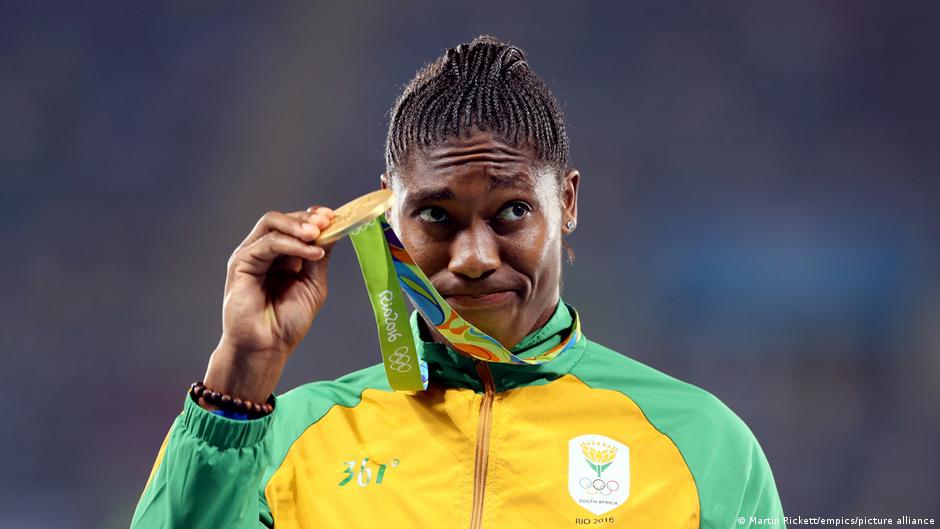
South African runner Caster Semenya, a two-time Olympic gold medalist, has voiced her dissatisfaction with the impact of the International Olympic Committee's new policy on intersex athletes. This policy, announced last week, heavily focuses on transgender athletes, but experts and athletes assert that the effects will be more pronounced for those with Differences in Sexual Development (DSD).
It is noteworthy that Semenya was unable to defend her title in the 800 meters at the Tokyo 2020 Olympics due to a new policy set by the International Association of Athletics Federations, which requires female athletes to lower their testosterone levels to below 5 nanomoles/liter for at least six months prior to competition. Semenya has refused to comply with this policy, resulting in her exclusion from competitions.
Details of the New Policy
The new policy from the International Olympic Committee includes a rare exemption for athletes with complete androgen insensitivity syndrome or other rare differences in sexual development, but it reverts to the SRY test, which was used in the 1990s. This test checks for the presence of the SRY gene, located on the Y chromosome, which is considered an indicator of masculinity.
Semenya described this decision as a “shame,” writing in an article published by Time: “Genetic testing is not a means to protect girls and women in sports. Calling it that is an attempt to cover a monster. Let’s call this what it is: exclusion, but under a different name.”
Background & Context
Over the years, the issue of gender testing in sports has been a contentious topic, raising questions about fairness and equality. In 2023, a report from a group of scientists worldwide indicated that men typically outperform women in endurance, strength, and speed events due to fundamental biological differences. However, cases of athletes with intersex conditions are not as clear-cut as they seem, with situations varying significantly.
Semenya, along with boxer Imane Khalif, who won a gold medal at the 2024 Paris Olympics, is among the athletes with differences in sexual development. Professor Alon Williams, a sports scientist at Manchester Metropolitan University, warned that these athletes may face marginalization due to these changes.
Impact & Consequences
The new policy from the International Olympic Committee raises ethical concerns regarding genetic testing for a large number of individuals, many of whom are under the age of 18. Williams pointed out that revealing information that could change their lives regarding their personal biology could have significant negative repercussions.
The International Olympic Committee is now reverting to a system abandoned in the 1990s, reducing biological sex to the presence of a single gene on the Y chromosome, which is an oversimplification. While there is strong evidence of physical advantages for transgender athletes, the evidence regarding advantages for athletes with intersex conditions remains contentious.
Regional Significance
In the Arab region, this issue is garnering increasing attention, with growing calls for equality in sports. These policies may affect Arab athletes with differences in sexual development, necessitating an open dialogue about their rights and needs.
In conclusion, the issue of genetic testing and gender testing in sports remains a complex topic that requires a balance between fairness and equality. All athletes must be treated with dignity and respect, with the necessary medical support and advice provided.