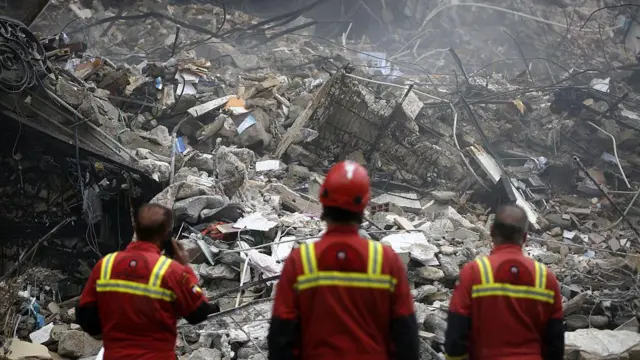
The United States and Iran have announced a temporary ceasefire, coming after more than a month of military escalation in the region. The coordinated attacks launched by the US and Israel on Iranian targets raised widespread international concern, prompting the involved parties to seek diplomatic solutions.
In his statements, Israeli Prime Minister Benjamin Netanyahu confirmed that this agreement does not include Lebanon, raising questions about the future of Israeli-Lebanese relations amid ongoing tensions. This development comes at a sensitive time, as fears of escalating conflict in the region are increasing.
Details of the Ceasefire
The temporary ceasefire represents an important step in efforts to ease tensions between the United States and Iran. The attacks targeting Iranian sites over the past weeks aimed to undermine Tehran's influence in the region; however, international reactions have varied, with many countries calling for restraint.
The military actions by the US and Israel were driven by concerns over Iran's nuclear program, which the West views as a threat to regional and international security. Nevertheless, military escalation could lead to dire consequences for regional security, necessitating dialogue and negotiation.
Background & Context
Historically, relations between the United States and Iran have seen increasing tensions since the Iranian Revolution in 1979. Economic sanctions and military blockades have been prominent tools of US policy towards Iran, exacerbating the conflict. In recent years, the current US administration has attempted to reassess its strategy towards Tehran, but military escalation could bring matters back to square one.
Israel, for its part, considers Iran an existential threat and has conducted several military operations against Iranian targets in Syria. These operations reflect Israel's strategy to limit Iranian influence in the region, complicating the security landscape further.
Impact & Consequences
The temporary ceasefire may contribute to reducing tensions; however, challenges remain. The continued presence of US forces in the region could provoke Iranian reactions, potentially leading to renewed escalation in the future. Additionally, the exclusion of Lebanon from the agreement could open the door for new military operations if tensions rise.
The economic ramifications of this conflict could be significant, as any military escalation may impact oil prices and global financial markets. Oil-producing countries in the region are closely monitoring the situation, as any disruption in supplies could affect the global economy.
Regional Significance
The Arab region is already suffering from multiple conflicts, and the ceasefire between the US and Iran could have either positive or negative effects. If calm persists, it may open doors for new diplomatic efforts to resolve existing disputes in the region.
However, ongoing tensions between Iran and Israel could lead to renewed escalation, affecting the stability of neighboring countries. It is crucial for Arab nations to remain vigilant and work towards enhancing regional cooperation to address security challenges.
The temporary ceasefire represents an opportunity to seek peaceful solutions to the conflict, but challenges remain. The current situation requires ongoing diplomatic efforts to ensure regional stability.