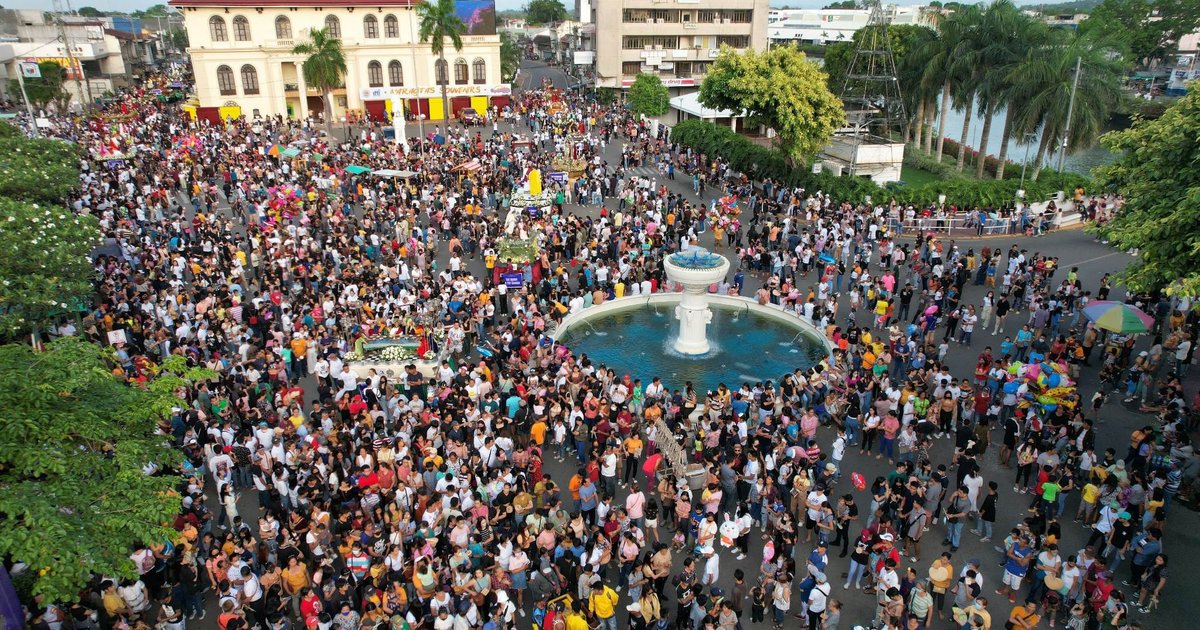
Christians worldwide celebrate Good Friday, a significant day marked by ancient religious rituals and devoted prayers. This day is part of Holy Week, where believers remember the suffering and death of Christ. It is typically observed on the Friday before Easter and is considered one of the holiest days in the Christian calendar.
The celebrations on this day include a variety of rituals that differ from church to church, but they all share an atmosphere of sorrow and reflection. The day usually begins with a special prayer known as the Ninth Hour Prayer, where believers are reminded of Christ's sufferings. Special masses are also held that focus on reading passages from the Gospel related to the Passion of Christ.
Event Details
The rituals practiced on Good Friday are among the oldest Christian traditions, dating back to the early centuries of Christianity. In many countries, processions and ceremonies are held to express sorrow and respect for the memory of Christ's crucifixion. In some cultures, fasting and abstaining from meat are preferred on this day as a form of expressing grief.
The processions held on this day are among the most prominent expressions of celebration, where believers gather in the streets carrying crosses and chanting hymns. In some cities, large processions involve thousands of participants, reflecting the strength of faith and solidarity among Christians.
Background & Context
Good Friday is part of Holy Week, which begins on Palm Sunday and ends with Easter. This week is considered an important reflective period for Christians, focusing on the meanings of redemption and sacrifice. Historically, it is believed that Good Friday has been celebrated since the fourth century AD, when it was established as a commemoration of Christ's crucifixion.
The ways of celebrating this day vary among different Christian denominations. While Catholic churches focus on traditional rituals, some Protestant denominations prefer simpler methods. Nevertheless, the overall atmosphere on this day is one of sorrow and contemplation of the meanings of redemption.
Impact & Consequences
Good Friday is not just a religious celebration; it has profound social and cultural implications. This day serves as an opportunity for believers to reflect on values of forgiveness and love, strengthening social bonds within the community. It also demonstrates Christians' commitment to their faith, reflecting the importance of religion in their daily lives.
The rituals associated with Good Friday provide an opportunity for renewing faith, as many believers engage in confession and repentance. This enhances spiritual connections among individuals and contributes to promoting human values within society.
Regional Significance
In the Arab region, Good Friday is an important occasion for Christians, celebrated in many countries such as Lebanon, Palestine, and Egypt. The celebrations in these countries reflect cultural and religious diversity, as Christians express their faith through traditional rituals and social practices.
These celebrations provide an opportunity to enhance interfaith dialogue, as Muslims show support for Christians during their celebrations. This fosters values of peaceful coexistence among different religions in the region.
In conclusion, Good Friday is an occasion that reflects the depth of Christian faith and highlights the importance of spiritual values in individuals' lives. This day strengthens social and religious bonds and contributes to fostering understanding among different cultures.