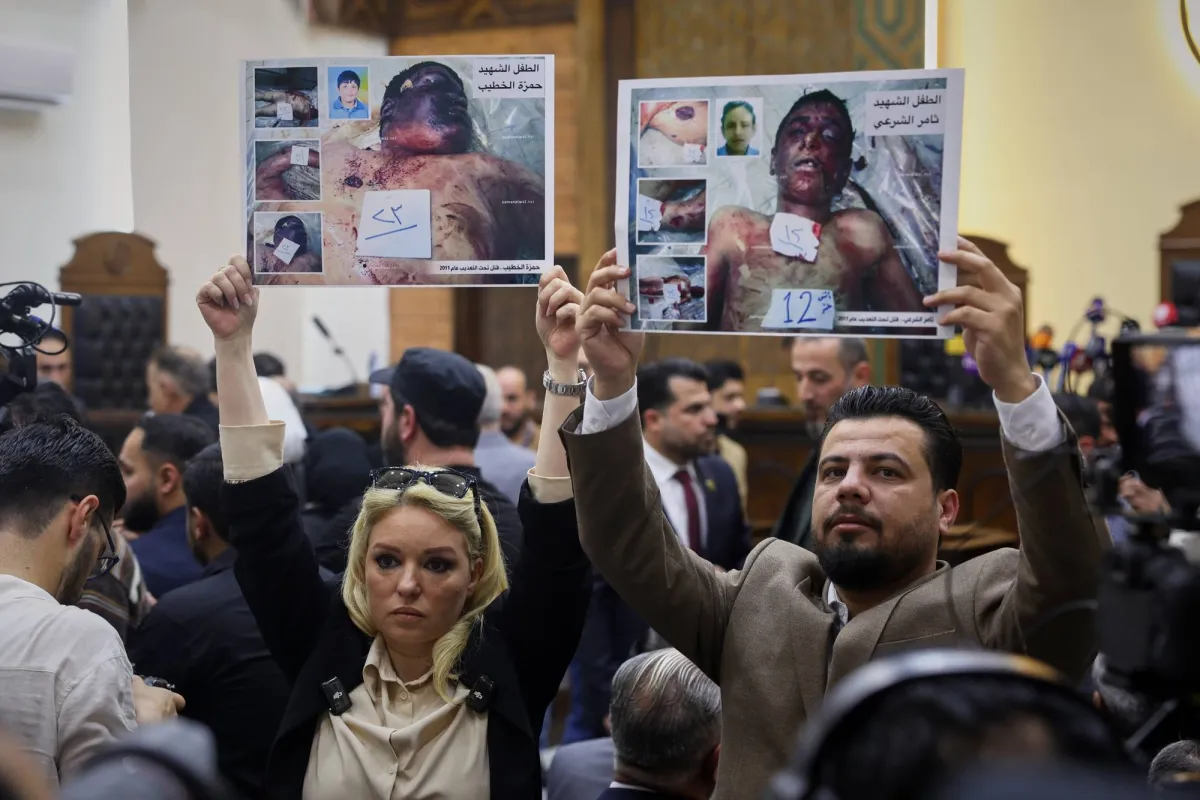
In an atmosphere charged with joy and anticipation, several residents of Daraa gathered outside the courthouse to follow the first session of the trial of Aatif Najib, the head of political security in the city, who is accused of committing severe human rights violations during the Syrian revolution. A young woman, aged twenty-eight, who was only fifteen when the protests erupted in 2011, expressed her feelings, saying: "I am from the family of Sheikh Ahmad Al-Siyassine, all my cousins and all the people of Daraa have faced arrest, persecution, and murder. Today, we celebrate the trial of the killer; we have triumphed, and I hope for justice for everyone who violated human rights in Syria."
Outside the courtroom, law enforcement officers were heavily deployed, while media cameras occupied most of the space inside. This sparked outrage among some personal claimants who had come from Daraa early in the morning, as they were forced to wait outside until their names were called. One of them shouted in protest: "Are journalists prioritized over claimants?" but no one responded amidst the noise of the courthouse.
Details of the Event
The trial witnessed the presence of more than 50 people from Daraa, including 6 young men who were arrested by Aatif Najib in February 2011, in what is known as the "Children of Freedom" case. These young men were accused of writing the phrase "Your turn has come, Doctor" on the wall of a school. During that period, more than 20 children were arrested for graffiti, as reported by Ola Aba Zeid, who attended the trial with her brother Abdul Rahman as a claimant. She confirmed that Najib denies arresting and torturing the children, despite the fact that everyone who entered Assad's prisons faced various forms of torture.
Ola urged the Syrian authorities to organize the access of claimants to the courtroom, hoping that Najib and all those who committed violations against Syrians would receive just punishment. Iyad Khalil, who was waiting to be called into the courtroom, said: "I was the first detainee in the Syrian revolution on February 8, 2011, when I was 14 years old," pointing to a physical disability in his leg resulting from torture.
Background & Context
The events of the "Children of Freedom" case date back to the beginning of the Syrian revolution when several children in Daraa took to the streets to express their demands, only to face violent repression from the regime. Aatif Najib, who was the head of political security in Daraa, played a pivotal role in those events, being accused of issuing orders for the arrest and torture of children. This trial represents a turning point in the path of justice in Syria, as victims and their families seek to reclaim their rights.
Historically, Daraa has witnessed numerous violations over the past years, making it a hotspot for protests and revolutions. As events escalated, it became essential to hold those responsible for these violations accountable, which is what the people of Daraa are striving for today through this trial.
Impact & Consequences
The trial of Aatif Najib is considered an important step towards achieving justice in Syria and may help to enhance trust between citizens and authorities. It also reflects the Syrian community's desire to hold accountable those responsible for the violations they have suffered. This trial could open doors for more cases related to human rights in Syria, thereby reinforcing the importance of transitional justice.
Despite the significant challenges facing Syria, this trial represents a glimmer of hope for victims and their families as they seek justice and accountability. The success of this trial may encourage more victims to speak out and report the human rights violations they have endured.
Regional Significance
The trial of Aatif Najib is an important event not only in Syria but in the Arab region as a whole. It reflects the social and political changes occurring in the region, where citizens are striving for justice and accountability. This trial may inspire other peoples in the region to stand against violations and demand their rights.
In conclusion, this trial represents a step towards achieving justice in Syria and could mark the beginning of a new phase of accountability for the violations suffered by citizens. The hope for justice remains alive, and the international community must support these efforts to ensure that perpetrators do not escape punishment.