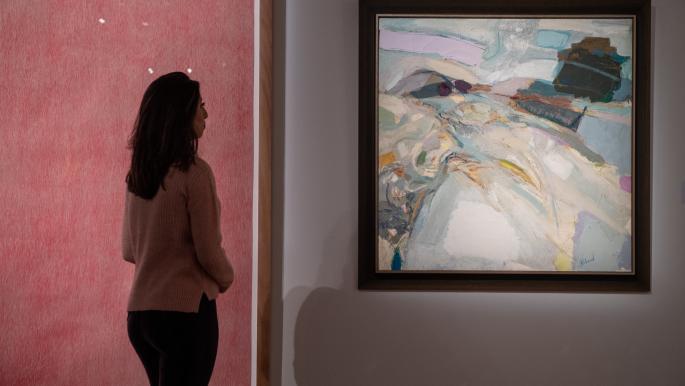
The world celebrates Lebanese artist Shafiq Aboud, marking 100 years since his birth. His works, influenced by Byzantine icons and church traditions, reflect his struggle with identity between Lebanon and France.
Shafiq Aboud, born in 1923 in Lebanon, is considered one of the most prominent visual artists in the Arab world. He left a clear mark in the art world through his works that reflect deep cultural and religious influences. Although he spent a significant part of his life in France, his Lebanese roots remained present in all his artistic contributions.
Event Details
Aboud's centenary coincides with artistic and cultural celebrations in Lebanon and abroad, where a collection of his works is being showcased in special exhibitions. Reports indicate that these exhibitions aim to highlight his significant influence on contemporary art movements and how he managed to blend Lebanese heritage with European modernity.
Aboud always expressed his feelings about his identity, stating in one of his remarks: "I am no longer Lebanese, nor could I become French." This phrase summarizes the internal conflict the artist experienced, which manifested in his works that reflect the tension between different cultures.
Background & Context
Historically, Lebanon witnessed significant social and political transformations in the 20th century. These transformations directly affected artists and creatives, many of whom found themselves facing challenges of identity and belonging. Shafiq Aboud was one of those artists, having moved to France early in his life, which allowed him to explore new artistic currents.
Aboud was influenced by Byzantine icons, which is clearly evident in his works that blend traditional and modern styles. He played a major role in promoting visual arts in Lebanon, contributing to the establishment of several art associations aimed at supporting young artists.
Impact & Consequences
The influence of Shafiq Aboud extends beyond his artistic works. He contributed to shaping a new artistic identity in Lebanon, becoming a symbol of challenge and creativity. His works were not limited to aesthetics alone; they expressed important social and political issues.
Moreover, Aboud inspired many young artists who seek to express their identities through art. He became a role model for how to combine different cultures, reflecting the rich diversity of the Arab world.
Regional Significance
Shafiq Aboud's centenary is an opportunity to reconsider visual arts in the Arab world, highlighting the role of artists in expressing issues of identity and belonging. Amid the political and social changes in the region, art remains a powerful means of expressing feelings and ideas.
Celebrating a figure like Shafiq Aboud reflects the importance of the arts in enhancing cultural dialogue between peoples and emphasizes the need to support artists and creatives in the Arab world.
In conclusion, the works of Shafiq Aboud stand as a testament to the ability of art to transcend cultural and geographical boundaries, making his centenary a fitting occasion to celebrate creativity and identity simultaneously.