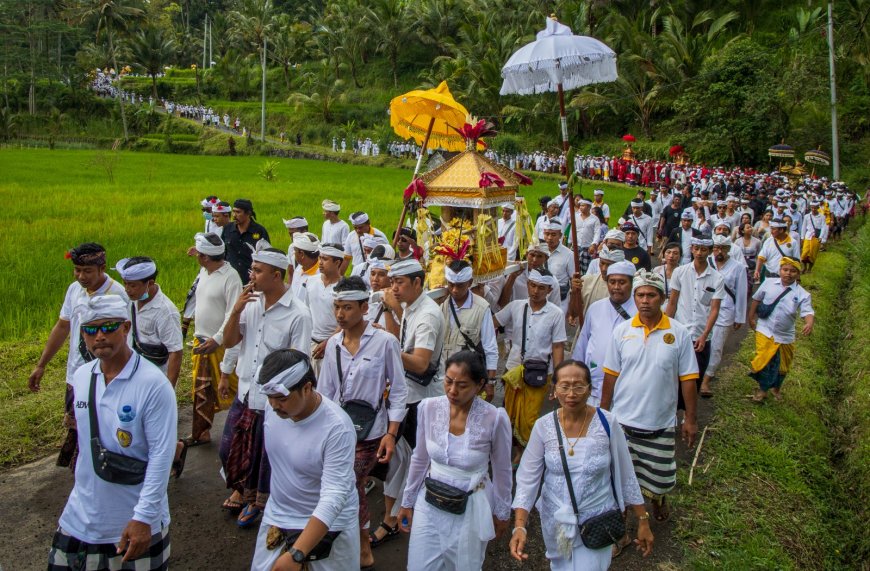
Residents of Tiengtali village in Karangasem, Bali, Indonesia, celebrated the 'Miyab' tradition, held every three years, where participants carry sacred items across a lake to pray for agricultural fertility. This tradition is an essential part of the Hindu culture in the region, reflecting the community's connection to the land and agriculture.
Hundreds of locals gathered for this annual event, dressed in traditional attire and participating in religious rituals aimed at enhancing fertility and agricultural production. Participants carry 'jembana', sacred items considered symbols of blessing and fertility, parading them around the lake.
Event Details
The 'Miyab' celebrations typically begin with prayers and supplications to the gods, as this tradition is an opportunity to express gratitude for the natural resources provided by the land. The event also serves as a means to strengthen social bonds among community members, as everyone comes together to celebrate.
The celebrations take place in an atmosphere of joy and happiness, with traditional music playing and local foods being served. This tradition demonstrates how agriculture is not merely an economic activity but an integral part of the cultural and religious identity of the residents.
Background & Context
Historically, the 'Miyab' tradition is part of the Hindu cultural heritage in Indonesia, practiced for centuries. These rituals reflect the deep ties between humans and nature, showcasing how agricultural communities depend on natural factors to ensure their livelihoods. Amidst climate changes and challenges facing agriculture, this tradition serves as a means to preserve cultural identity and raise awareness about the importance of agriculture.
Bali is considered one of the most famous tourist destinations in Indonesia, attracting visitors from around the world. The 'Miyab' tradition illustrates how local culture can play a role in promoting sustainable tourism, allowing visitors to experience this unique ritual and interact with local residents.
Impact & Consequences
The 'Miyab' tradition exemplifies how culture can influence the local economy. By attracting tourists, this tradition can contribute to boosting the local economy and increasing awareness of the importance of agriculture. Additionally, this event provides an opportunity to enhance cultural understanding between visitors and locals, fostering cultural exchange and building bridges of cooperation.
Moreover, this tradition serves as a means to emphasize the importance of sustainable agriculture and environmental preservation. In light of current environmental challenges, this tradition can inspire other communities to adopt more sustainable agricultural practices.
Regional Significance
Although the 'Miyab' tradition focuses on Hindu culture in Indonesia, there are lessons to be learned in the Arab region. Agriculture is a fundamental part of cultural identity in many Arab countries, and cultural celebrations associated with agriculture can enhance awareness of the importance of this sector. Such events can also contribute to promoting cultural tourism in Arab countries.
In conclusion, the 'Miyab' tradition demonstrates how culture and religion can unite to promote agriculture and preserve cultural identity. This event is a call for everyone to celebrate nature and recognize the importance of agriculture in our daily lives.