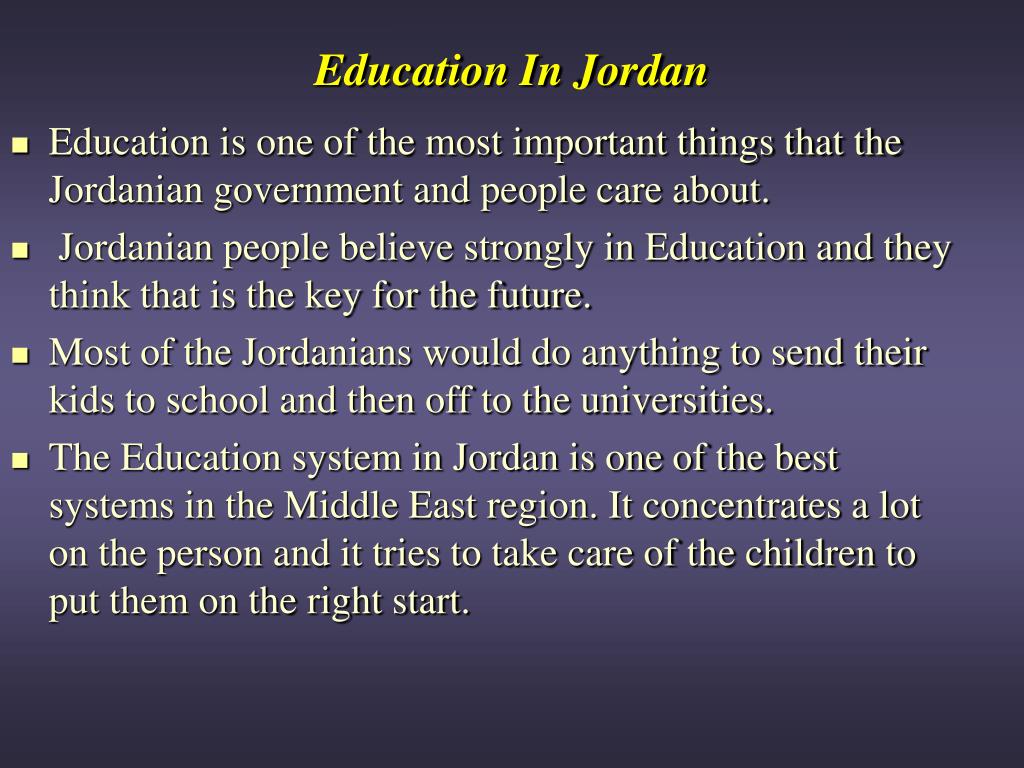
A new report highlights the education rate in Jordan, pointing out the challenges facing the educational system. It discusses the factors affecting education quality and the efforts being made to improve it.
Education is one of the fundamental pillars for the advancement of societies, playing a crucial role in shaping the future of upcoming generations. However, the educational system in Jordan faces numerous challenges that impact the quality of education and its outcomes.
Event Details
The report indicates that the education rate in Jordan reflects a complex reality, with data showing significant disparities in education quality between urban and rural areas. It also emphasizes the urgent need to improve educational infrastructure and provide the necessary resources for schools.
Moreover, the importance of teacher training and skill development has been highlighted, as teachers are the core element in the educational process. Greater investment in training and professional development programs is required to ensure high-quality education delivery.
Background & Context
Historically, Jordan has witnessed significant transformations in its educational system, with numerous reforms introduced in recent years. Nevertheless, persistent challenges require immediate attention. Among these challenges is the increasing number of students in schools, which places additional pressure on educational resources.
The impact of the COVID-19 pandemic has further complicated the situation, as studies have shown that remote learning was not effective for all students, exacerbating educational gaps. Therefore, addressing these issues necessitates comprehensive and integrated strategies.
Impact & Consequences
Improving the education rate in Jordan has far-reaching implications for society as a whole. As the quality of education rises, so do the opportunities for youth to secure good jobs, contributing to reduced unemployment rates and bolstering the national economy.
Furthermore, quality education fosters the development of an informed and educated society, enhancing citizens' ability to participate actively in political and social life. Thus, investing in education is considered an investment in the country's future.
Regional Significance
Jordan's experience in improving its education rate serves as a model for the Arab region. Many Arab countries face similar challenges in their educational systems, making it essential to share experiences and best practices.
Enhancing regional cooperation in the field of education could contribute to improving education quality across the region, benefiting future generations. Therefore, there should be joint efforts to develop effective educational strategies.
In conclusion, improving the education rate in Jordan requires a concerted effort between the government, civil society, and the private sector. Investing in education is an investment in a better future for all.