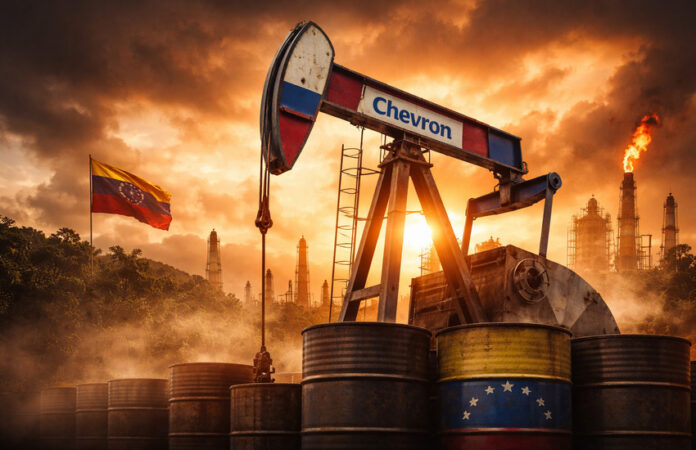
Mike Wirth, the CEO of Chevron, affirmed that the adjustments made by the Venezuelan government to its oil policies indicate a significant advancement in the country's efforts to attract foreign investments. Wirth explained that these changes present a substantial opportunity to revive the oil industry in Venezuela, which has been experiencing a significant decline in production over the past years.
Wirth pointed out that foreign investments are essential for rebuilding the oil infrastructure in Venezuela, which was once one of the largest oil producers in the world. However, he emphasized that the government needs to take more steps to enhance the business environment and attract international investors.
Details of the Event
Wirth's statements come at a critical time for Venezuela, as the country faces significant economic challenges due to international sanctions and internal conflicts. The oil industry in Venezuela has seen a sharp decline in production, with output levels dropping from approximately 3.2 million barrels per day in 2015 to less than 700,000 barrels per day currently.
The Venezuelan government is striving to improve economic conditions by attracting foreign investments and has already begun implementing some reforms aimed at enhancing the business environment. However, concerns remain regarding the political and economic stability in the country, which could hinder investment attraction efforts.
Background & Context
Historically, Venezuela possessed the largest oil reserves in the world and heavily relied on oil revenues to finance its economy. However, unstable economic policies and international sanctions have led to a deterioration of the economic situation. In recent years, the Venezuelan government has attempted to restructure the oil industry by allowing more participation from foreign companies.
Chevron is considered one of the major oil companies still operating in Venezuela, seeking to capitalize on the available opportunities in the market. Nevertheless, political and economic challenges continue to pose obstacles to the recovery of the oil industry in the country.
Impact & Consequences
If Venezuela can attract the necessary foreign investments, it could lead to an improvement in the country's economic situation and an increase in oil production. This would contribute to restoring Venezuela's status as one of the largest oil producers in the world.
However, success in this area depends on the government's ability to implement the necessary reforms and provide a stable environment for investors. Should political and economic challenges persist, Venezuela may remain trapped in a cycle of poverty and economic decline.
Regional Significance
The oil industry in Venezuela is important not only for the Venezuelan economy but also for global economies, including Arab countries that heavily rely on oil exports. If Venezuela manages to restore its oil production, it could impact global oil prices and increase competition in the market.
Moreover, Venezuela's success in attracting investments could serve as a model for other countries in the region seeking to enhance their oil industries. Ultimately, hope remains pinned on the Venezuelan government's ability to achieve economic and political stability.