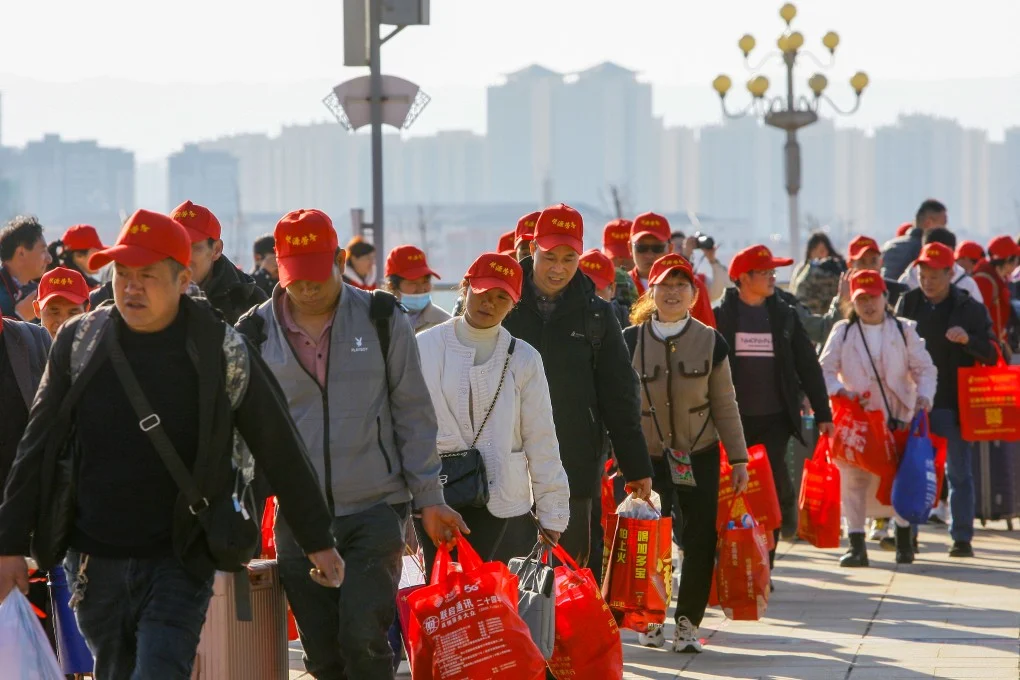
The Chinese government announced on Friday new measures aimed at easing restrictions on migrant workers, enabling them to benefit from social insurance programs in the regions where they work. This initiative is part of the government's efforts to enhance workers' rights and improve working conditions across the country.
These measures are part of a broader strategy aimed at creating a unified national market by removing barriers that hinder the flow of capital and human resources. The State Council, China's highest executive body, noted that these changes will contribute to strengthening the social protection of migrant workers, who represent a significant segment of the country's workforce.
Details of the New Policy
Under the new policy, migrant workers will be able to register for social insurance programs in the areas where they work, rather than having to return to their original regions. This change reflects the government's commitment to improving the lives of workers and enhancing their rights, especially in light of the economic and social challenges facing the country.
The new measures also include improvements to the health insurance system, allowing workers to access better and more comprehensive health services. The government will work to simplify the registration processes for social insurance programs, making them more accessible to migrant workers.
Background & Context
Historically, migrant labor in China has faced strict restrictions on access to social services, leading to widespread inequality in rights. The "Hukou" system, which determines individuals' place of residence, has been a major factor contributing to this issue. With the increasing number of migrant workers in China, the need for radical reforms has become more urgent.
In recent years, China has witnessed significant changes in its economic and social policies, as the government seeks to improve working conditions and enhance workers' rights. These reforms come at a sensitive time, as the country faces economic challenges due to global changes.
Impact & Consequences
This step represents a significant shift in government policy towards migrant workers, expected to lead to improved working conditions and increased social stability. Furthermore, these measures may contribute to boosting the local economy by increasing workers' consumption and improving their access to essential services.
Moreover, these changes could attract more migrant workers to major cities, helping to stimulate economic growth in those areas. However, the biggest challenge remains ensuring the effective implementation of these policies and providing the necessary support for migrant workers.
Regional Significance
China's experience in improving the rights of migrant workers serves as a model that Arab countries can benefit from, as many of them face similar challenges in labor rights. These reforms could inspire Arab nations to adopt more inclusive and effective policies for protecting workers' rights, thereby enhancing social and economic stability in the region.
In conclusion, this step by the Chinese government marks a milestone in the journey towards improving workers' rights and may have positive impacts on the economy and society as a whole.