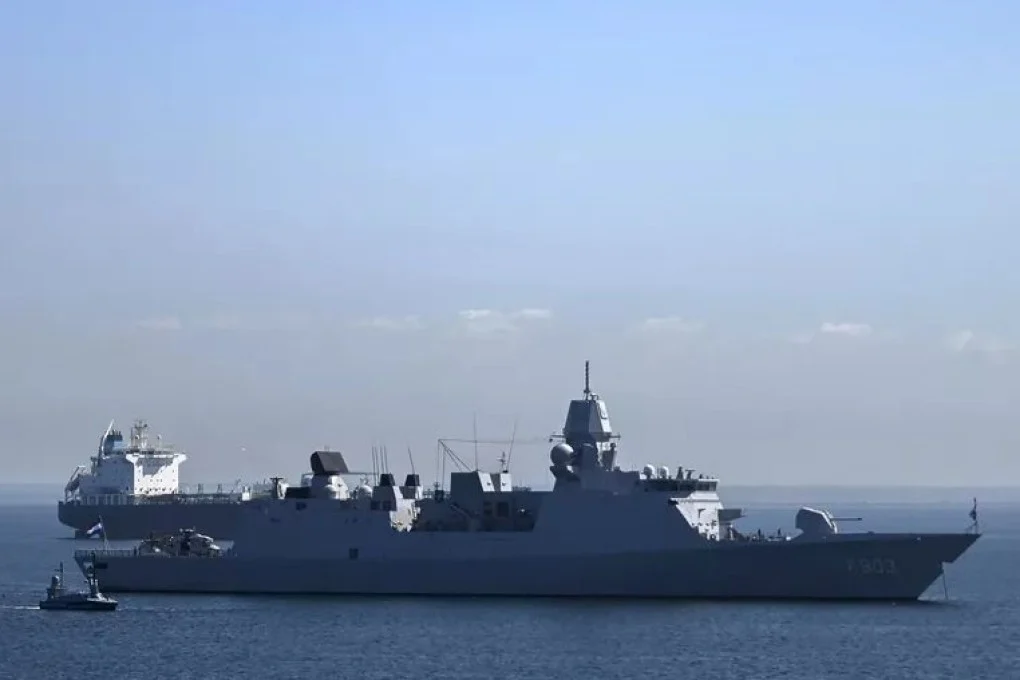
On Wednesday, China declared that its armed forces successfully expelled a Dutch warship from the Paracel Islands, employing methods that included electronic jamming. This announcement was made in an official statement from the Southern Theater Command of the People's Liberation Army, which is responsible for security in the South China Sea.
The Dutch vessel, known as De Ruyter, was described as having 'illegally intruded' into the Xisha Islands, the Chinese name for the Paracel Islands. This incident reflects the escalating tensions in the region, where several countries are disputing sovereignty over these resource-rich waters.
Details of the Incident
According to the statement, the incident occurred late on Wednesday, with Chinese forces confirming that they took immediate action to expel the Dutch ship. Reports indicated that the Dutch Navy was conducting patrol operations in the area, prompting a strong reaction from the Chinese side.
In an unusual move, China accused the Dutch Navy of causing a 'miscalculation,' adding a new dimension to the existing tensions in the South China Sea. This area is considered a hotspot for maritime disputes, with China competing against countries like Vietnam, the Philippines, and Malaysia for sovereignty.
Background & Context
Historically, the Paracel Islands have been a focal point of a long-standing dispute between China and Vietnam, with China controlling the islands since 1974. However, other countries in the region do not recognize Chinese sovereignty, leading to recurring tensions. In recent years, China has increased its military activities in the South China Sea, raising concerns among neighboring countries and the United States.
Chinese military operations in the region include the construction of military bases on artificial islands, enhancing its position in maritime disputes. In this context, incidents like the expulsion of the Dutch ship are part of China's strategy to maintain control over contested waters.
Impact & Consequences
This incident could escalate tensions between China and Western countries, especially with allies like the Netherlands. Western nations may respond to this action by bolstering their military presence in the region, potentially increasing the risk of future confrontations.
Furthermore, rising tensions in the South China Sea could impact global trade flows, as a significant percentage of maritime trade passes through these waters. Any escalation could affect commodity prices and increase economic instability in the region.
Regional Significance
For Arab countries, any escalation in the South China Sea could impact economic interests, particularly with the increasing reliance on trade with China. Stability in this region also affects maritime security, which is vital for Arab nations that depend on maritime trade.
In conclusion, the situation in the South China Sea remains complex, with national interests intertwining with regional and international tensions. It is crucial to monitor the developments of this incident and its implications for security and stability in the region.