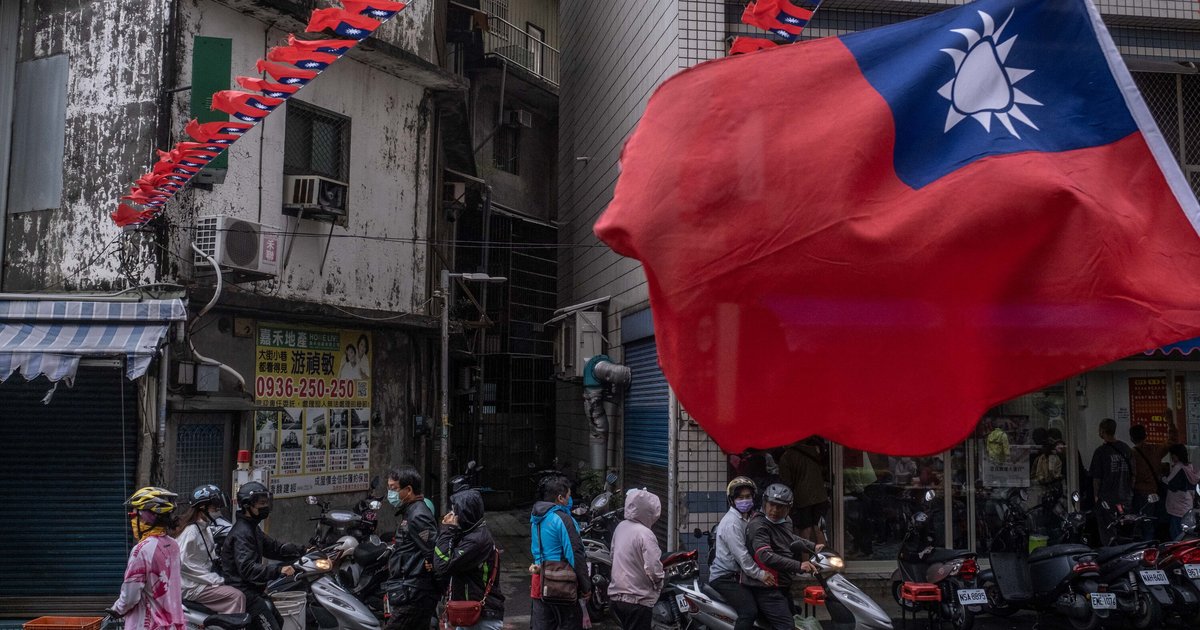
China welcomed the leader of Taiwan's Kuomintang party, marking the first such visit in a decade. This initiative aims to demonstrate the potential for avoiding conflict in the Taiwan Strait while also seeking to reduce U.S. arms sales to the island.
This visit comes at a sensitive time as Beijing seeks to strengthen its position in the face of increasing U.S. pressure, presenting itself as a party striving for peace and stability in the region.
Details of the Event
The Chinese government received the leader of the Kuomintang, which is one of the most prominent opposition parties in Taiwan. This visit follows a prolonged period of tensions between Beijing and Taipei, with rising concerns over a potential military conflict in the region. Through this step, China aims to send a message to the United States that dialogue and negotiation are possible.
This visit is seen as an attempt by Beijing to diminish the impact of U.S. support for Taiwan, which includes repeated arms sales. China hopes that this visit will help ease tensions in the Taiwan Strait, a potential flashpoint in international relations.
Background & Context
Over the past years, relations between China and Taiwan have experienced increasing tension, particularly after the Democratic Progressive Party came to power in Taiwan, adopting a more independence-oriented policy. In contrast, China seeks to reunify Taiwan with the mainland, considering it an integral part of its territory. Historically, relations between the two sides have fluctuated, with periods of cooperation and conflict.
The visit by the Kuomintang leader is a strategic move by Beijing, attempting to exploit political divisions within Taiwan to bolster its position. Additionally, this visit occurs amid escalating tensions in U.S.-China relations, complicating the situation in the region further.
Impact & Consequences
This visit demonstrates that China is looking to use diplomacy as a means to alleviate tensions, but it also reflects concerns over the increasing U.S. support for Taiwan. If Beijing succeeds in convincing Taiwan to open channels for dialogue, it could lead to a reduction in regional tensions; however, China may face resistance from other political forces in Taiwan.
The implications of this visit are expected to be significant for international relations, as the United States will monitor China's reactions and assess how this move impacts its strategy in the region. Additionally, if China succeeds in improving relations with Taiwan, it may encourage bolder steps in its foreign policy.
Regional Significance
The China-Taiwan relationship holds particular importance for the Arab region, as stability in the Taiwan Strait could influence economic and political balances in Asia. Any escalation in conflict could affect oil prices and global trade, reflecting back on the Arab economy.
Ultimately, this visit could represent a turning point in relations between China and Taiwan, potentially opening new avenues for dialogue and cooperation, but it also carries the risks of escalation if not handled carefully.