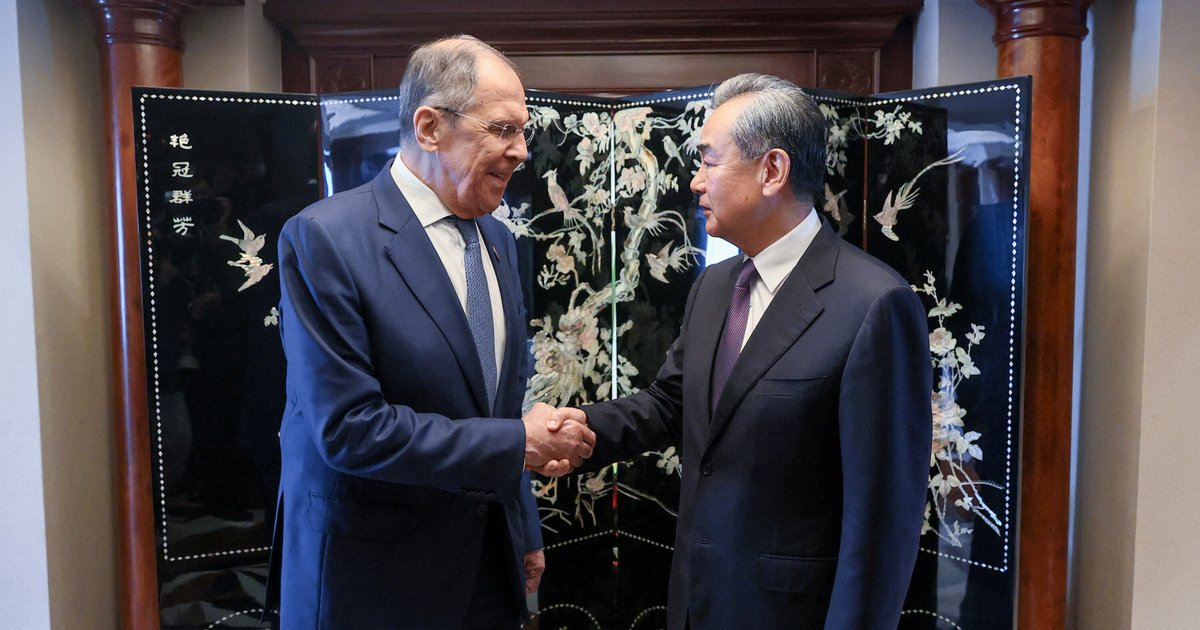
In a move reflecting new trends in international politics, Chinese Foreign Minister Wang Yi announced his country's willingness to collaborate with Russia at the UN Security Council to alleviate escalating tensions in the Middle East. This announcement was made during a phone call with his Russian counterpart Sergey Lavrov, where Wang emphasized the importance of achieving a ceasefire as soon as possible.
Wang pointed out that the fundamental solution to navigation issues in the Strait of Hormuz lies in achieving a truce, adding that China consistently advocates for resolving hot issues through dialogue and negotiation. These statements come at a time when the international community is awaiting a vote by the Security Council on a Bahraini draft resolution aimed at protecting commercial shipping in the region.
Details of the Event
In his conversation with Lavrov, Wang stressed the necessity for both China and Russia to adopt an objective and balanced approach to addressing global issues, including the situation surrounding Iran, which is significantly affected by the unwarranted aggression from the United States and Israel. The Russian Foreign Ministry expressed satisfaction with the alignment between the two countries on many international issues.
These remarks come at a time when the Arabian Gulf is witnessing heightened tensions, as China has repeatedly called for an end to the fighting in the region, which has persisted for over a month and led to the closure of the Strait of Hormuz, a vital corridor for oil and gas shipping. This strait is considered one of the most important maritime passages in the world, through which approximately 20% of the global oil supply flows.
Background & Context
Historically, the Middle East has experienced numerous crises and conflicts that have led to repeated international interventions. Since the beginning of the new millennium, tensions between major powers in the region have escalated, particularly following the U.S. invasion of Iraq in 2003. These interventions have contributed to destabilizing the region, exacerbating humanitarian and political crises.
In recent years, Iran has become a key focal point in regional conflicts, facing increasing pressure from the United States and its allies. This pressure has led to rising tensions in the Gulf, making it imperative for powers like China and Russia to intervene to mitigate these tensions.
Impact & Consequences
The cooperation between China and Russia in addressing Middle Eastern issues could alter the power dynamics in the region. China, seeking to enhance its global influence, views stability in the Middle East as an opportunity to bolster its economic interests. Meanwhile, Russia aims to maintain its influence as a great power on the international stage.
If these countries succeed in achieving a ceasefire, it could lead to opening new channels for dialogue between conflicting parties, contributing to long-term stability in the region. Additionally, this cooperation may encourage other nations to engage in peace efforts, reflecting a shift in international politics towards peaceful solutions.
Regional Significance
For Arab countries, this collaboration between China and Russia represents an opportunity to enhance regional dialogue. Stability in the Gulf directly impacts Arab security and economy. The success of these efforts could also help alleviate humanitarian crises faced by some Arab nations due to ongoing conflicts.
In conclusion, it appears that new trends in international politics may open new horizons for peace and stability in the Middle East. As tensions continue, hope remains pinned on international efforts to achieve a peaceful settlement that benefits all parties involved.