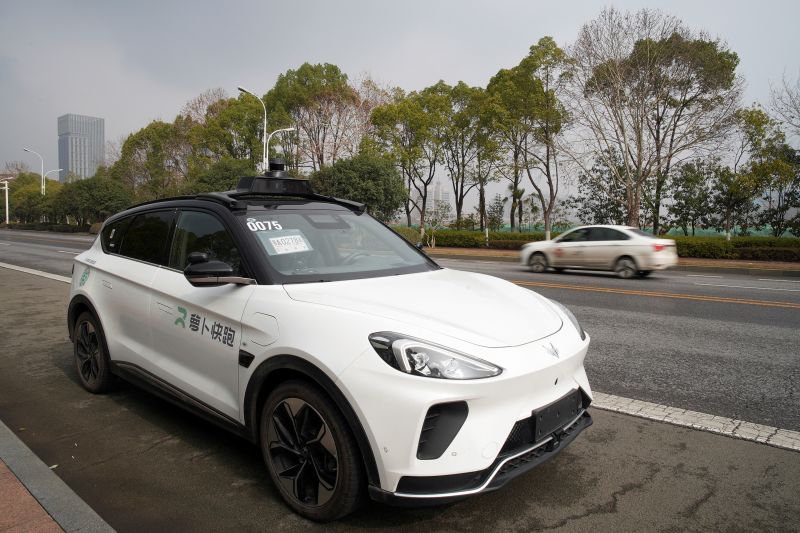
China has announced a suspension of new licenses for self-driving cars following the chaos that occurred in Wuhan last month, where dozens of Baidu's autonomous taxis came to a standstill, leading to significant traffic congestion. This decision is part of the Chinese government's efforts to ensure the safety of autonomous transportation and to avoid a repeat of such incidents.
The incident in Wuhan raised concerns among authorities in Beijing, prompting regulators to call on local governments to review the sector and implement stricter measures. Under this decision, companies will not be able to add new vehicles to their fleets, expand into new cities, or start new testing projects.
Details of the Incident
This step is part of the Chinese government's efforts to enhance the safety of autonomous transportation, as reports indicated that the incident in Wuhan was the result of a technical malfunction that caused the vehicles to stop in the city center. This raised significant concerns about the current technology's ability to handle complex traffic conditions.
So far, there is no clear information on when the government will resume issuing new licenses. Some experts have indicated that this move could slow down the development of autonomous transportation technologies in China, which has been considered a leader in this field.
Background & Context
Historically, China has strived to be at the forefront of innovation in technology, especially in the field of self-driving cars. Major companies like Baidu have invested in developing this technology, making it one of the leading countries in this area. However, incidents like the one in Wuhan highlight the challenges facing this industry.
In recent years, China has seen a significant increase in the number of self-driving cars on the roads, leading to improvements in autonomous driving technologies. Yet, the recent incident indicates an urgent need to review these technologies to ensure the safety of both passengers and pedestrians.
Impact & Consequences
This move by the Chinese government serves as a warning to companies operating in the self-driving car sector. The incident demonstrated the urgent need to improve the technology used in these vehicles, as well as the necessity for more effective monitoring systems to ensure safety.
These restrictions may also have negative effects on companies that rely on this technology, as they will face difficulties in expanding or introducing new vehicles to the market. This could impact innovation in this sector, hindering China's progress in this field.
Regional Significance
As Arab countries seek to develop autonomous transportation technologies, the incident in China offers important lessons about the significance of safety and technology. Arab nations can benefit from China's experience in this area by focusing on developing effective monitoring systems before introducing this technology to their markets.
In conclusion, incidents like the one in Wuhan serve as a reminder of the need to balance innovation and technology with public safety. Countries looking to adopt modern technology must take these lessons into account to ensure a safe and sustainable future.